



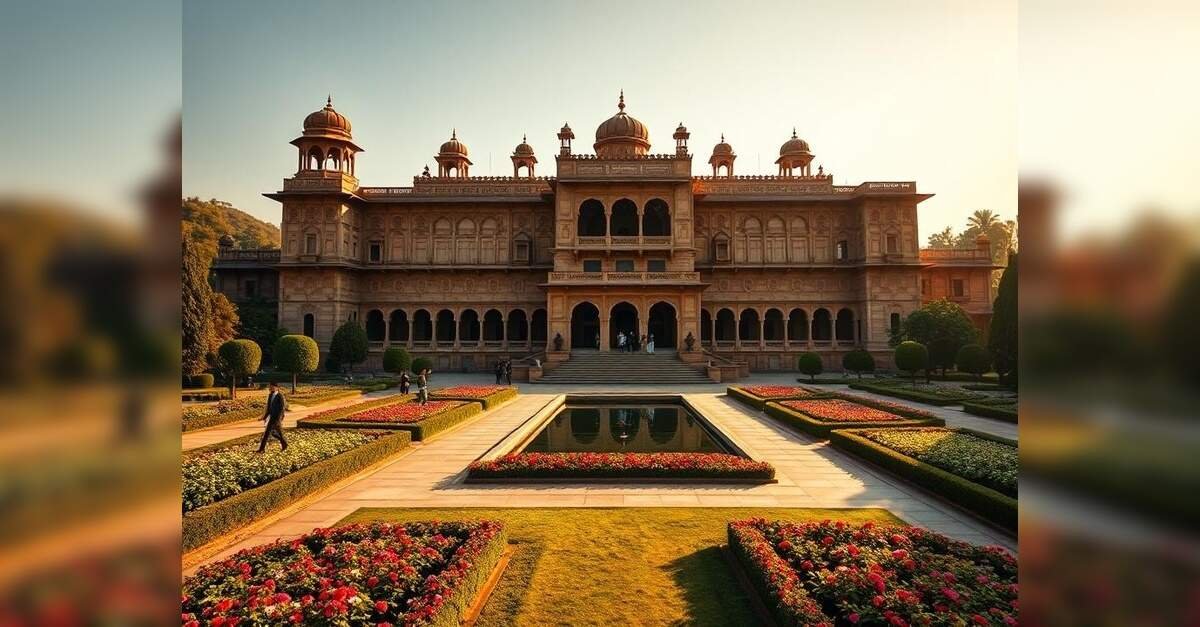
For decades after Independence, the estates of erstwhile princely families faded quietly into the background, as grand palaces became museums, assembly halls turned into legislative chambers and private legacies were absorbed into the administrative machinery of the new Republic.
Today, however, the same stones that once housed durbars are now at the centre of long-drawn legal battles. Far from a mere revival of feudal nostalgia, these cases indicate factors like shaky or incomplete estate planning, soaring property values and increased commercialisation of heritage properties in a time when royal no longer means privileged in law.
In Udaipur, the Mewar family’s decades‑long property fight has resurfaced after the 2025 death of Arvind Singh Mewar, the 76th custodian of the House of Mewar and chairman of the HRH Group of Hotels.
His passing has surfaced claims between his son Lakshyaraj Singh Mewar and daughter Padmaja Kumari Parmar, over the will he left behind and the trusts he controlled.
The Delhi High Court recently denied Padmaja Kumari Parmar’s application for Letters of Administration, stating that the contested will is already under judicial scrutiny, therefore its validity will be determined within the same proceedings.
A single judge bench of Justice Subramonium Prasad noted, “Permitting adjudication of the same issue in parallel proceedings founded on intestacy would run contrary to the legislative scheme and may result in inconsistent findings.”
“In disputes like Mewar, courts will examine documentary evidence: how the property was acquired, in whose name it stands, whether it was ever treated as joint family property, whether it was settled into a trust, or whether it sits inside a company,” said Keyur D. Gandhi, managing partner, Gandhi Law Associates. “If assets are corporatised, the fight often becomes one of shareholding and control rather than inheritance in the traditional sense.”
“Disputes over royal estates are resurfacing because urban land prices have skyrocketed, making old palaces valuable assets,” explains Alay Razvi, managing partner at Accord Juris. “Families now turn these sites into hotels and tourist spots, which boosts income and triggers fights among heirs seeking larger shares. Weak planning from past generations, such as vague wills or trusts, creates confusion when control passes on.”
In Jaipur, Rajasthan, where the former royal family is challenging the state’s attempt to convert the 145‑year‑old Sawai Man Singh Town Hall, once the old Vidhan Sabha, into a heritage museum. The Rajasthan government’s October 2022 decision to rebrand the building as a museum shocked the erstwhile rulers, who argue that the March 1949 merger covenant between the Dominion of India and the United States of Rajasthan explicitly preserved their private property rights.
The case, valued at stakes in the range of nearly INR 2,500 crore, now stands before the Supreme Court, which has issued notice to the state government while observing that Article 363 may bar courts from entertaining disputes arising out of treaties and covenants.
“A ruling favouring the Jaipur royals could embolden other former ruling families to test historical claims of private ownership against State possession, thereby reopening questions long considered settled,” said Tushar Kumar, advocate, Supreme Court of India.
In the Bhopal royal family’s succession dispute, which also involves the Pataudi lineage, the Madhya Pradesh High Court in 2025 set aside an earlier judgment that had favoured certain women heirs over the estate of the Nawab of Bhopal, and instead directed that the succession be determined under Muslim personal law. The Supreme Court has since stayed the High Court’s fresh‑trial order, leaving the overall succession question open.
“These disputes are resurfacing primarily due to generational transitions and earlier estate planning that inadequately anticipated fragmentation across trusts and corporate vehicles,” said Gaurav Ghosh, Advocate, Supreme Court of India.
Modern law, not royal customs
After the 1950 Constitution and the abolition of princely privileges, former rulers ceased to be a distinct juridical category. Inheritance disputes are now governed by the same regimes as every other Indian family: the Hindu Succession Act, the Indian Succession Act, trust and company law and where applicable, personal law for Muslim claimants.
“Having been associated with both the Mewar disputes and the Rampur litigation, I can say that royal status no longer carries independent legal consequences in succession matters. After the Constitution came into force and subsequent constitutional changes, former rulers ceased to occupy a distinct juridical category. Succession disputes are now governed by ordinary law. In Talat Fatima (Rampur), the Supreme Court applied personal law, not rulership,” noted Ghosh.
In the Scindia family dispute, in Gwalior, Madhya Pradesh, which has spanned over 25 years and involves properties estimated at over INR 40,000 crore, the feud between Jyotiraditya Scindia and his three aunts turns on whether daughters and collateral heirs now have equal rights under the Hindu Succession Act. The Madhya Pradesh High Court at Gwalior, in September 2025, granted the parties about 90 days to reach an amicable settlement.
“These cases clearly show that modern law prevails over royal convention. Titles may carry legacy value, but property rights today flow from wills, trust deeds, company records and personal succession laws, not from customary notions of who is the ‘rightful ruler.’ Courts look at legal title, not lineage,” said Gandhi.
Commercialisation of heritage properties
The Indian hospitality market is projected to grow from about USD 24-25 billion in 2024-25 to roughly USD 31 billion by 2029. At the premium end, the Indian luxury‑hotel market was valued at USD 3.64 billion in 2025 and is estimated to grow at a CAGR of about 11.3 per cent, reaching USD 6.93 billion by 2031, with heritage and palace properties anchoring much of this premium segment’s growth.
According to the Indian Heritage Hotels Association (IHHA), Rajasthan accounts for 75 percent of India’s total heritage hotels. The state’s 2021 Revised Guidelines for Granting Certificate of Heritage formalised this dominance by certifying pre-1950 buildings, offering subsidised bar license fees and free land conversion, with over 155 certificates issued to date.
Ghosh observes: “Commercialisation significantly increases litigation risk because revenue‑generating hotels, museums and licensing ventures convert symbolic assets into high‑value corporate interests, sharpening conflicts over control, management rights and beneficial ownership.”
“Converting palaces into paying ventures like stays and exhibits raises their market worth, igniting heir rivalries over earnings and say. Hospitality operations bring steady cash, which absent heirs now claim after a key figure’s passing,” adds Razvi.
“Once heritage properties generate substantial and recurring revenue through hotels, museums, events, licensing, and tourism, questions of management, profit allocation, transparency, and control assume tangible financial significance. Disagreements that might once have been resolved within private durbars now surface as petitions alleging mismanagement, breach of trust, or oppression of minority interests,” said Kumar.


