



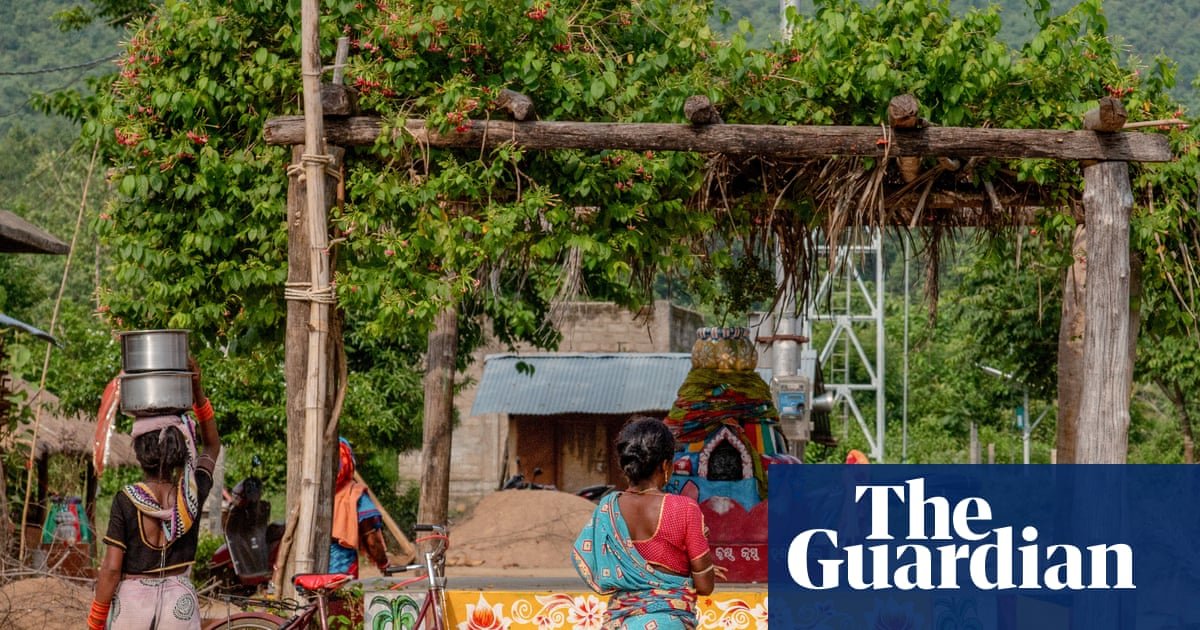
Kasturi Gamango and Pramila Sabar cannot contain their giggles as they explain one of the big attractions of the Raja festival, which they attended a few days earlier along with 20 other farmer families in Laxmipur, in Odisha’s Ganjam district.
“We do no work for three days during the festival,” they say. “Our husbands cook and clean while we enjoy our free time.”
Raja is a vibrant, agrarian celebration in the richly forested eastern Indian state of Odisha that celebrates fertility, womanhood and Basumati, the Hindu goddess of the Earth. Traditionally, the three-day event is held from 14 to 16 June to mark the start of the rainy season and the beginning of sowing crops.
But this year the fields remained untouched, and the skies clear. The monsoon did not arrive until the end of the month.
Global experts have officially declared that this year would see the onset of a “super” El Niño, an extreme version of the weather cycle, and expect it to intensify rapidly from July to September.
In India, El Niño years are usually associated with a weak monsoon, delayed and uneven rainfall, dry spells and extreme temperatures, leading to agricultural droughts, increased energy use and water shortages as reservoirs are depleted.
June ended with a 40% shortfall in rain and even with the excess rainfall this month, the effects of drought have not been mitigated. The state has faced at least 19 droughts over the past 50 years.
Despite the dry conditions and a lack of irrigation facilities, farmers in Laxmipur cautiously sowed seeds in their paddy fields in the last days of June, hoping it would rain in time for germination. Mangala Sabar, 45, remembers the 2023-24 El Niño years “when the transplanting attempts failed twice in each year, and we lost the entire crop”.
Sanjith Mandal, 24, also remembers that time. “When the crops failed those two years, our family took a loan of 30,000 rupees [£235] from a moneylender at very high interest to manage expenses. Almost everyone here has taken on debt.”
During El Niño, the main concern is reduced rainfall and lower soil moisture, which adversely affect farming, says Nitin Bassi, a water management specialist at the Council on Energy, Environment and Water (CEEW), a Delhi-based thinktank.
“Monsoon happens after a peak summer in our country, and the soil is dry. If the soil is not saturated enough when it rains, there won’t be any runoff going into the reservoirs, natural tanks and ponds, and there won’t be sufficient water to supply for winter crops either,” he says.
According to Bassi, nearly 50% of the cultivated area in Odisha is largely rain-fed, where irrigation is not practised or available. A 2024 analysis by CEEW found that the monsoon arrived up to a week late in Odisha over the past decade, and winter rainfall from October to December had increased.
Mangala Sabar has been supporting his family of four by working daily-wage jobs in the local construction industry, supplemented by rice grown in his field. “With that, we only have to buy groceries, and household expenditure will be manageable. Otherwise, I have to work twice as hard to make up for the lost sustenance and earn extra income needed to buy rice for the entire year for my family,” he says. “I only find work for about 15 days a month, even that is highly uncertain.”
In Mali Jagannathpur village, on the banks of the Rushikulya River, farmers wait for canal water to be released from a nearby reservoir once rainfall picks up, so they can sow their seeds.
However, not all fields have access to canal water. Widowed about four years ago, K Sukumari, 28, wanted to farm her husband’s plot, but has been unable to grow rice due to the water shortage.
“Five years ago, when I worked in the field with my husband, I remember there was water in the borewell and even rainfall was adequate,” says Sukumari, who is raising her two children alone, one of whom needs special care.
The borewell has dried up, and rainfall has often been delayed and deficient for the past few years, she says. She works in a brick kiln factory for half of the year and in other people’s fields during the growing season to earn a living.
In many villages in Odisha, household income is a mix of daily-wage labour, sharecropping and remittances from migration, supplemented by subsistence paddy farming.
“Drought is not an unknown hazard for Odia farmers,” says Chandni Singh, a lead author for the Intergovernmental Panel on Climate Change and climate adaptation researcher at the Indian Institute for Human Settlements, referring to farmers living in Odisha.
after newsletter promotion
“We know that in any farming system, people are very smart,” says Singh. “They are not passive victims; they are innovating and adapting.
“But you can’t expect a farming household to endlessly adapt in place,” she says. “The other thing farming households can do is diversify risk. So you start migrating.”
“Distress migration” is occurring in some parts of Odisha but remittances have been a substantial source of income for many villages, improving livelihoods in the southern region, according to Liby Johnson, executive director of Gram Vikas, a development organisation working with Odisha’s rural communities for nearly five decades.
However, at the heart of farming communities’ wellbeing and long-term resilience against the climate crisis is water security and weather certainty, he says. Gram Vikas has launched a slew of initiatives in Odisha’s villages, including hyperlocal weather forecasting, detailed aquifer mapping to understand groundwater availability, and the building of low-cost soil and water conservation structures to enhance water retention.
Overlooking the hills of the Eastern Ghats, one of the 25 automatic weather stations installed by Gram Vikas stands on the roof of Mangala Sabar’s house, at the entrance to Laxmipur village. The outer wall has been turned into a huge blackboard where weekly weather conditions and a seven-day rain forecast are written in the local Odia language. He receives the processed weather forecast information via WhatsApp and is responsible for updating the board.
The India Meteorological Department also launched an initiative last year to provide accurate forecasts of the monsoon’s arrival up to 30 days in advance. Tailored forecasts are now being delivered to more than 38 million farmers via SMS and phone calls, including in Odisha.
Similarly, several El Niño-related advisories were issued by the government recommending farmers delayed sowing, choose low-duration or other less water-intensive crops, and adopt drought-resilient varieties.
However, uptake of this information remains limited. “The idea that data alone will influence a farmer’s decision is flawed. People don’t make decisions like that, especially farmers who are dealing with uncertainty every day,” says Singh.
“The core information comes from their local knowledge, like reading the soil, the ants, the trees and the clouds. There’s also an outsized influence of peers – studies show that the uptake of that climate information is much higher when information comes through peers,” she says.
Johnson says: “One has to really give space for an evolutionary process for cropping changes to happen. We have to instil confidence in the community that the information is accurate and valuable, and let the farmer choose what works best for them.”
This month the rating agency S&P Global warned that a weak monsoon in India could drive up inflation, weaken rural demand and strain fiscal balances.
With bursts of heavy rainfall across some parts of the country in the month of July, the overall monsoon deficit has narrowed to 21%. But there remains deep uncertainty as El Niño strengthens.
Farmers in Odisha, however, are pushng on. “How can we know if it will rain adequately or not? There is no point in worrying about that. We will sow the seeds regardless because we are farmers,” says Mangala Sabar. “We will farm, and let’s see what happens.”


