


The Supreme Court has a strong preference for closure. Courts depend on finality. Once a judgment is delivered the case is usually over. But sometimes the top court looks at a case it has already decided and asks if the matter was truly settled.
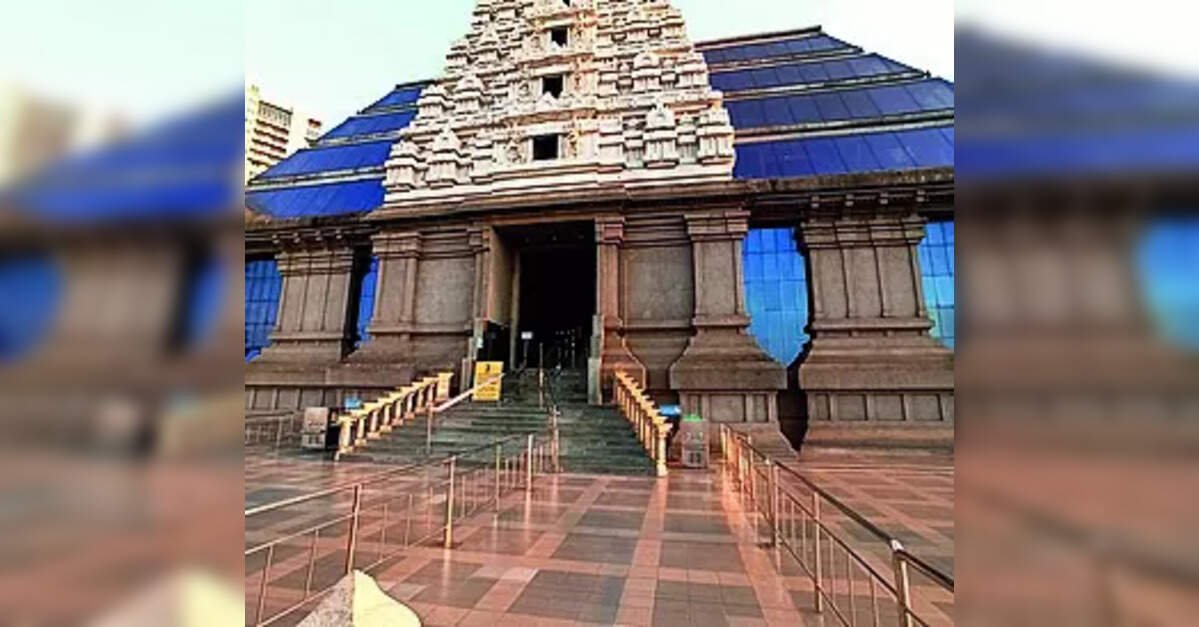
That question has come up in a dispute that has lasted nearly 25 years. Two entities within ISKCON have fought in court over who controls the Hare Krishna Hill temple in Bengaluru. For decades the case wound through trial courts and the Karnataka High Court and eventually reached the Supreme Court.
In May 2025 the Supreme Court seemed to end the matter. It ruled in favour of ISKCON Bengaluru. It overturned a Karnataka High Court ruling that had supported ISKCON Mumbai. The court said the temple belonged to the society registered in Karnataka. After such a long battle that decision appeared final.
For many this verdict marked the closure of one of the longest running disputes involving a modern religious institution.
But the case refused to rest.
Soon after the retirement of Justice Oka in May, ISKCON Mumbai filed a review petition. In November, when the petition came up before Justices J K Maheshwari and Augustine Masih, there was a split. Justice Maheshwari believed the review deserved consideration. Justice Masih, who had been part of the bench that delivered the May verdict, disagreed. Such a divergence at the review stage is rare and consequential. Once judges differ, the matter cannot remain confined to chambers.
In view of this split the case was placed before then Chief Justice of India B R Gavai. Exercising his administrative authority, he directed that the review be listed before a three‑judge bench in open court.
On December 3, the Supreme Court agreed to revisit its May decision, which had handed control of ISKCON’s Bengaluru temple to the Bengaluru faction, overturning a Karnataka High Court ruling that had favoured the ISKCON Mumbai faction.
Reopening the May 16 decision, a three‑judge bench headed by Justice M M Sundresh issued notice on the review petition filed by ISKCON Mumbai, which claims sole rights over the temple. The bench, also comprising Justices P K Mishra and Satish Chandra Sharma, asked the Bengaluru faction to respond to the review plea and listed the matter for further hearing on January 22, 2026.
This decision alone places the ISKCON matter in a very narrow category. The bench that will now hear the case consists of judges who were not part of the earlier ruling. As a result, the entire dispute, which had remained pending in the Supreme Court for nearly 11 years before being decided in May, will effectively be re‑argued.
The scope of the review is limited but serious. The bench will examine whether ISKCON Bengaluru forged or fabricated documents to establish ownership of the temple, as alleged by ISKCON Mumbai. It will also consider whether these allegations were overlooked earlier and whether they were relevant to determining ownership. This is not a rehearing on merits but a focused inquiry into whether something vital was missed.
Open court hearings at the review stage in civil matters is very rare. The only category that routinely receives them is death penalty matters.
While unusual, this is not without precedent.
Rupa Ashok Hurra And Finality
In Rupa Ashok Hurra v Ashok Hurra in 2002 the Supreme Court said final judgments can sometimes be wrong. The Court said finality is important but it cannot hide clear injustice. That decision laid the ground for what later became known as curative petitions. It also made clear there must be a limited way to correct a grave error.
NJAC Review And Court Answering For Itself
After it struck down the National Judicial Appointments Commission the Supreme Court allowed open court hearings in the review petition. The matter was not just legal. It was also about the court’s own authority. The Court chose to hear lawyers openly rather than in chambers. That showed the court believed it needed to explain itself in public.
Sabarimala And Visible Justice
In the Sabarimala review cases the SC again chose open court hearings. The issues involved faith practice and constitutional values. The Court later referred the matter to a larger bench. The hearings showed that when questions of belief are involved the Court often prefers to be open and public in how it decides.
Ayodhya And The Power To Reopen
In the Ayodhya case the Supreme Court dismissed the review petitions in chambers. But the Court also said open court hearings could be allowed if new evidence or clear errors emerged. This was important. It showed that the power to reopen a final decision exists even when the Court does not use it.
Death Penalty Cases And Irreversibility
In death penalty cases the Court has at times held open court hearings at the review stage. This happened in the cases of Yakub Memon and the Nirbhaya convicts. The reasoning is simple. When the outcome cannot be reversed the process must be beyond doubt. Open hearings help ensure that.
What Lies Ahead
Seen in this light the reopening of the ISKCON dispute makes sense. It may be rooted in a long battle between two parts of the same religious movement. But it also involves questions of institutional authority and public trust. These are not ordinary issues.
When this matter is heard again in the Supreme Court in January 2026 the judges will once again balance finality against fairness. They may stick with their earlier verdict. Or they may change course. We do not know that yet.
But by choosing to hear this matter in open court the SC has already sent a message. Some cases are too important to be resolved quietly. Sometimes closure matters. But getting it right matters more.
(Views are personal)


