



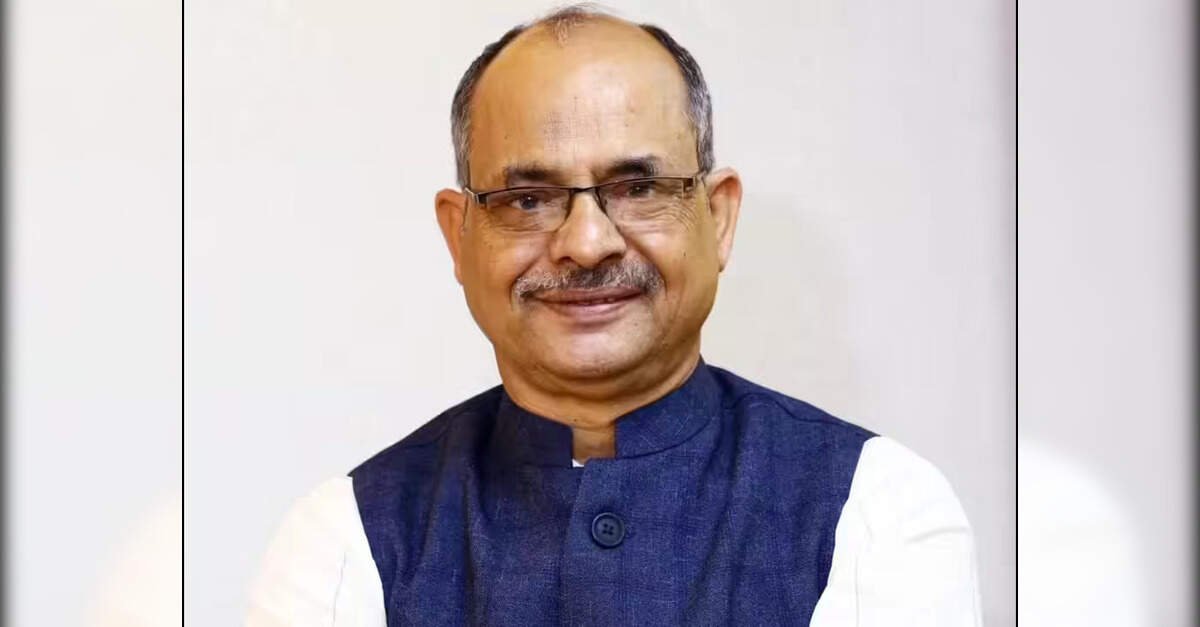
By Prof Manoj Kumar Tiwari
During the last twelve years India’s higher education landscape has undergone a remarkable transformation in terms of accessibility, quality and technological innovations. Prior to 2014, the primary focus of the Indian education system was expanding access, but over the last 12 year it has emerged as a globally competitive ecosystem emphasising employability, innovation, entrepreneurship, and research excellence.
The scale of expansion in higher education institutions itself is unprecedented. Since 2014, India has added seven new Indian Institutes of Technology (IITs), nine Indian Institutes of Management (IIMs), sixteen Indian Institutes of Information Technology (IIITs), and approximately fifteen new All India Institutes of Medical Sciences (AIIMS). During the same period, the number of universities increased from around 760 to more than 1,330, representing an addition of over 570 universities nationwide.
The expansion of premier institutions has significantly improved regional equity. New IITs were established in Tirupati, Palakkad, Bhilai, Goa, Jammu, Dhanbad, and Dharwad, while new IIMs emerged in Nagpur, Sambalpur, Bodh Gaya, Jammu, Sirmaur, Visakhapatnam, Amritsar, Mumbai and Guwahati. Similarly, the network of IIITs expanded from 10 to 26 institutions, strengthening India’s capacity in digital technologies and advanced computing.
Medical education witnessed equally impressive growth. Medical colleges increased from approximately 387 to nearly 780 institutions, while the AIIMS network expanded across several states, dramatically improving access to quality healthcare education and services.
During the same period, there has been a significant rise in student enrolment in higher education. The Gross Enrolment Ratio (GER), which was around 23.7 per cent, has now increased to over 28 per cent. Millions of additional students, particularly women and learners from underserved regions and underprivileged social groups, have entered the higher education system.
One of the most significant changes in India’s higher education has been a noticeable shift from degree-oriented education to employability-oriented learning. Universities and other higher education institutions today emphasise internships, live industry projects, experiential learning, entrepreneurship, skill certifications, and multidisciplinary education. Programmes in Data Science, Artificial Intelligence, Machine Learning, FinTech, Cybersecurity, Business Analytics, and Sustainability have become highly demanded across academic institutions.
India’s higher education institutions are increasingly aligned with the needs of Industry 4.0 and the digital economy. Industry-Academia collaborations have helped strengthening curriculum design, research partnerships, innovation laboratories, internships, and placement opportunities. Such collaborations are now defining a new momentum in many higher education institutions by solving real-life problems of society.
The country’s global academic standing has also improved considerably. Indian institutions are now increasingly visible in international ranking systems such as QS and Times Higher Education Rankings. IITs, IIMs, and leading universities have enhanced their reputation through stronger research output, innovation ecosystems, and global collaborations.
Research and innovation have emerged as central pillars of institutional development. Universities are now evaluated not only by enrolment and teaching quality but also by publications, citations, patents, startup creation, technology transfer, and societal impact. Incubation centres and innovation hubs have become common features across campuses, encouraging students and faculty to pursue entrepreneurial ventures.
Another historic development has been the internationalisation of Indian higher education. Recent reforms have enabled globally recognised foreign universities to establish campuses and academic partnerships in India. Similarly, leading educational institutions from India, both public and private, have opened their overseas campuses. This marks a significant change in India’s positioning in higher education, because the country has now emerged as a global education destination.
India’s digital transformation capabilities have further accelerated the country’s progress in educational attainments. Online learning platforms, virtual laboratories, hybrid classrooms, academic credit banks, and technology-enabled teaching methods have enhanced flexibility and accessibility for learners. The integration of technology into education has expanded learning opportunities far beyond traditional classroom boundaries.
The efforts of the educators have been well supplemented by institutional reforms and far-reaching policies. In 2020, the Union Government came out with a new and apt policy for the country’s education sector in the form of the National Education Policy (NEP) 2020. NEP 2020 aims to transform India’s higher education system by making it flexible, multi-disciplinary, and globally aligned and has an ambitious goal to increase the GER to 50% by 2035. Overall, in the last 12 years, India’s higher education system has made stupendous progress in almost all key indicators of education and is now poised for a momentous growth aligning with the PM’s vision of a Viksit Bharat.
The author of the article is Prof. Manoj Kumar Tiwari, Director, Indian Institute of Management (IIM) Mumbai.
DISCLAIMER: The views expressed are solely of the author, and ETEDUCATION does not necessarily subscribe to it. ETEDUCATION will not be responsible for any damage caused to any person or organisation directly or indirectly.


