


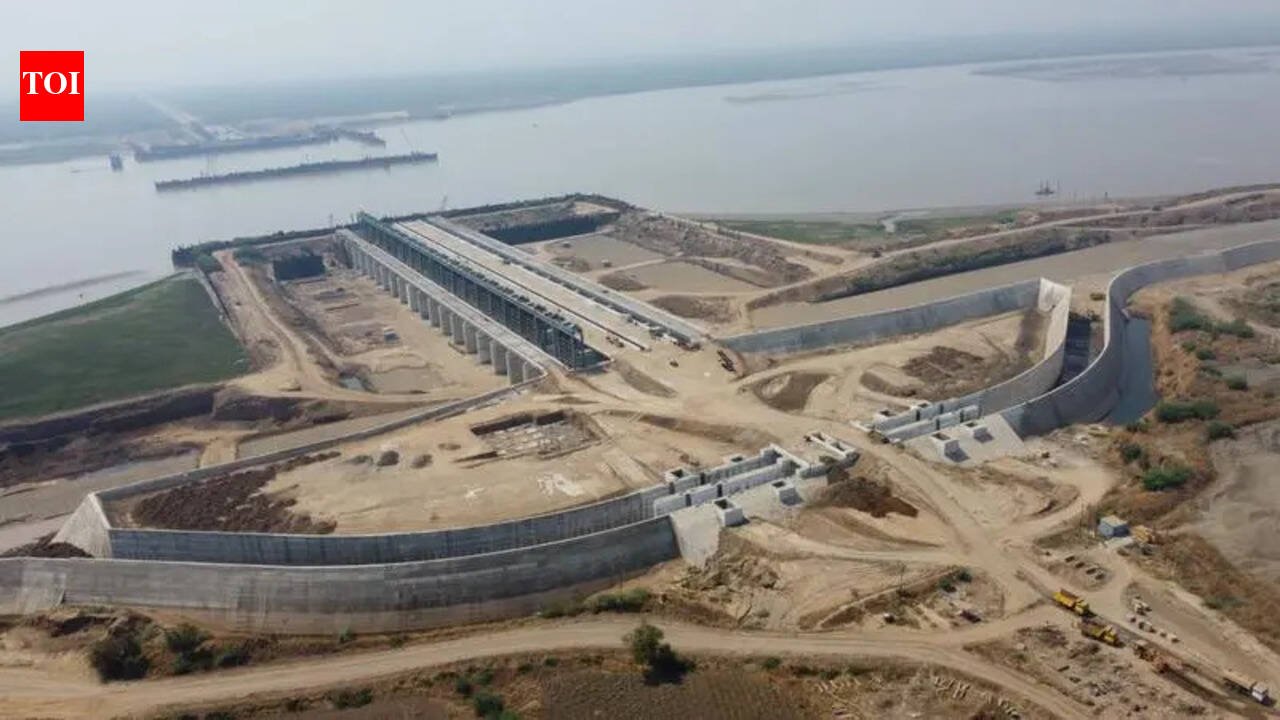
Vadodara: The Gujarat govt has accelerated implementation of the Bhadbhut Barrage Project, projecting it as a major driver of socio-economic transformation in South Gujarat.Guided by the chief minister, the project is expected to open new avenues of development while generating annual economic benefits of Rs 1,000 crore to Rs 1,200 crore, officials said. With nearly 80% of land acquisition completed and around Rs 400 crore paid as compensation to farmers, work on the project has gathered pace. In a parallel development, physical work on the long-pending flood protection embankment has also resumed, offering relief to riverbank villages vulnerable to monsoon flooding. Officials said that of the 819 hectares required across six villages in Ankleshwar taluka, 642 hectares have been acquired through a consent-based mechanism, ensuring compensation to landowners. “The consent-based mechanism benefited over 7,000 tribal and fishing community farmers, many of whom have witnessed a marked improvement in their living standards,” an official said. The resumption of embankment work, which had been stalled for nearly four years, is expected to provide permanent protection to low-lying areas from Dhanturia-Tariya to Sarfuddin-Borbhatha. These regions have historically suffered heavy losses due to flooding and soil erosion during the monsoon. “Once completed, the embankment will safeguard fertile agricultural land and allow residents to pursue livelihoods without the recurring threat of floods,” the official added. A key component is the creation of a reservoir with a storage capacity of 599 million cubic metres of freshwater. This will cater to industrial, irrigation and drinking water needs in Bharuch, Ankleshwar and Vagra, while also helping prevent seawater ingress and soil salinity in the Shuklatirth belt, improving agricultural productivity. A six-lane bridge planned under the project will reduce the distance between Surat and Dahej by 37km, improving connectivity to major industrial hubs such as Dahej, Saykha and Vilayat. The improved transport network is expected to save fuel and time while speeding up the movement of goods, boosting economic activity in the region. Officials said the project goes beyond water conservation, aiming to prevent wastage of Narmada’s freshwater, address salinity and support sustainable development for agriculture and industry.
