


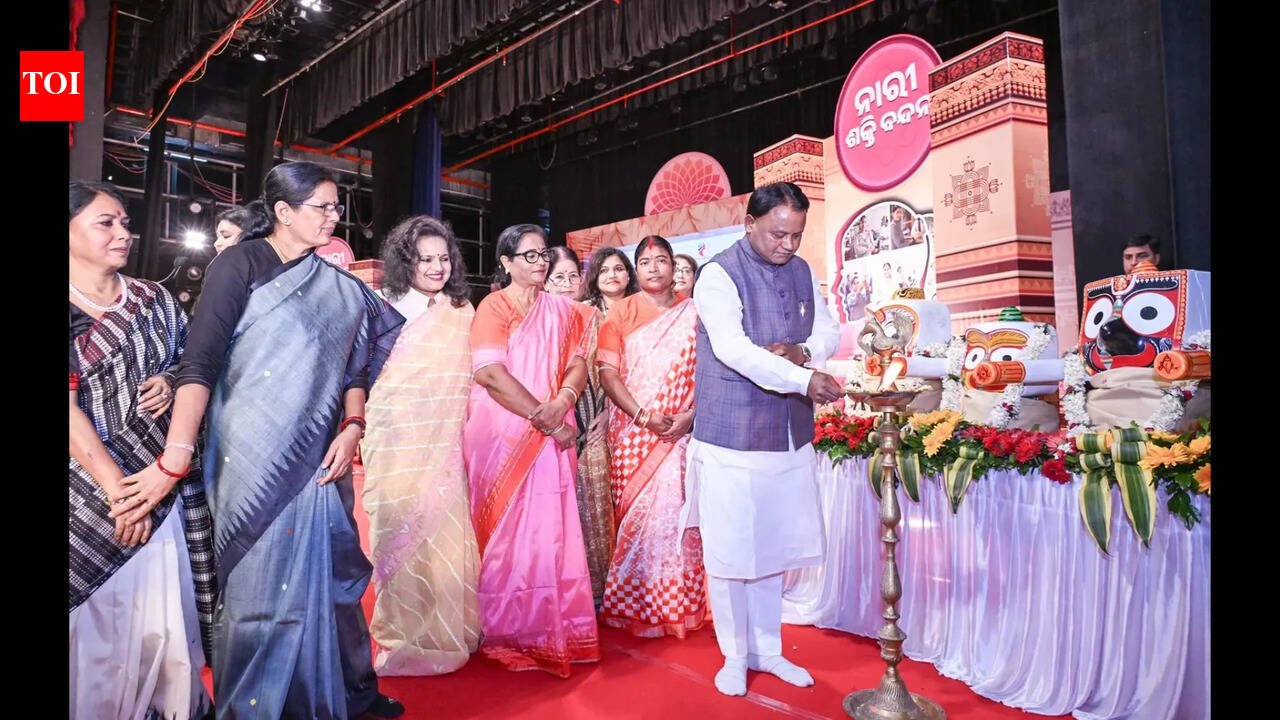
Bhubaneswar: Ahead of the special session of Parliament scheduled from April 16 to 18 to amend the Constitution for implementation of 33% reservation for women in the Lok Sabha and state assemblies and increase Lok Sabha seats to 850 from 2029, chief minister Mohan Charan Majhi on Wednesday said the move would give a major push to women-led development and strengthen their role in policymaking.Addressing a Nari Shakti Vandan Town Hall Meeting here, Majhi described the Nari Shakti Vandan Adhiniyam, 2023, as the most revolutionary step towards women’s empowerment in independent India. “This is not just a law, but the flight of dreams of crores of women. When women take leadership roles, the entire society and nation benefit,” he said.
Majhi added, “Prime Minister Narendra Modi’s government, while staying rooted in Indian traditions, had rolled out several welfare programmes for women over the past 12 years, with the women’s reservation law being the most decisive intervention.”Noting that women are no longer just voters but active participants in democracy, Majhi said Odisha itself had about 14.5 lakh women serving as elected representatives in panchayati raj institutions.He added that the state govt’s focus was on building a prosperous Odisha as part of the vision of Viksit Bharat, with special emphasis on women’s economic self-reliance. He cited initiatives such as the Subhadra Yojana and the Lakhpati Didi programme, aimed at ensuring prosperity at the household level. “True development happens when an ordinary village woman participates in digital banking and modern agriculture,” he said.Odisha assembly speaker Surama Padhy said women’s representation must be reflected equally in legislatures and urged support for greater participation of women in decision-making. Deputy CM and women and child development minister Pravati Parida said the law would make the journey from panchayat to Parliament easier for women leaders.Several speakers, including writer and Jnanpith recipient Pratibha Ray, senior officials and prominent achievers, hailed the Act as timely and transformative for India’s democratic and social landscape.
