



So-called “dupe culture” is booming in the U.S. jewelry industry, with replicas of jewelers’ signature designs flooding the likes of TikTok, Amazon and fast-fashion retailers. The consumer movement, where people actively search for and proudly buy affordable alternatives to recognizable designs, is a growing problem for jewelers, and presents a legal and economic challenge for brands both big and small.
“There is a growing market for budget-friendly alternatives to high-end products generally, and in the jewelry industry specifically, lookalikes can be manufactured quickly and at a fraction of the cost of the originals,” explains Kristin Grant, patent attorney and founder of Grant Attorneys at Law PLLC, specialists in business and intellectual property law.
Significantly, dupes are different from fakes. Dupes are a more affordable look-a-like product, while a fake is an illegal replica that copies a brand’s trademarks. The former is technically legal in the United States, providing a loophole for competing businesses to take advantage of.
“Certain elements of jewelry designs can be difficult to protect which may, in some instances, leave room for a third party drawing inspiration from an original piece to argue that the elements that were copied were not protectable,” says Grant. It’s this loophole that many jewelers are currently trying to close, arguing that unique creations should have more protection under the law.
Several brands are currently in the midst of legal battles regarding intellectual property, copyright protection and design infringement. In February 2026, David Yurman filed a federal copyright infringement lawsuit in New York against TJX Companies, the parent company of T.J. Maxx and Marshalls, claiming it was selling jewelry “virtually indistinguishable” from its federally registered twisted cable designs. The same month, New York-based luxury jeweler Foundrae filed a copyright infringement lawsuit against Pandora, alleging the latter’s “Talisman” collection copies the exact visual expression, selection and arrangement of its own signature medallions. Both cases are currently ongoing.
Related: This Italian Jewelry House’s Milan Atelier Is Hidden in Plain Sight
They’re just two examples of recent high-profile copyright disputes, but many jewelers face a constant battle to protect their work and creativity from retailers, other jewelry brands and anonymous traders on platforms like TikTok and Instagram.
“At a certain point, confronting copies starts to feel like fighting a hydra: Cut off one head and two more appear,” says independent jewelry designer Polly Wales. “Reporting listings, sending letters, contemplating legal action — it can become a second job very quickly, and a profoundly uncreative one.”
The Legal Route
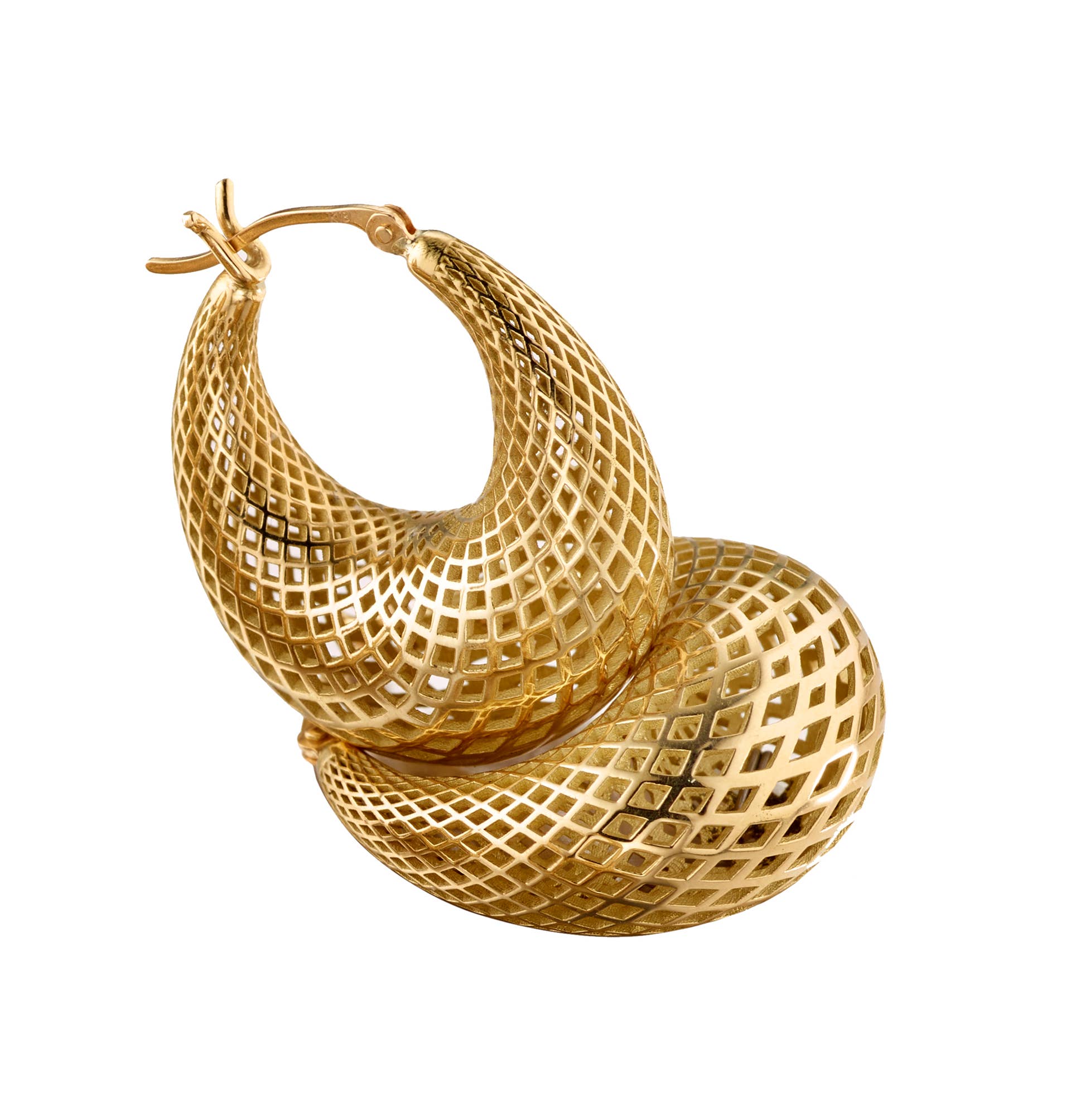
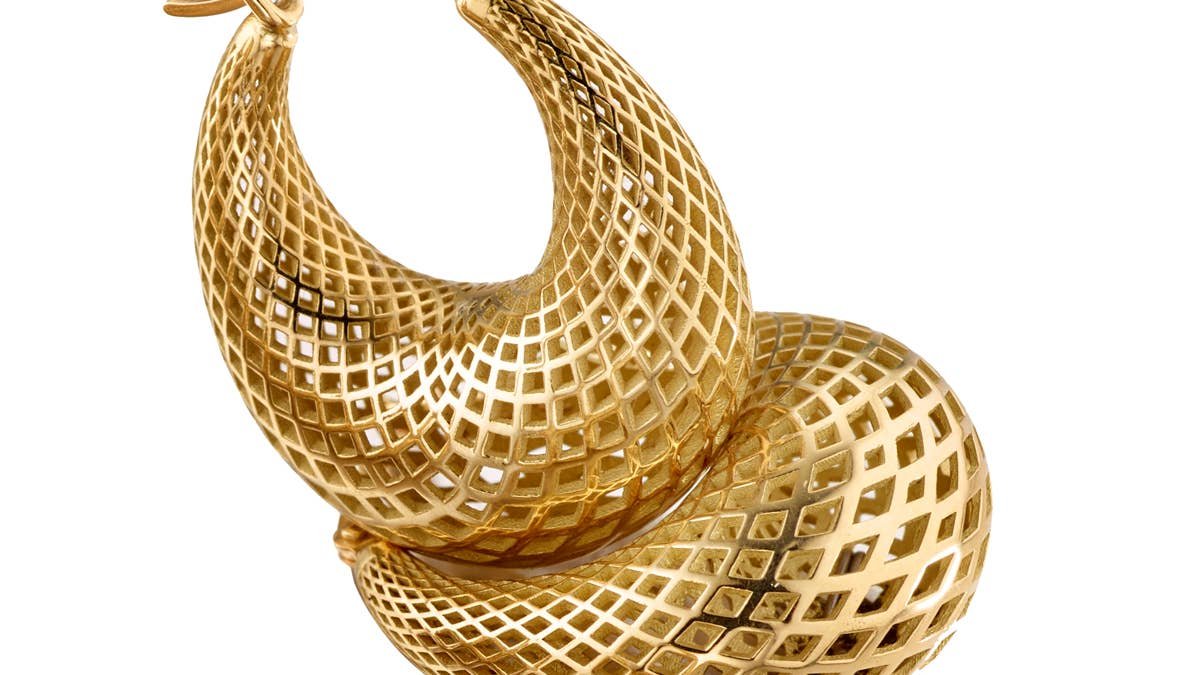
Ray Griffiths earrings done with Crownwork®
There are several existing legal avenues jewelers can go down to protect their work. First is copyright protection, “the most accessible means of protecting jewelry designs,” according to Grant, which is also relatively inexpensive. Copyright can be applied to original artistic or expressive works, although common elements and shapes (like stars or hearts) are not protected and neither are purely functional aspects of a piece. This means that a “design that comprises an original combination of common elements may receive protection as a whole, but that protection may be relatively thin,” explains Grant.
For the ornamental design of a piece, a design patent might offer “stronger protection,” she advises. But these can be quite costly, and ideally the application should be made “before the piece is publicly disclosed.” They also do not protect functional aspects of a jewelry item, like a novel locking mechanism or the method of making it, which would require a separate utility patent.
There’s also “trade dress protection,” which is applied to the overall appearance of a product, which consumers then associate with a specific brand. However, this association can be “tricky to establish,” says Grant. She also recommends ensuring there are written agreements with manufacturers that address ownership of designs, files and molds in order to reduce risk.
New York-based jeweler Ray Griffiths went down the copyrighting route, and trademarked his Crownwork technique in 2014. He developed it after years of restoring antique jewelry and becoming “enamored with the grid pattern” often found underneath old crowns and tiaras.
He met a “very knowledgeable trademark lawyer” at a trade show, who told him his look was distinctive and authentic, and that he should protect it with a trademark. “It took around three years, but it proved to be very good advice and it has protected our brand ever since,” says Griffiths.
The Creative Route
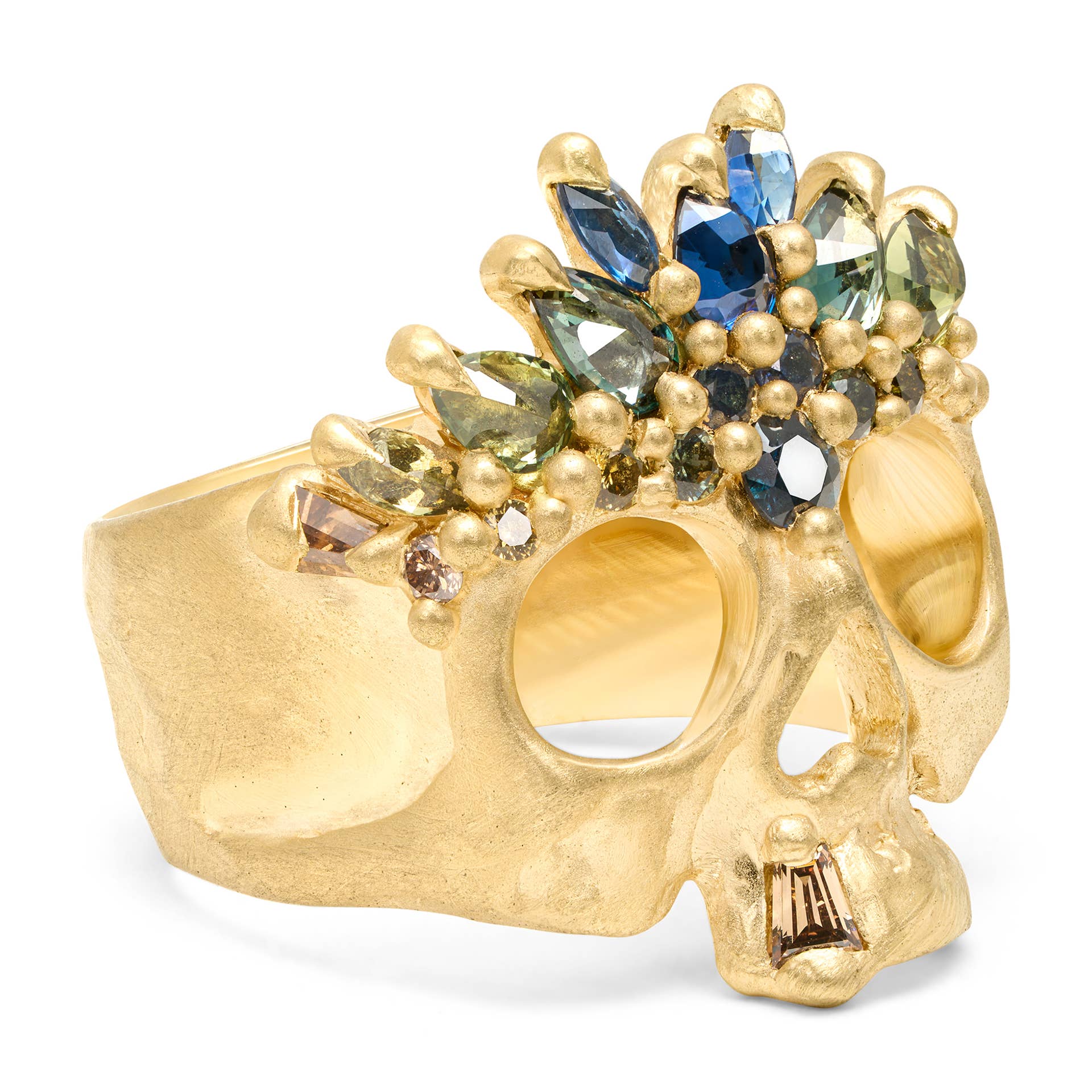
Photo: Courtesy of Polly Wales
Another option is to create fundamentally unique, handmade designs that a mass-market brand wouldn’t have the tools or time to replicate.
“The very thing that makes our work difficult to copy at scale is also what makes it ours: it misbehaves,” says Wales, who makes handmade jewelry using a signature Cast-Not-Set technique that involves throwing gemstones into molten gold to create one-of-a-kind pieces.
@jewelsbyjinx Christmas came early! #jewelry #jewelrytok #jewellery #ringstack #gold
“Cast-Not-Set has limitations and variables built into the process,” she says. “Molten gold and gemstones don’t behave like pixels. You can imitate the silhouette of a piece, but reproducing the particular accidents, textures, colors and relationships between stones is another matter entirely.”
However, despite their complexity, her popular designs are often copied — and sometimes by fellow independents. But for Wales, ultimately, the “answer to a dearth of creativity is more creativity. We’d rather put our energy into making the next thing than obsessing over someone making a lesser version of the last one.”
Also frequently duped is Los Angeles-based jewelry brand Spinelli Kilcollin, whose signature rings are instantly recognizable. Its co-founders, Yves Spinelli and Dwyer Kilcollin, recently introduced their own tongue-in-cheek response to dupe culture. They started an amnesty, opening a “Trade-In Bar” in their stores where customers can hand in their imitations and receive a $50 credit towards purchasing an authentic piece. The dupes are then displayed in store for all to see.
The co-founders have decided to take a more philosophical attitude to dupe culture – and recognise the opportunities it presents for their own brand building. “When people post dupes of our rings, they always tag or reference some version of #spinellidupe, which shows the value of our creations and brand,” says Spinelli. “Social media obviously spreads this more quickly. I don’t see it as bad, and I don’t ever want someone to feel bad wearing a copy. It actually says that there’s a whole group of people who want to wear our designs that we are unable to serve.”
Advice for Designers

Photo: Courtesy of Spinelli Kilcollin
His advice to other designers and brands is to “not to get too emotional or spend time chasing this stuff. Let it motivate you to try to reach higher and embrace and share the value of your work and your brand.”
For Griffiths, the best way to protect your creative IP is to “own it in every way possible. A trademark is very important, but it needs to go hand in hand with a creative vision and journey,” he says. Conversations with clients are also important. “If people understand your creative philosophy, they connect the designs with you, and dupes lose their value,” he says.
Griffiths also advises other independent jewelers to “create a look that’s not borrowed from anyone else and develop your own signature style, because that is something that can never be copied.” Finally, he recommends getting “a good IP lawyer who won’t take no for an answer.”
Constantly battling dupes can be lengthy and frustrating, however. Faceless businesses peddling imitation designs via social media can pop up and disappear over night, and reporting listings, sending letters and contemplating legal action is exhausting for smaller jewelers.
“There may be room to do more,” says Grant of the U.S. legal system. “Pursuing anonymous online sellers can be slow and costly, and further measures that make sellers easier to identify and platforms quicker to respond could be helpful.”
The current swath of legal cases moving through the courts may move the needle, she adds. “Rulings favorable to the plaintiffs could encourage major brands and retailers to review designs and sourcing more carefully.” However, “these rulings may have a more limited effect on anonymous online sellers, who can be difficult to locate and hold accountable.”
Ultimately, there is still a long way to go to tamp down on dupe culture in the jewelry industry. “We haven’t found a satisfying way to protect everything we make through IP law, and there are limits to what those protections can accomplish,” says Wales. Like Griffiths, for her the best protection is to “develop a point of view so particular that copying the product isn’t enough.” She also advises always looking forwards: “If somebody is copying where you’ve already been, give them the impossible job of catching up with where you’re going.”
