



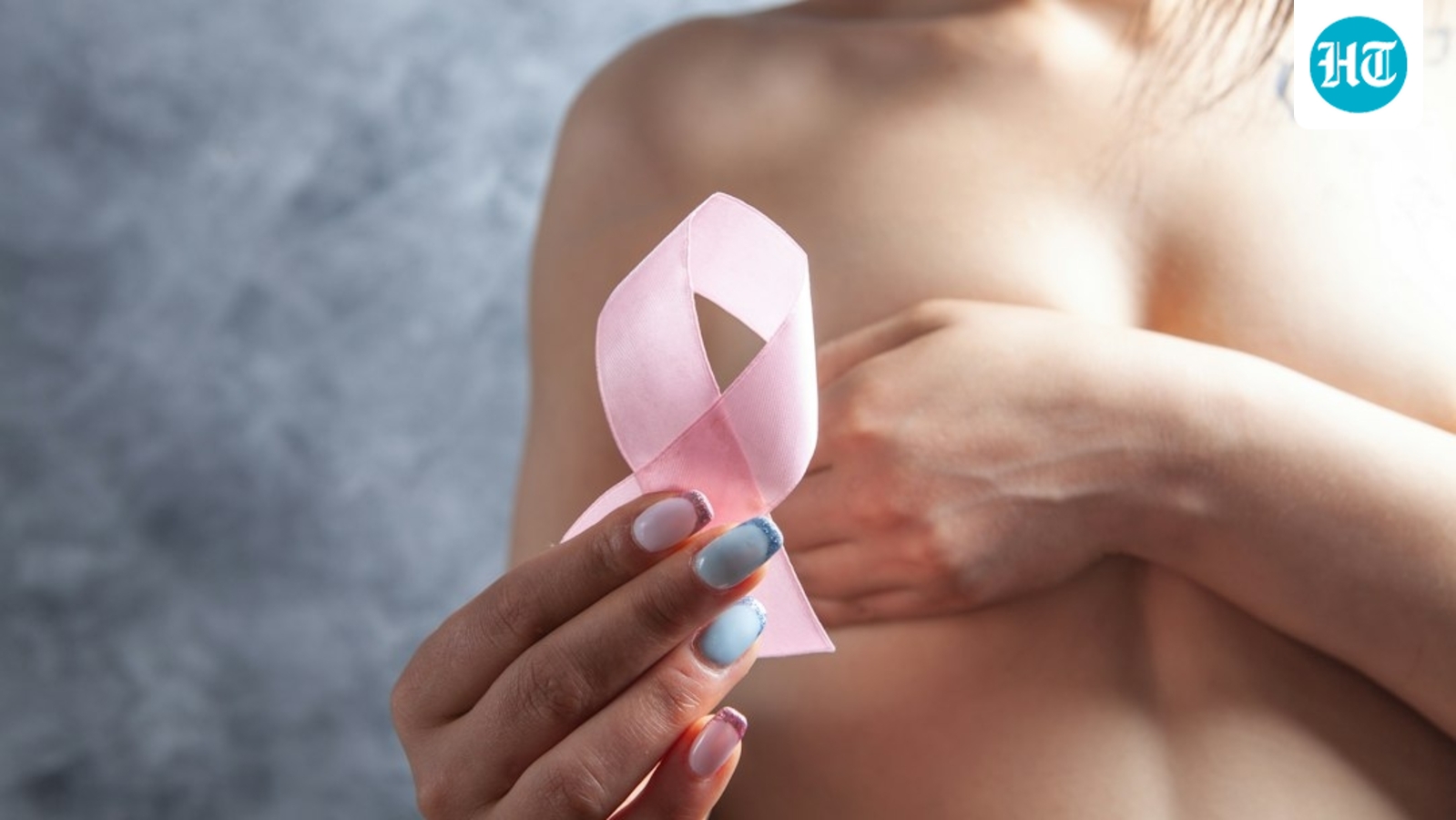
Breast cancer is the most common cancer among women in India, representing nearly 27% to 32% of all female cancers. Over 200,000 new breast cancer cases are diagnosed annually in India, with estimates showing approximately 221,579 cases and 82,429 deaths recorded, according to data shared by Observer Research Foundation.
However, taboos around the topic and the general fear of the disease can lead to women often ignoring any lumps that may have formed around their breasts. Therefore, it is important to know how to do a proper self-examination at home. As October marks the annual breast cancer awareness month, HT Lifestyle reached out to experts from Dr LH Hiranandani Hospital, M|O|C Cancer Care, and a senior gynaecologist from Sir HN Reliance Foundation Hospital to understand breast cancer, how to perform self-checks, how to recognise warning signs, and more.
Here are some poignant questions we asked the experts related to breast cancer:
1. How should women properly check their breasts for lumps?
Dr Asha Dalal, director of obstetrics and gynaecology at Sir HN Reliance Foundation Hospital, highlighted that breast cancer is the most frequent type of cancer found among women in India, with Indian women getting diagnosed almost ten years before Western women. “Today, breast self-awareness has replaced any specific method. Decide on a regular date every month. For those who still have their periods, select a date just after their monthly cycle. For those who do not have their periods anymore, select a fixed date,” she added.
Dr Namita Pandey, a breast oncoplastic surgeon at Dr LH Hiranandani Hospital, Mumbai, stated that as a breast oncosurgeon, she would urge all women to get acquainted with the normal look and feel of their breasts. “Self-awareness of breasts helps women detect changes at an earlier stage,” she stressed.
According to her, ideally, a breast self-examination should be done once a month following the menstrual period, as at this time the breast is less sensitive. For women who do not have their menstrual periods anymore, it can be done on any day of the month. Here are some key steps she highlighted:
- In front of a mirror: Watch for changes in breast size, shape, skin or nipple position. With your hands raised, watch for any pulling or dimpling of the skin.
- Lying down or during shower: Gently examine the whole breast with pads of your fingers in a small and overlapping circular motion. The examined zone should include the area from the collarbone to the lower breast and from the breastbone to the armpit.
- Examine the nipples and armpits: Pay attention to any spontaneous (without applying pressure) nipple changes, nipple discharge, and lumps in the armpit.
“It should be noted that self-examination does not replace clinical examination or screening. In case of detection of a new change, you should contact a doctor rather than self-checking the area,” Dr Namita added.
According to Dr Asma Pathan, a cancer physician at M|O|C Cancer Care Pune, breast lumps are probably the most widely recognised breast cancer symptoms. However, delaying the check-up until there is a lump in your breast is wrong.
“Breast cancer can manifest itself through other visual or non-visual signs long before the appearance of a lump—and even at an early stage of breast cancer there might be no symptoms at all. Women should become aware of the usual look and feel of their own breasts. Self-exam is not about diagnosing cancer, but recognising any changes in your body that may need to be checked out,” she added.
Therefore, she stressed that no one should turn a breast examination into some complex medical procedure. The main idea is practice, not perfection.
2. What are the warning signs of breast cancer?
According to Dr Namita, one should be aware of:
- The appearance of a new lump in the breast or armpit.
- A new mass or thickening, typically painless
- A change in the size, shape, or contour of the breast.
- Dimpling, thickening, redness, or the appearance of the skin resembling that of an orange peel.
- A recently inverted nipple or any other nipple abnormalities.
- Any spontaneous nipple discharge, especially bloody nipple discharge.
- Unexplained breast pain and/or swelling.
- Redness, scaling or rash on the breast or nipple
- Localised breast swelling or lump in the axilla
- Persistent pain at one site
“It is important to know that most breast lumps are benign; however, every new lump should be checked by a physician,” Dr Namita underlined.
Meanwhile, Dr Asma recommended consulting a physician if you discover a new lump or thickening, any alteration in the breast’s size or shape, dimpling or puckering of the skin, redness or abnormal swelling, an inverted nipple, anything different about the nipple area, or any discharge from the nipple that is unusual or bloody. “It is true that most lumps in the breast area are not cancerous. However, it is not necessarily normal for a lump to be painless.”
3. How often should women undergo breast checkups?
Dr Namita stated that women at average breast cancer risk should consult a doctor about regular mammograms, typically starting around age 40, depending on age and risk. “Clinical breast examination could also be recommended,” she added.
She further underlined that ‘women with a family history, mutations such as BRCA1 or BRCA2, chest radiation before, and personal history of breast cancer may require closer surveillance, and even MRI scans’. “Individualised recommendations should be sought from a breast specialist. Do not postpone consultation if you notice an abnormal change.”
Self-examination can be done consistently, according to Dr Asma, but clinical examinations or mammograms may or may not be required depending on age and personal and family medical history.
Meanwhile, Dr Asha Dalal states that regular screenings must depend upon age, personal medical history and individual risk profile. “In average-risk patients, regular clinical examination once every one to three years in the 20s to 30s, and once annually after 40 years is one commonly used approach. There are different guidelines concerning mammography – in India, most oncological societies recommend annual mammography starting at 40,” she added.
4. Does breast cancer always cause physical changes?
According to Dr Namita, it does not. She highlighted, “Early breast cancer might not have any symptoms at all, which could only be detected through mammograms. Breast cancer doesn’t necessarily cause pain, nor does the lack of lumps in the breast exclude it.”
She further noted that more serious cases of breast cancer might lead to ‘unexplained weight loss, bone pain, shortness of breath or nerve-related problems, but none of them is specific to breast cancer’.
Per Dr Asha, men also have breast tissue, and 1% of breast cancers are found in men. “They are often diagnosed in their 60s, since breast cancer in males is rarely suspected by both men and doctors. It is not recommended to perform routine self-exams for all men, but awareness should still be raised. Any lump, nipple discharge, or skin changes in the area behind the nipple should be examined by a doctor. Men should not ignore such signs simply because breast cancer is a rare disease among the male population. Men in these categories should discuss the possibility of regular clinical examinations with a doctor,” she added.
5. Should men also check for breast lumps?
It is often a misconception that only women can get breast cancer or carry the risk. However, according to Dr Namita, that is far from the truth. She further noted, “Even though breast cancer is quite rare among men, they must still be vigilant about any changes in their chest, including the presence of lumps, nipple discharge, retracted nipples or any other changes in the skin.”
6. Can men also be at risk?
Absolutely, Dr Namita noted. “There are numerous risk factors, including age, family history, BRCA2 gene mutations, some hormonal conditions, and radiation exposure in the chest area. Men with a history of breast cancer in the family should talk to a doctor and determine their level of risk. What I am trying to say is that early detection is crucial and can save lives,” she added.
Note to readers: This article is for informational purposes only and not a substitute for professional medical advice. Always seek the advice of your doctor with any questions about a medical condition.
