



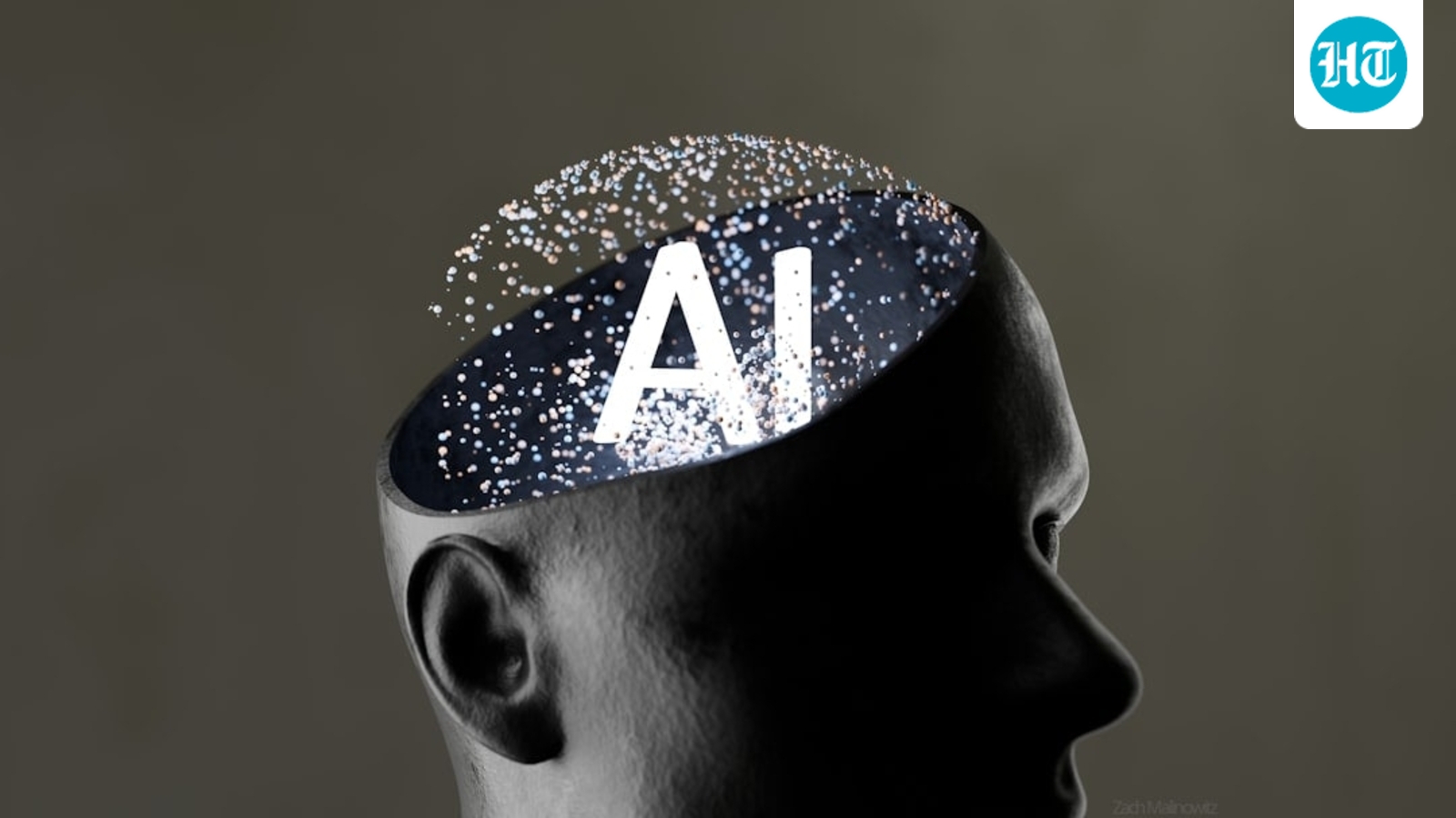
Companies are spending billions on Artificial Intelligence (AI), but many are making a strangely lopsided investment. They are spending heavily on the silicon and barely enough on the carbon.

The silicon is obvious: GPUs, cloud infrastructure, copilots, agents, foundation models and enterprise licenses. The carbon is us: the people expected to use all this technology productively.
That imbalance may explain one of the great puzzles of the AI boom. AI adoption is everywhere, but meaningful returns remain surprisingly elusive. A widely cited estimate suggests that as many as 95% of enterprise generative-AI initiatives fail to produce measurable return. McKinsey’s numbers are only slightly less sobering: Nearly eight in 10 companies use generative AI, yet a similar proportion report no significant bottom-line impact. About 90% of more ambitious vertical AI use cases remain stuck in pilot mode.
Companies often blame the technology. Frequently, however, the problem sits one layer below it: AI literacy.
I think about this through a pyramid.
Most of us understand the health pyramid intuitively. Good health does not begin with longevity drugs or biohacking. At the base are boring fundamentals: Sleep and diet. Then comes fitness, followed by mental wellbeing, and finally longevity. Trying to optimise longevity while sleeping four hours a night would be absurd.
Enterprise AI transformation works much the same way.
At the bottom of what I call the AI transformation pyramid sits literacy. Above it comes adoption, then workflows, then culture, and finally longevity, where AI has become an enduring organisational capability rather than another technology programme.
Yet most companies try to climb this pyramid upside down.
They begin by demanding ROI. Then they commission use cases, buy agents, redesign workflows and announce an AI-first culture. Somewhere near the end, somebody remembers that thousands of employees have never actually learnt how to work effectively with AI.
It is the corporate equivalent of signing up for a marathon before learning how to run.
This is where AI literacy bootcamps are becoming important. And literacy is not the same thing as training. Training teaches someone which button to press in a particular tool. Literacy gives them the capability to work confidently across tools that will themselves change every few months.
I describe this through my three laws of AI literacy.
The first: Everyone need not become an AI expert, but everyone needs to become AI literate. Companies understandably obsess over hiring AI engineers, data scientists and machine-learning specialists. But they represent perhaps 1% of the workforce. The real AI talent opportunity is the other 99%: the salesperson, HR executive, factory manager, lawyer, marketer, finance professional and CEO learning to work alongside models and agents.
The second law is that the definition of literacy itself has changed. For centuries, literacy meant reading and writing. Industrial society added arithmetic. In the AI age it becomes reading, writing, arithmetic and working with AI in everything you do.
That does not mean prompting ChatGPT occasionally. It means knowing what to delegate to AI and what not to; how to ask better questions; how to verify answers; how to protect confidential data; when hallucinations matter; how agents differ from chatbots; where human judgment must remain in the loop; and increasingly, how to redesign one’s own work around these capabilities.
The third law follows naturally: AI investments will not land unless the people expected to use them are AI literate.
This is where the return on investment (ROI) problem begins to make sense.
The first wave of enterprise AI largely bolted new technology onto old work. Give everyone a copilot licence. Add a chatbot. Automate one task. Celebrate the pilot.
But productivity revolutions rarely work that way. When factories first replaced steam engines with electric motors, productivity did not suddenly explode. The real gains arrived when factories were redesigned around electricity. McKinsey finds something similar with AI today: among the organisational practices it examined, workflow redesign has the strongest relationship with bottom-line impact. Its latest research finds that high-performing AI companies are far more likely to fundamentally redesign workflows than everyone else.
But it is not the tech or AI department who redesigns the workflow? A procurement executive understands procurement. A relationship manager understands banking customers. A plant engineer understands the production line. An HR leader understands hiring. They possess the domain knowledge required to decide which parts of their work AI should automate, augment or leave alone.
Without AI literacy, they cannot have that conversation.
This is why a good corporate AI literacy bootcamp is not another introduction to ChatGPT session. It should get employees actually working with AI on their own problems: researching, analysing data, creating presentations, summarising complex documents, working with images and video, building simple agents, interrogating spreadsheets and redesigning workflows. It should also teach the judgement required to know when not to trust the machine.
And literacy has to start from the top. CEOs and boards cannot delegate AI understanding to the CIO any more than they could delegate financial literacy entirely to the CFO. Leaders need enough literacy to ask intelligent questions about investments, risk, organisational design and where AI changes the economics of their businesses.
The pyramid matters because each layer rests on the one below it. Literacy creates adoption. Adoption reveals which workflows should change. Changed workflows eventually alter culture. Only then does AI become an enduring organisational capability.
Enterprises currently spend enormous sums ensuring they have enough AI. Perhaps the larger competitive advantage will belong to those that spend equally seriously ensuring they have enough human intelligence to use it. The AI transformation will certainly be powered by silicon. But its ROI will be decided by carbon.
(The views expressed are personal)
This article is authored by Jaspreet Bindra, founder, CEO, AI&Beyond and Tech Whisperer Ltd.
