



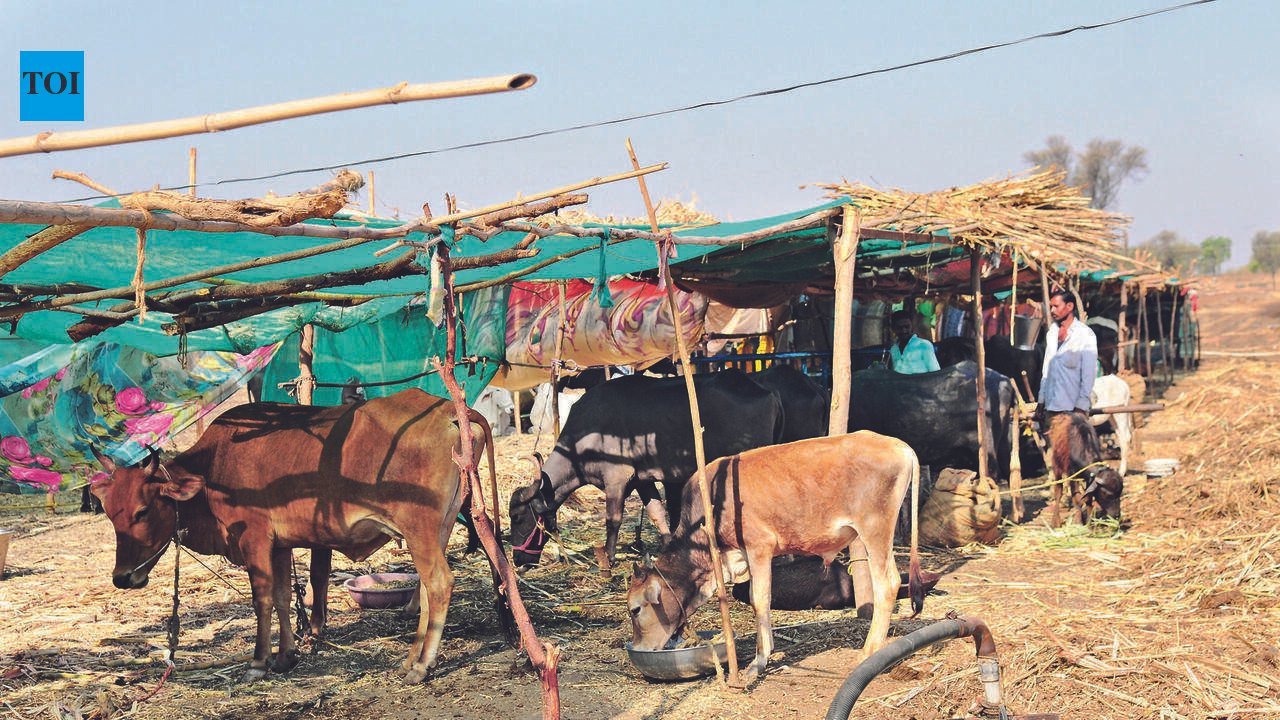
Yavatmal: The ongoing kharif season has brought severe drought-like conditions to Yavatmal district due to scanty rainfall. The crisis has now extended to livestock, with nearly 8.18 lakh animals in rural areas facing an acute shortage of fodder.The prolonged dry spell has created a serious fodder shortage, forcing several farmers to sell their bullock pairs and cattle. The shortage has also triggered a sharp decline in cattle prices, causing substantial financial losses to livestock owners.According to the district administration, Yavatmal currently has 8,17,932 livestock, requiring around 85,929 metric tonnes of fodder every month.At present, the district has approximately 3,35,598 metric tonnes of fodder stock. The available fodder is expected to last for varying periods in different talukas, ranging from around 70 to 157 days.Yavatmal and Ralegaon talukas have fodder stock expected to last until January 31, 2017, while Babhulgaon has stock for around 157 days. Kalamb, Malegaon, Umarkhed and Pandharkawada have fodder available for approximately 120 to 125 days.Ner, Wani, Zari-Jamni, Arni, Darwha, Digras, Pusad and Mahagaon have fodder stocks sufficient for around 90 to 95 days.Following the declaration of drought, govt has announced various relief measures and concessions. The administration has also begun focusing on the availability of drinking water and fodder.The drought has forced several farmers to put their livestock up for sale, with bullocks accounting for a significant portion of the animals being sold. The impact is clearly visible in the cattle markets at Kalamb, Ghatanji, Arni and Pusad, where prices of bullock pairs have reportedly fallen by nearly 25% to 30%. A bullock pair that previously fetched around ₹2 lakh is now being sold for approximately ₹1.50 lakh to ₹1.60 lakh.Farmer Raju Hete said that cattle markets in the district earlier witnessed around 300 bullock pairs being brought for sale. However, the number has now fallen to just 50 to 60 pairs.“Due to the shortage of fodder, prices of bullocks have fallen by nearly 25 to 30 per cent. If the fodder shortage continues to worsen, prices are likely to fall further,” he said.Hitesh Raut, a farmer from Aheralli, owns 12 acres of farmland and had traditionally relied on bullocks for agricultural operations. However, the severe shortage of fodder forced him to sell his bullock pair. He is now using a tractor for farming operations.Dr Mangesh Kale, deputy commissioner, Animal Husbandry and Dairy Development Department, Yavatmal, said applications are being invited from livestock owners as part of measures to tackle the drought-like situation.“Farmers who have irrigation facilities should undertake fodder cultivation. Fodder seeds will be provided with a 100 per cent subsidy so that the fodder shortage can be addressed,” Dr Kale said.
