



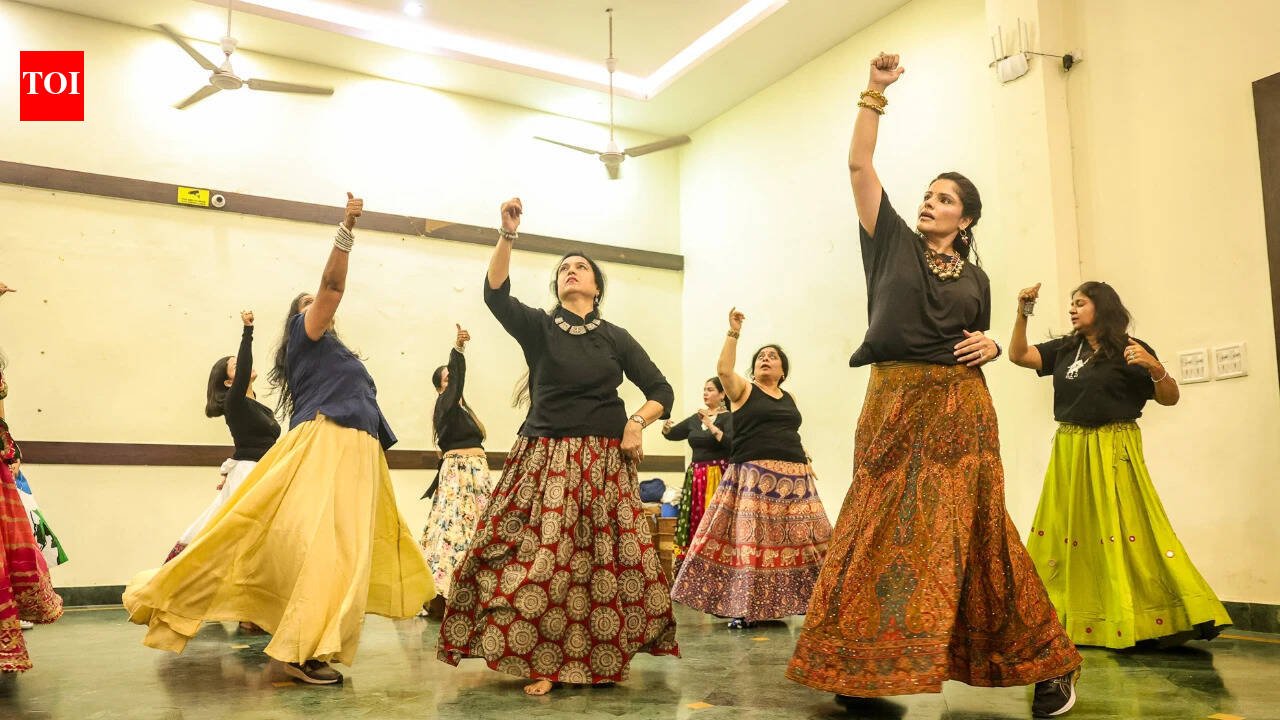
With Navratri just a fortnight away, NCR residents’ weekday evenings and weekends are getting a festive spin as dance enthusiasts learn garba and raas from experts. Planning to head to a garba night during Navratri? Brush up on the basics so you can snap-clap-twirl and keep pace with the circle during these community celebrations.
‘Keeping it simple, authentic so more people can access this cultural experience’
‘Garba isn’t about perfection’At Lok Utsav Foundation, director Yamini Dikshit says the learning process is similarly structured to take beginners from basic movements to fuller sequences. “Garba is not about performing perfectly; it is about participating and enjoying the experience. Our one-month workshop follows a gradual learning process, beginning with basic hand and leg movements before moving to six Garba and five Dandiya sequences. Towards the end, we introduce formations such as heench and teen taali.”Yamini adds, “One thing we consciously maintain is the authenticity of the dance form. While we do use a variety of music, from traditional Garba compositions to carefully selected Bollywood tracks, we don’t believe in changing the fundamental character of Garba simply to follow a trend. Our choreography continues to be rooted in traditional movements and steps. At the same time, our participants have evolved over the years. Those who have been with us since the early days now often look forward to more complex, faster-paced movements because they have developed a strong foundation. On the other hand, participants who may prefer a slower pace look for simpler movements. As instructors, we try to strike a balance between the two, creating choreography that is challenging enough for experienced dancers while remaining accessible to beginners. The biggest takeaway is perhaps that Garba is not about performing perfectly, it is about participating and enjoying the experience. For many of our students, the workshop becomes a much-needed break from their everyday schedules. They come in after work, college or school, spend an hour dancing, meeting people and learning something new, and leave feeling energised. Over time, the classroom becomes a community, and many participants form friendships and memories that go beyond the workshop itself.”Professional dancer Ishita Choudhary, who is learning the form for the first time, shares, “Mujhe FOMO ho raha tha, so I joined the classes. I love the fact that everyone is in a whole circle, doing the same thing. There’s this amazing synergy when everyone is moving together.”Garba instructor Jahnvi Doshi from Thangaat Garba shares, “What makes the response particularly special is the diversity of participants. People from different communities and backgrounds are coming together to learn Garba, discover its culture and experience the infectious energy of dancing as a community.” Doshi adds, “The response reflects how Garba is becoming a more inclusive cultural experience.”‘Keeping it simple, authentic so more people can access this cultural experience’Across centres, garba sessions are bringing together first-timers, seasoned dancers, children and older participants, all working through the steps ahead of Navratri. Choreographer Bharat Singh Rajawat, who has been teaching garba in Delhi for 15 years through his venture Garbaholics 360, has simplified his choreography this year. “Our focus this year is to keep it simple. I have kept the moves very easy and have focused on authenticity so that more people can access this cultural experience.”
Choreographer Bharat Singh Rajawat, who has been teaching garba in Delhi for 15 years through his venture Garbaholics 360, has simplified his choreography this year.
Delhi-based choreographer Manpreet Singh, founder of Moksha Performing Arts, who conducts classes across South Delhi, shares, “Garba is traditionally a form of devotion to Maa Amba, performed to folk aartis and devotional music. In my classes, I try to keep that authenticity alive by using Gujarati garba songs, teaching traditional steps and then bringing everyone into the circle, which is the traditional format. At the same time, I understand that the Delhi audience enjoys trending music, so I occasionally add viral Garba songs and create engaging combinations with my students.”From nostalgia to workout: Different reasons bring people to garba classesGarba classes are becoming a bridge between different experiences. Harshit Kakaria, an artist who grew up in Ahmedabad, misses the scale of celebrations back home. In Delhi, joining classes has given him a way to reconnect with the culture. “Being away from home, it’s good that I get to explore the garba culture here as well,” he says.
“From seven-year-olds to 70-year-olds, we have people learning together, and we are happy that even the men are joining us,” says Rachna Duggal, who has been attending the workshop every year
Meanwhile, Sanchay Chaudhary, a banker from Mumbai, shares, “It’s a nice workout, and it also helps me freshen up after a hectic day,” he says. Nanvar Hrangkhawl, a college student from Tripura shares, “When you perform in a group, there is this collective happiness that you get to share in a circle. It’s really fun”For others, learning the steps is also about reclaiming a part of their own cultural identity. “My Gujarati side comes alive during these nine days,” says Mansi Parmar, who has grown up in Delhi, who wanted to sharpen her technique. “I saw how the workshop instructor gives shape to the steps, something that I, as a Gujarati, also wanted to improve.”
‘What makes the response particularly special is the diversity of participants’
