



New Delhi: No matter how the rivalry evolves, an India vs Pakistan cricket clash invariably comes with a little touch of history. This time, the footnote is that the two neighbours will be facing each other for the first time in Asian Games.
Less than 24 hours earlier, it became clear that India would potentially face Pakistan three times at next year’s ICC ODI World Cup. As the rivalry becomes increasingly one-sided in recent encounters and across formats, another chapter awaits in Nisshin, with a gold medal at stake.
Pakistan have lost their last six T20Is against India, and Farhan’s side will be looking to arrest that run. It helps that India – also the reigning world champions – have fielded a star-studded squad for the tournament in a bid to defend gold as compared to Pakistan’s second string squad
For all the weight an India vs Pakistan contest carries, if it still does, beyond the geopolitical realm, Saturday’s Asian Games final could well be decided in the first six overs. Rain has already disrupted at least five matches at the venue and could have a say in the final too even though weather predictions suggest otherwise.
India, meanwhile, have shown a preference for getting the job done quickly, but conditions could dictate a different approach. On a surface that has offered turn and uneven bounce, how both sides negotiate the powerplay and the middle overs could shape the contest. India have the cheat code with a fiery top-order boasting of Vaibhav Sooryavanshi, Abhishek Sharma followed by Sanju Samson and Ishan Kishan.
“We know the conditions, they are not going to be so easy. They are also a spinner-friendly team,” said India’s Kishan after his knock against Sri Lanka in the semi-final.
The opening overs will also bring an intriguing individual contest into focus. Pakistan captain Sahibzada Farhan against Jasprit Bumrah. Farhan showed in the T20 Asia Cup that he can take on the Indian pace spearhead, having struck him for two sixes in their previous T20I meeting.
But Bumrah comes into the final on the back of a devastating opening spell against Sri Lanka, where he picked up two wickets in his first over. Farhan also has two half-centuries against India and will be keen to draw on that experience in the gold-medal match. Whether he can counter Bumrah’s new-ball threat could have a significant bearing on Pakistan’s start.
The defending champions entered the final after a 124-run demolition of Sri Lanka, while Pakistan reached the summit clash by beating Bangladesh by six wickets in a rain-shortened semi-final.
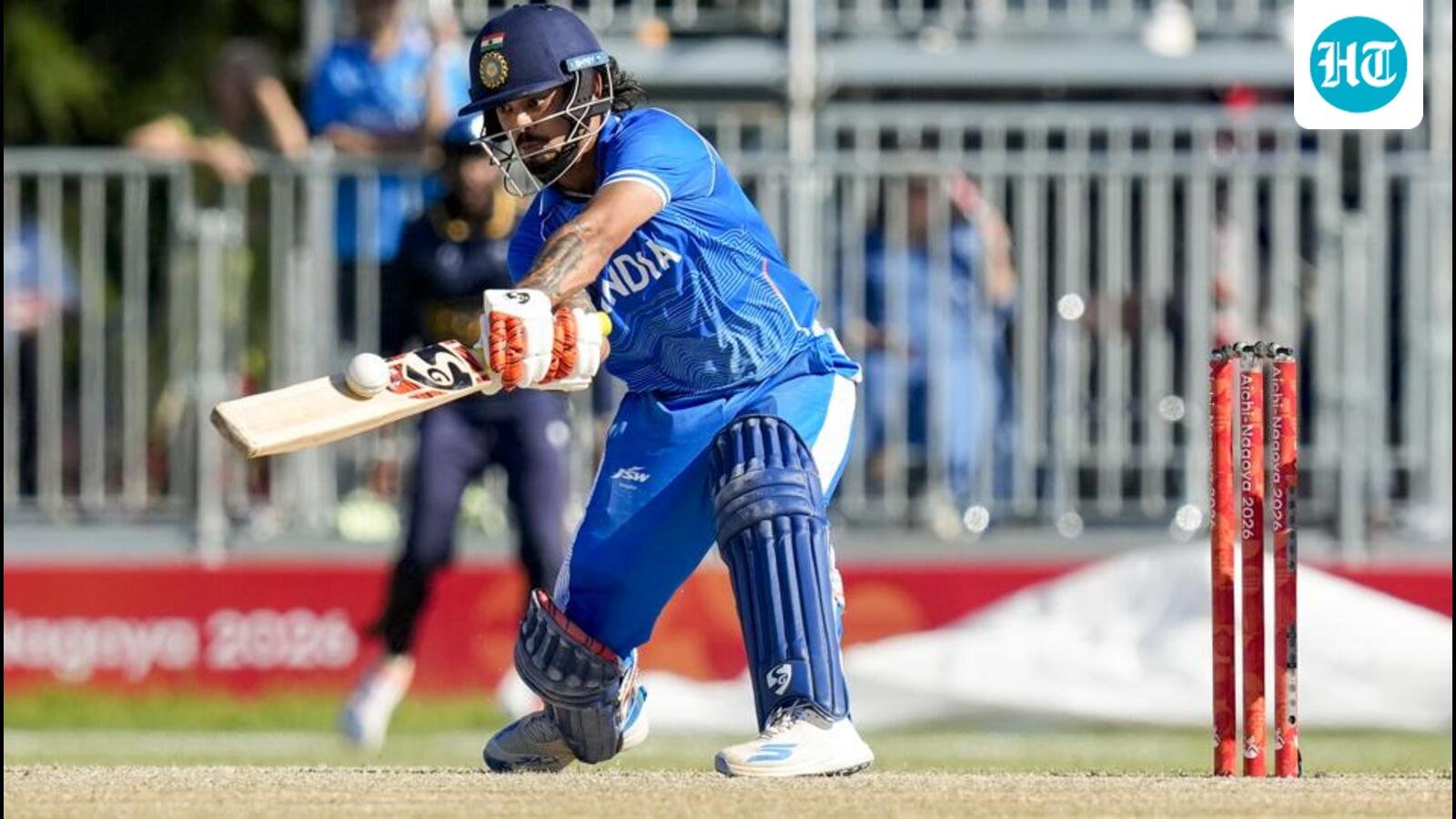
Kishan admitted he was not entirely comfortable at the crease against Sri Lanka but still produced a commanding 80 off 46 balls. Vaibhav Sooryavanshi, making his Asian Games debut, added 38 off 21, underlining India’s batting firepower.
Pakistan, in comparison, looked less assured with the bat in their rain-reduced chase against Bangladesh, losing wickets at regular intervals before Abdul Samad’s blazing 30 off 15 balls took them home.
India handed the 15-year-old Sooryavanshi his debut in the semi-final, with Sanju Samson moving down to No. 3. Whether they retain that combination against Pakistan will be worth watching.
Pakistan, meanwhile, have an inexperienced bowling attack but are likely to persist with their spin-heavy combination with their two wrist spinners Abrar Ahmed and Sufiyan Moqim and Saim Ayub and Arafat Minhas.
India also opted to leave out Arshdeep Singh and fielded Bumrah as their lone frontline fast bowler in the semi-final. It’s unlikely that there will be a departure from that combination, with Axar Patel, Washington Sundar, Ravi Bishnoi and Abhishek Sharma’s off-spin offering variety.
The battle for gold could come down to which team handles the spin threat and maximizes the powerplay. Here’s hoping the drama on the field outdoes the theatrics of the no-handshake episodes.
