



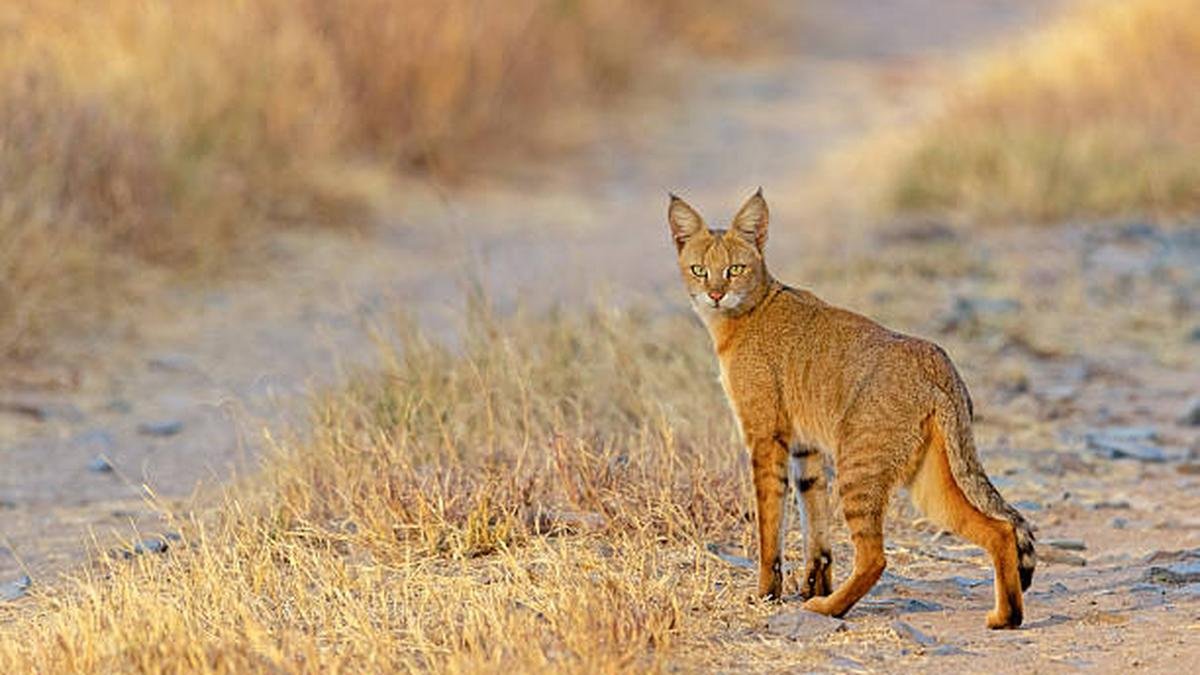
Secondary grasslands that grow in ther place, consist of species that are taller, with greater leaf area.
| Photo Credit: Getty Images
(This article forms a part of the Science for All newsletter that takes the jargon out of science and puts the fun in! Subscribe now!)
Ancient grasslands, one of the least valued ecosystems, support a phenomenal diversity of wildlife, create livelihoods of billions of pastoralists, and store one-third of Earth’s terrestrial carbon. But they are often considered “wastelands,” ripe for development, mining, power projects or afforestation drives.
Now a new global study has found that once destroyed, grasslands that grew for millennia can almost never regenerate the same way, at least for a century. When they do “recover,” the secondary grasslands consist of different species that are taller, with greater leaf area, found a study published in the Proceedings of the National Academy of Sciences.
This phenomenon, said the paper, owes to altered ecological conditions, including soil nutrients and pH levels that are no longer suitable for old grassland flora. In their place are established plants that are taller, had higher specific leaf area, and lower dry-matter content, and non-native annuals, found the scientists, including a researcher at the Indian Institute of Science Education and Research in Pune.
For the study, researchers gathered data on 742 plant species from species in India, Australian, and Brazilian savannas and the iconic “big four” prairie grasses of the United States and compared old-growth grasslands flora with secondary grasslands species. “Notably, these trait differences that make old-growth grassland plants more resource conservative and secondary grassland plants more resource acquisitive persisted over a century,” said the scientists.
Old-growth plant species include fire-prone, megafauna-grazed ecosystems such as North American prairies, Australian savannas and Indian savannas, while secondary grasslands consist of a mix of native and non-native species, the paper stated.
Secondary grasslands, on the other hand, contain fewer plant species than the old-growth grasslands they replace. The paper provides examples: many native perennial grasses and forbs that are characteristic of old-growth grasslands can be missing or replaced by non-native weedy annuals in secondary grasslands, particularly in the initial decades of recovery.
These findings underscore the importance of old-growth grassland conservation, said the paper, which also provides guidance to recover grassland biodiversity through ecological restoration.
Alas, natural grasslands cannot entirely be restored. However, in the Thar desert, Kutch, the Deccan, the Terai and in the Assam flood plains “I have seen restoration and the return to grassland obligated species, Asad Rahmani, a leading Indian conservationist and an ornithologist told The Hindu.
For example when the Solapur grassland was restored, it brought back the endangered bustard; in Kutch the grassland restored by the Corbett Foundation, brought the back lesser florican and many larks, warblers, white-browed bush chat; and on the Orange grasslands in Assam, the pygmy hog has been successfully reintroduced, Prof. Rahmani told The Hindu . “We need a National Grassland Restoration Programme along with the National Grazing Policy, he added.
With 15 per cent of the livestock of the world in four per cent of surface area of the world, India does not have any programme or policy to restored the grasslands. “This needs to change for our livestock and wild animals that live in grasslands,” Prof. Rahmani told The Hindu.
From the Science Pages
Question Corner
Why is some music able to make us cry?
Flora and Fauna
Published – September 30, 2026 11:36 am IST
