



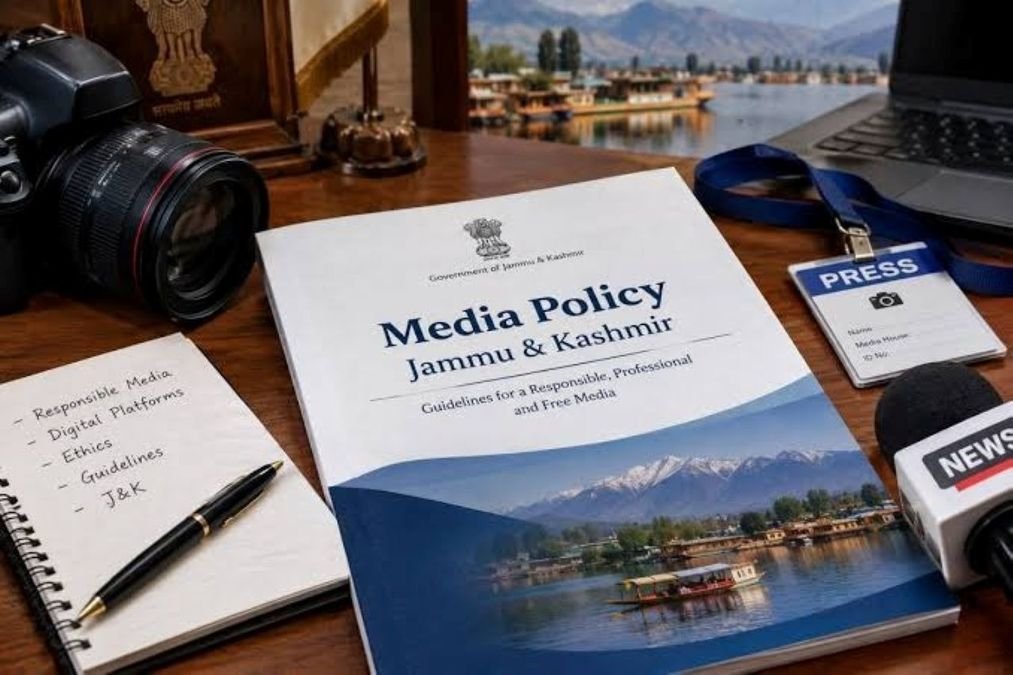
The Jammu and Kashmir Government’s decision to introduce a New Media Policy, 2026, reflects a concern that can no longer be ignored. Digital platforms have transformed the way news is produced, circulated and consumed. But alongside genuine journalism, the online space has also witnessed the rise of anonymous handles, unregistered portals and social media accounts that publish unverified, misleading or fabricated claims. A regulatory framework, therefore, is necessary. Yet the need for regulation must not become an excuse for excessive control. The government’s proposal to bring online news platforms within a formal registration and accountability framework is understandable. District administrations are expected to maintain lists of unregistered social media news handles, while the Information Department will formulate guidelines and standard operating procedures. Existing laws, including the Information Technology Act, the Bharatiya Nyaya Sanhita and the Bharatiya Nagarik Suraksha Sanhita, are also being cited to deal with unlawful online activity. However, the success of the policy will depend less on its stated objectives and more on the manner in which it is implemented. Terms such as “misleading,” “unethical” or “anti-national” can be interpreted broadly. If these expressions are not clearly defined, they could be used selectively against criticism, dissent or uncomfortable reporting. Any new policy must establish transparent procedures, independent scrutiny and a fair opportunity for media organisations and individuals to respond before punitive action is taken. The proposed provisions concerning de-empanelment of media houses and withholding of government advertisements deserve particular caution. Government advertising should not become an instrument to reward favourable coverage or punish critical journalism. Financial pressure can undermine editorial independence as seriously as censorship. Any decision affecting advertisements or accreditation must be based on publicly known criteria, supported by evidence and subject to appeal. The concerns voiced in the Assembly about fabricated content and impersonation are valid. So is the observation that political parties and elected representatives have themselves contributed to the expansion of social media. Public figures routinely use digital platforms to shape narratives, promote activities and reach voters. They must, therefore, accept that accountability cannot apply only to journalists and independent publishers. Official publicity mechanisms and political communication also require transparency. The government’s cybercrime coordination centre and the DIPR’s fake-news monitoring cell can play a constructive role if their work remains evidence-based and open to scrutiny. Swift rebuttals are useful, but an official denial should not automatically be treated as the final word. Jammu and Kashmir needs a media policy that distinguishes journalism from propaganda, error from deliberate fabrication, and criticism from criminality. Regulation should strengthen public trust, not weaken press freedom. The right response to misinformation is better journalism, transparent governance and due process, not an opaque system that places every digital voice under suspicion.
