



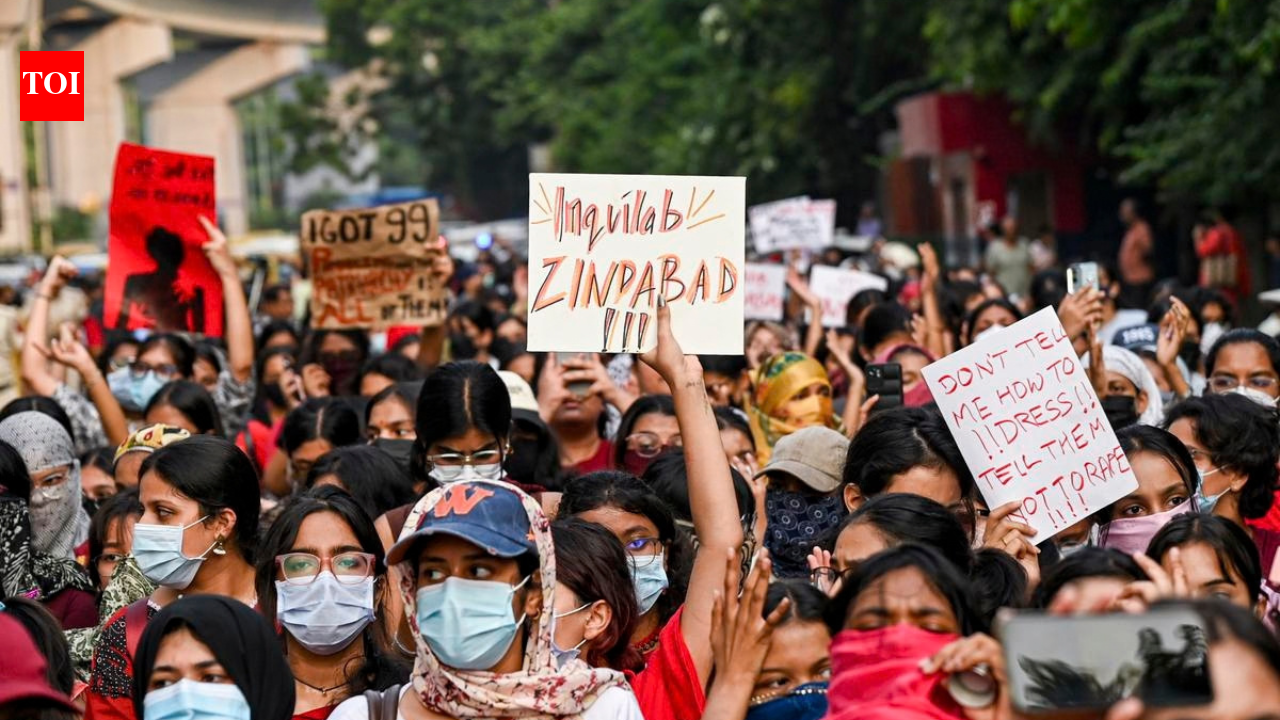
Reached? – The question women’s safety begins and ends withAnusha Garg, a third-year journalism student and President of the LSR Students’ Union, expresses what every woman occupying public spaces in Delhi feels:This week, after a minor was reportedly gang- raped in a South Delhi, my first instinct was: safety had to come first. But I kept returning to the one contradiction – the danger was outside, yet we were the ones being asked to retreat.Women’s safety is not something we discuss only after a disturbing headline. It is built into our everyday plans. Among friends, “reached?” is almost a form of punctuation. If a college event ends late, the conversation changes quickly, “Metro or cab? Is that road crowded? Should we leave together? Share your location. Call when you reach”. These calculations become so routine that we barely register them. But there is a thin line between protection and restriction. “Come home early” can become the answer to a problem women did not create.
‘Police commissioner had a meeting with us in the auditorium Thursday morning, sharing safety precautions with us. There has been police deployment since Tuesday, but let’s see if it helps the safety issue. The back gate is always secluded and unsafe, we never take this route alone,’ shares Gudia, second year Hindi student, who lives near Badarpur (Pic: @du_beat)
National Crime Records Bureau (NCRB) data show that 13,396 crimes against women were registered in Delhi in 2024. Registered crime is not the same as the full prevalence of violence, but the figure makes it impossible to dismiss the anxiety women carry through the city. And that anxiety has a cost.A spontaneous evening out for a male friend comes with logistical queries for us: route, transport, company, phone battery, one last message home. “Stay home” cannot be our final safety policy. If women withdraw whenever public spaces feel unsafe, those spaces do not become safer; they simply become devoid of women. I will still share my location. I will still text “reached”. Precautions matter. But a safe city cannot be one where women become experts at disappearing. It has to be one where our presence requires no explanation.– As told to Sara Siddiqui
