



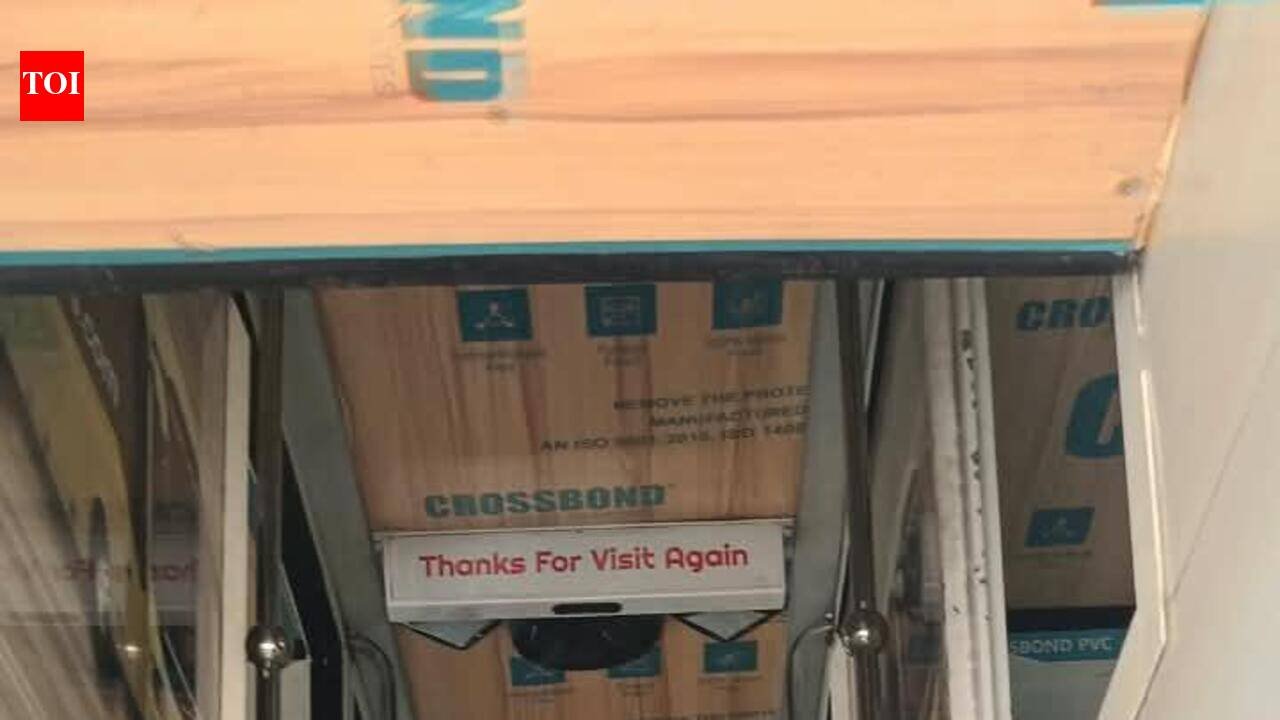
Ghaziabad: A day after one of the most horrifying bus tragedies seen in the region, a private air-conditioned sleeper bus at Kaushambi depot was being readied around 8 pm for its next run, a 600-odd km journey to Sitamarhi in Bihar. When TOI boarded the vehicle, it found that the ceiling was made of plywood, the fire extinguisher near the driver’s seat was jammed in its stand, and the first aid box was locked. The emergency exit at the rear was rusted, and its handle was stuck.Workers at the depot told TOI that the fitness inspection before a long-distance departure covers only tyre pressure and brake gear. The air-conditioning and the battery panel, both major causes of bus fires, are never checked.“As part of the fitness inspection, the bus was washed, its tyre pressure and brake gear were checked,” the bus’s cleaner said.Rita Devi, a Sitamarhi resident, sitting at a roadside eatery outside the bus stand with her husband after his check-up at AIIMS to take the bus, said she would have preferred a train. “I could not get a train ticket so we had to opt for a private bus. I feel scared, especially with buses speeding all the time, but for now this will have to do,” she said.
Spot the emergency exit
When TOI reviewed AC buses plying from Noida’s Sector 37, it found staff largely unaware of basic safety protocols. A helper on a 52-seat AC sleeper bus on the Noida-Bihar route said he did not know the AC servicing schedule. The bus carried a first aid box and a fire extinguisher, but he could not show what the box contained.“It’s there,” the helper, who did not wish to be named, said plainly. He said the driver had kept the extinguisher on board but was himself unaware of its inspection status. The bus runs with two drivers and one helper.On another bus parked at the same spot, bikes and scooters were loaded into the luggage compartment without checks. Staff neither verified the vehicles nor inspected the compartment, raising questions about whether operators follow basic screening protocols.
Bikes going into luggage compartment
Every evening, scores of AC sleeper buses bound for Bihar and eastern UP stop by along Yamuna Expressway to pick up passengers. “These buses usually originate from Kashmere Gate in Delhi, and when we book tickets, we are told to board the bus at Yamuna Expressway and multiple places. We wait there at a given time and board it,” said a commuter waiting for a bus near Chilla.Chirag Jain, who helps bus operators with paperwork, said no sleeper or double-decker buses are registered with Ghaziabad or Gautam Budh Nagar RTOs. The buses originate at Delhi’s ISBT, he said, and the two districts are only transit routes where operators pick up passengers at will along Noida Expressway, especially in the evening, in full view of the traffic department and RTO.“The vehicle’s fitness certificate should be mandatorily renewed every two years, but private bus operators somehow find a way to bypass it. The RTO and the traffic department carry out on-and-off inspections of valid papers, even resulting in challans, but that, it seems, is not enough to bring the practice to an end,” Jain said.A commuter standing on the expressway to catch a bus to Agra said there were many formalities, like permits, RTO inspection, speed limits, and highway patrolling, that are mandatory for buses. “While boarding one, we rarely stop to think if these papers and permits are in place,” he said.
Fire extinguisher that can’t be taken out
RTO data shows 8,812 accidents have taken place on Yamuna Expressway in the last 14 years. In 2025, the expressway recorded 1,198 accidents in which 113 people died, and 562 were injured.On Wednesday, nine passengers were killed when a private AC sleeper bus (BR32PA8647) travelling from Kashmere Gate in New Delhi to Mahoba caught fire near the 33km milestone on Yamuna Expressway in Jewar. A short circuit or spark in the AC system is suspected to have triggered the fire, possibly igniting the engine’s lubricant oil.KS Nandan, regional manager of UPSRTC, said the corporation conducted classes by fire safety personnel for drivers and conductors during peak summer about the safety processes that need to be followed. “But when it comes to private bus operators, these norms are hardly followed. Short circuit tests of either AC or battery panels, which are the major reasons for fire alongside smoking, are typically skipped by private operators,” he said.Nandan added that the emergency gate of a bus must be painted in a different colour from the body of the bus. But this too was rarely the case when it came to the private buses plying from the NCR depots. The emergency exit of the private sleeper bus that TOI checked on Thursday too was painted black and blue like the rest of the vehicle.RTO PK Singh said operators must ensure a bus is fit before any long-distance journey. He said an All India Tourist Permit requires a fitness test at an Automated Testing Station every two years, but private operators bypass even that.In Feb this year, a suggestion was made to install scanners at toll plazas, with software linked to a vehicle permit database, to enable effective checks. It has still not been enforced.In Feb this year, a suggestion was made to install scanners at toll plazas, with software linked to a vehicle permit database, to enable effective checks. It has still not been enforced.
