



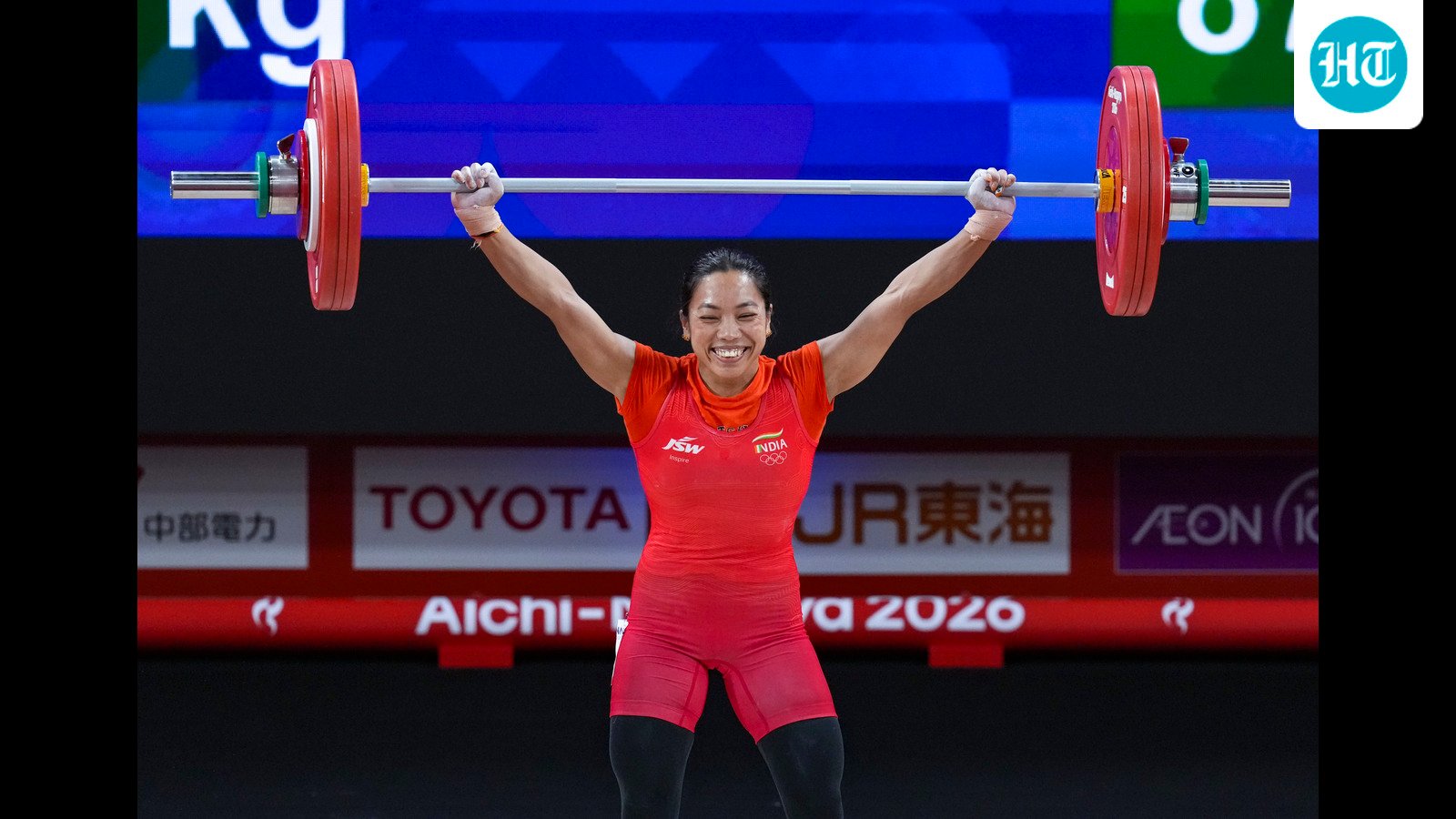
New Delhi: Elite sport runs on precision but the female body doesn’t always follow the script. After all, the barbell doesn’t care if you’re cramping, the runway doesn’t care if your body feels heavier, and the weighing scale doesn’t care if your body is retaining water.
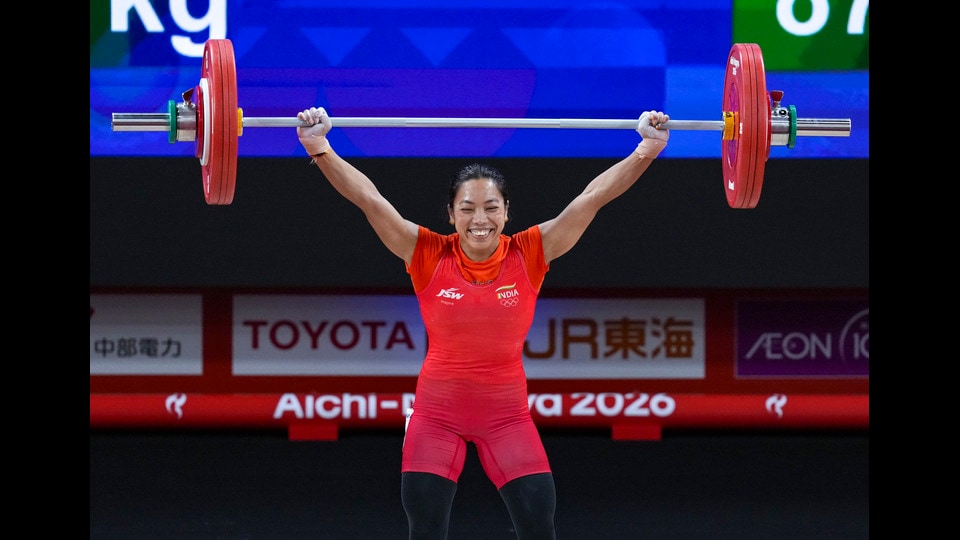
Gyaneshwari Yadav, and Ancy Sojan are elite Indian female athletes who have acknowledged in the past that the biggest variable is sometimes their own body, menstrual cycles, and hormones. They begin their Asian Games campaigns this week. Mirabai Chanu spoke about her cycle affecting her performance at the 2024 Paris Olympics.
“It was the first day of my period,” Gyaneshwari said immediately after her silver medal-winning lift at the Glasgow Commonwealth Games in July. “I didn’t know how my body would respond.”
It was a candid admission that offered another glimpse into the challenge they have long dealt with but seldom discussed publicly.
For long jumper Ancy Sojan, that shift is deeply personal. Behind her 6.88m jump that erased Anju Bobby George’s 22-year-old national record this year lies an often invisible battle with Polyendocrine Metabolic Ovarian Syndrome (PMOS), earlier termed Polycystic Ovary Syndrome (PCOS)/Disease (PCOD).
The leap was built not just on technical improvements, but on learning to manage a body that often refused to cooperate. “I have PCOD and weight gain problems,” Sojan told HT before heading to Japan. “It affects me mentally and physically. As a jumper, I need to stay lightweight, so I have to work extra hard.”
For Sojan, irregular periods don’t simply mean discomfort for a few days every month because they also dictate how her body responds to training. “The first month if my period doesn’t come, it’s manageable,” she said. “But if it doesn’t happen the second month, it starts affecting my body. I can’t perform well, can’t sleep well, gain weight…”
Although Gyaneshwari’s cycle is regular enough for her coaches to tweak her routine, she still customises training based on how her body responds. On the first two days of her period, she avoids heavy squats and lower-body strength work.
“Competition doesn’t wait,” she told HT, explaining that the broader training plan remains unchanged because athletes must be ready to perform at any time. “I could get my period even if I am at a major tournament, as it happened this time at CWG, so I also need to be used to it.”
Delayed periods can leave her feeling bloated, heavier and mentally drained for weeks, with no certainty when her body will recover.
Gyaneshwari uses heating pads to ease cramps and turns to dark chocolate for comfort before gradually resuming full training.
With PCOS delaying her periods for weeks, Sojan and her support team have tried natural remedies such as papaya and sesame laddoos in the hope of inducing menstruation, though with little success.
“My muscles feel loose. I gain weight and I don’t even feel like I look like an athlete,” Sojan said. “More than injury risk, I feel this affects my journey mentally and physically.”
“I love biryani and rice,” she laughed. “But I stopped eating them. I cut artificial sugar, reduced carbohydrates because I have to maintain my weight.
“The first two days when my period arrives… I feel dead,” she said. “But after they arrive, I feel so much better.”
Beyond ‘cycle syncing’
Social media has popularised the idea of “cycle syncing” but sports scientists caution against treating it as a one-size-fits-all solution.
“The commercial wellness industry has popularised cycle syncing,” Dr Samuel Pullinger, head of performance science at the Inspire Institute of Sport, told HT. “But in high-performance sport, it’s really based around individual symptom tracking over time, not following a generic template.”
Current research reflects that complexity and a need for immense flexibility and individualisation.
“At IIS, we track athlete data and vary training in line with their menstrual cycle,” Pullinger said. “As you gather more data, you begin seeing trends across the month. Then you can link those trends to the menstrual cycle.”
As a result, recovery sessions or lighter training blocks are often better scheduled around the pre-menstrual or early bleeding phase, when pain and other symptoms are less well tolerated. Technical sessions may suit other phases better. But Pullinger stresses that no single factor determines training.
How India sees it
Despite growing awareness, Pullinger believes this is a conversation India is still learning to have as it still trails leading sporting nations in female-specific sports science, particularly at the grass-root level.
“There’s still a significant gap between India and leading nations when it comes to female-specific sports science,” he said. “Sports science itself is still relatively new in India. There is also still a bit of taboo.”
For Sojan, embracing rather than resisting her body’s natural rhythms has become essential to her journey. Gyaneshwari found comfort and motivation in sharing her anxiety with her coach, Alakesh Baruah, on the morning of her CWG medal performance. However, athletes who can train taking into account their bodies and hormones and have a supportive team are still a minority.
