



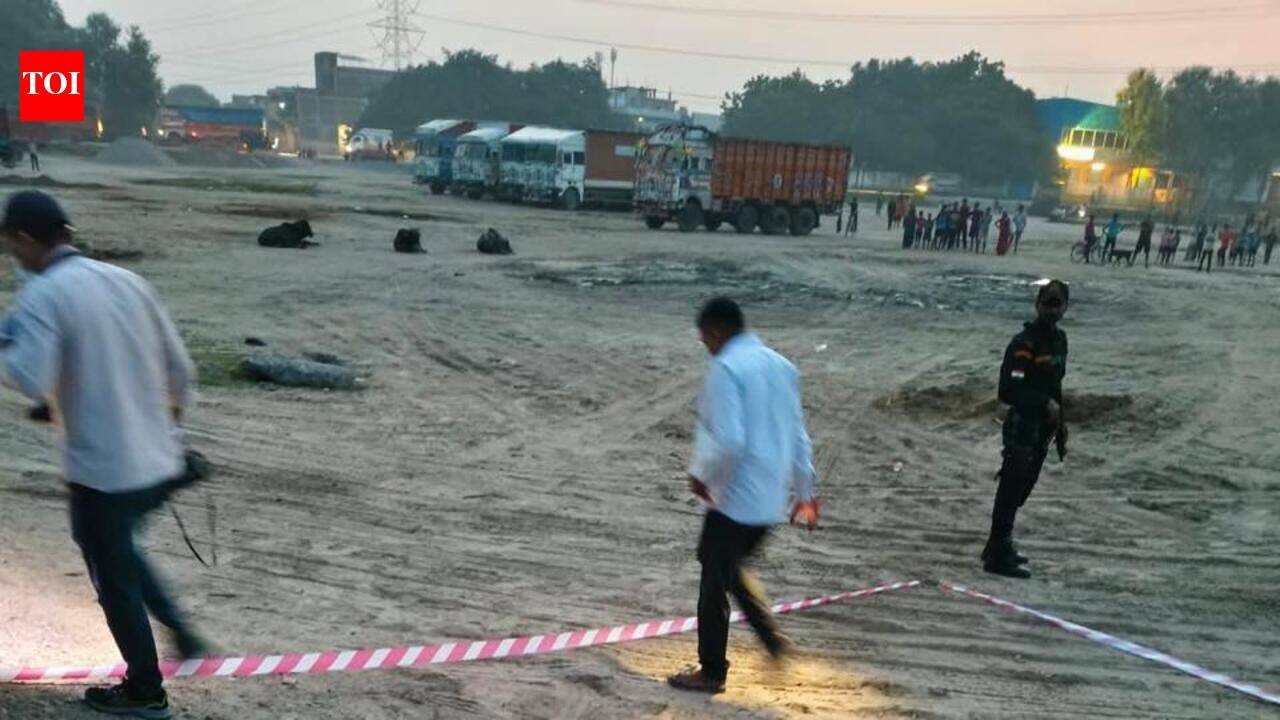
Lucknow: Brijesh Ganjhu, a key Tritiya Prastuti Committee (TSPC) commander, who was killed in an encounter with Uttar Pradesh Anti-Terrorist Squad (UP ATS) in Varanasi on Sunday, was once briefly associated with CPI (Maoist) before forming a rival extremist outfit and later entering local politics as an elected village head.UP ATS said Ganjhu had been among the most wanted operatives linked to extremist violence in Jharkhand’s forested belt. He carried a total reward of ₹30 lakh, comprising ₹25 lakh announced by Jharkhand Police and ₹5 lakh by National Investigation Agency (NIA).Officials said Ganjhu was known by multiple aliases, including Gopal Singh Bhokta, Dular Chand, Ranjan, Phulchand and Sardar. He was a resident of Lutu Sohawan village under the Lawalong police station area in Jharkhand’s Chatra district.According to senior officials associated with the probe, his early association with the extremist movement began with CPI (Maoist). He later split from the organisation and, in 2004, helped establish TSPC as a rival outfit. The formation of TSPC reshaped the extremist landscape in parts of Jharkhand, with the group attempting to build its own influence in areas traditionally dominated by the Maoists, officials said.Security agencies said TSPC under Ganjhu expanded operations across Chatra, Ranchi, Hazaribag, Ramgarh, Palamu and Latehar districts, and also extended activities into parts of Bihar.Ganjhu also entered local governance. In 2010, he was elected unopposed as the Mukhiya of Lawalong panchayat. Police, however, continued to identify him as an important figure in TSPC and maintained that his political position did not end his alleged links to the outfit.For nearly two decades, TSPC and CPI (Maoist) were locked in a violent rivalry in several pockets of Jharkhand. Officials said the contest extended beyond ideology and was tied to territorial influence and extortion networks, affecting civilians in areas such as Lawalong, Kunda and Pratappur.UP ATS said more than 45 cases were registered against Ganjhu, including murder, attempted murder, kidnapping, criminal conspiracy, extortion, arson, attacks on public servants and illegal possession of arms and explosives, besides provisions under the Unlawful Activities (Prevention) Act. The agency said he remained elusive for nearly 20 years, frequently changing appearance and locations to evade tracking.
