



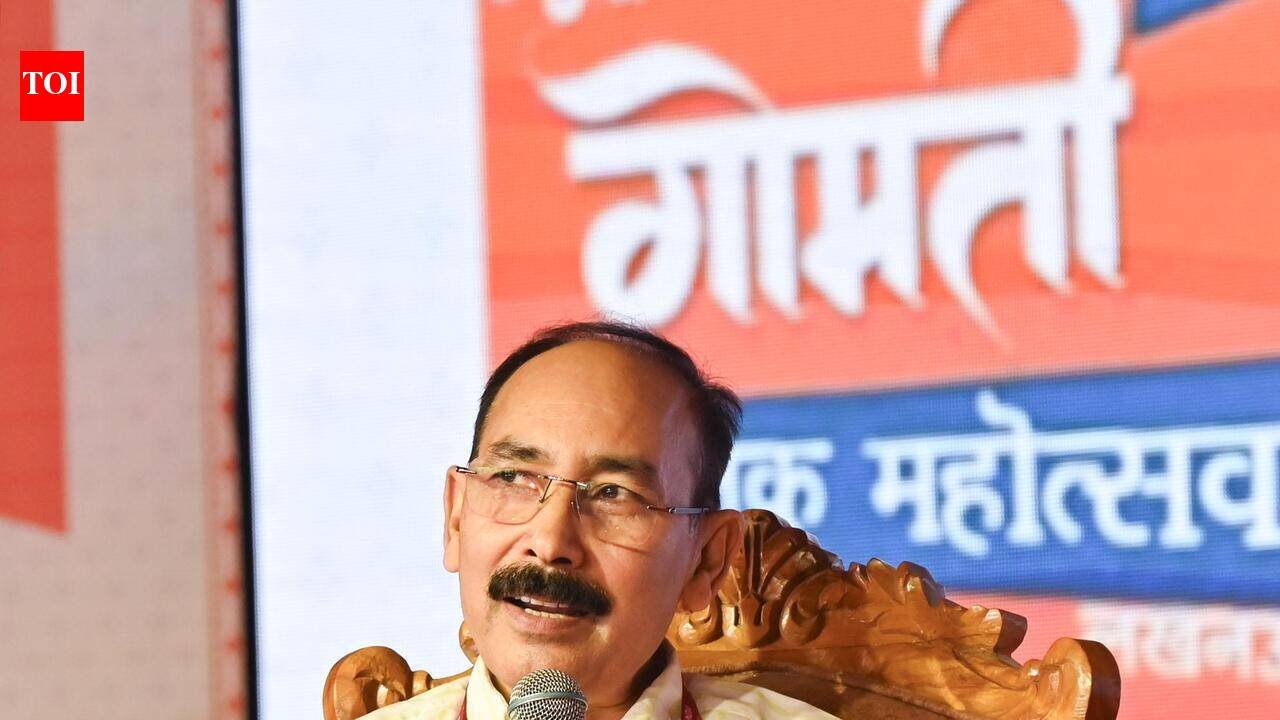
Lucknow: What if the woman who is remembered as the cause of Lord Rama’s exile was, in fact, one of the silent architects of his greatness?In the familiar telling of the Ramayana, queen Kaikeyi is often portrayed as the mother whose demand sent Lord Rama into the forest. Yet, beneath this tragedy lies a more profound relationship—one shaped by duty, sacrifice, love and the testing of moral consciousness.Scholar and author Rahees Singh offered a striking perspective on Kaikeyi’s place in Rama’s journey at the Gomti book festival on Sunday.“If you reduce Lord Rama to an idol, a statue or a framed picture, you would not need Kaikeyi. But if you wish to see Lord Rama through the lens of pure compassion, that Lord Rama cannot be realised without stepping out through the doorway of mother Kaikeyi,” said Singh.He added that Kaikeyi, remembered as a warrior queen with knowledge of warfare and statecraft was not merely Lord Rama’s stepmother. She loved him deeply. Her demand for his exile can therefore be viewed in this interpretation, not simply as an act of hostility but as a painful catalyst for his transformation.“The forest exposed Rama to lives far beyond palace walls—to ascetics, boatmen, tribal communities and people living at society’s margins. His encounters with Kewat and Shabari deepened his understanding of compassion, dignity and service,” said Singh.He said that Kaikeyi carried the burden of condemnation. As Singh observed, she endured “the world’s abuses for 14 years” and even the anguish of rejection by her own family.“Through the doorway of Kaikeyi’s sacrifice, Lord Rama entered the wilderness—and emerged as ‘Maryada Purushottam’,” said Singh.
