



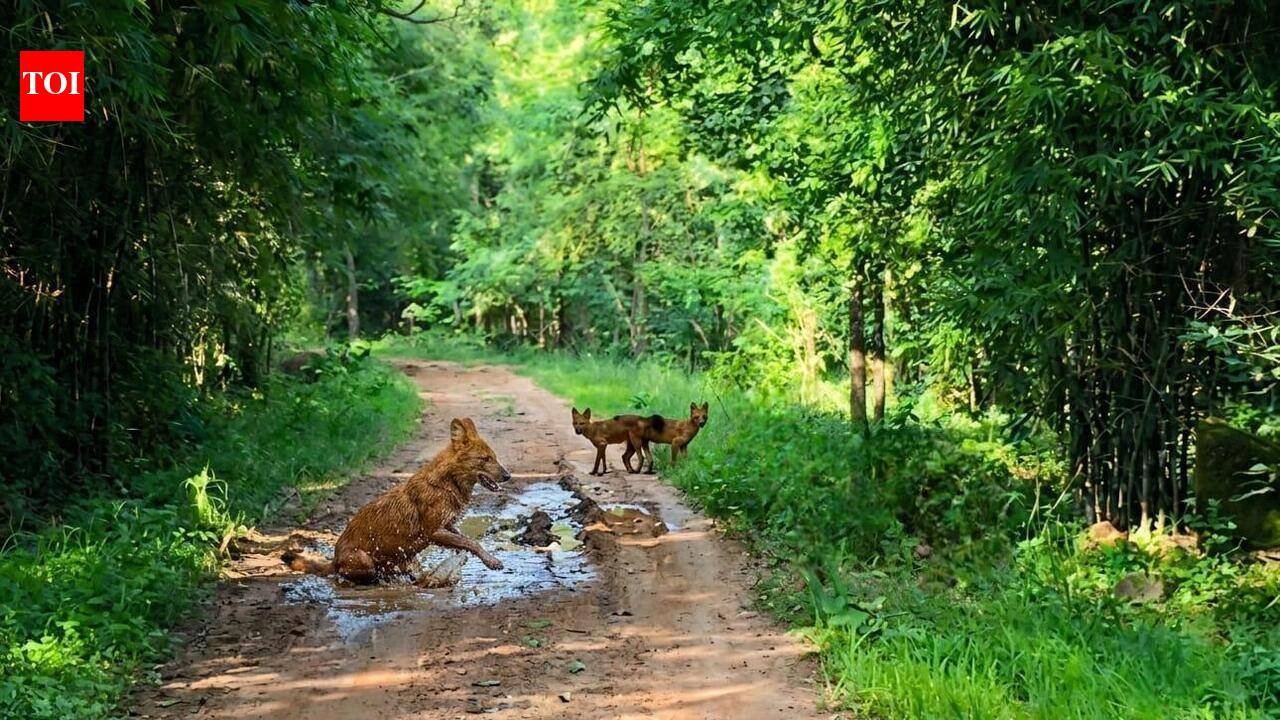
Bhubaneswar: The endangered Indian dhole population in Debrigarh Wildlife Sanctuary is showing signs of thriving, with two pups born earlier this year now growing into young adults and venturing across the forest alongside their parents.According to Hirakud Wildlife Division DFO Anshu Pragyan Das, the two pups have grown considerably and are no longer wholly dependent on adult animals for survival. “The pups are now self-sufficient enough to travel through the sanctuary without remaining constantly dependent on the adults. The father has also been observed accompanying the young animals,” he said on Sunday.Recent observations indicate the young dholes are increasingly being sighted near tourism zones, suggesting they are gradually expanding their range within the sanctuary.The sighting marks a significant milestone for Debrigarh, where a lone dhole, also known as the Asiatic wild dog, was first captured on a camera trap in 2023. What began as an isolated presence has now evolved into the sanctuary’s first documented breeding of a family, raising hopes for the species’ long-term survival in eastern India.Wildlife officials traced the family’s journey over the past few years. A lone male dhole was camera-trapped in Debrigarh in 2024. A female entered the sanctuary in 2025, and the pair was subsequently recorded moving together. Their successful breeding was confirmed in March this year when officials documented the pair with two newborn pups, the first clear evidence of reproduction in the sanctuary.Dholes are highly social carnivores that live and hunt in packs. Raising young is a collective effort, with adults sharing responsibilities for feeding, protecting and mentoring pups. The growing independence of Debrigarh’s young dholes reflects a healthy progression in their development and the stability of the emerging pack.More importantly, their movement across different parts of the sanctuary has broader ecological significance. Conservationists believe the dispersal of young animals can strengthen wildlife connectivity by linking isolated populations. Such movements help maintain genetic diversity and can contribute to the recolonisation of habitats where the species has disappeared.With only about 2,500 dholes believed to survive in India, largely across the Western Ghats, central India and Northeast, Odisha remains one of the few states supporting the elusive predator. Currently, only Similipal Tiger Reserve and Debrigarh harbour dhole populations in the state.
