



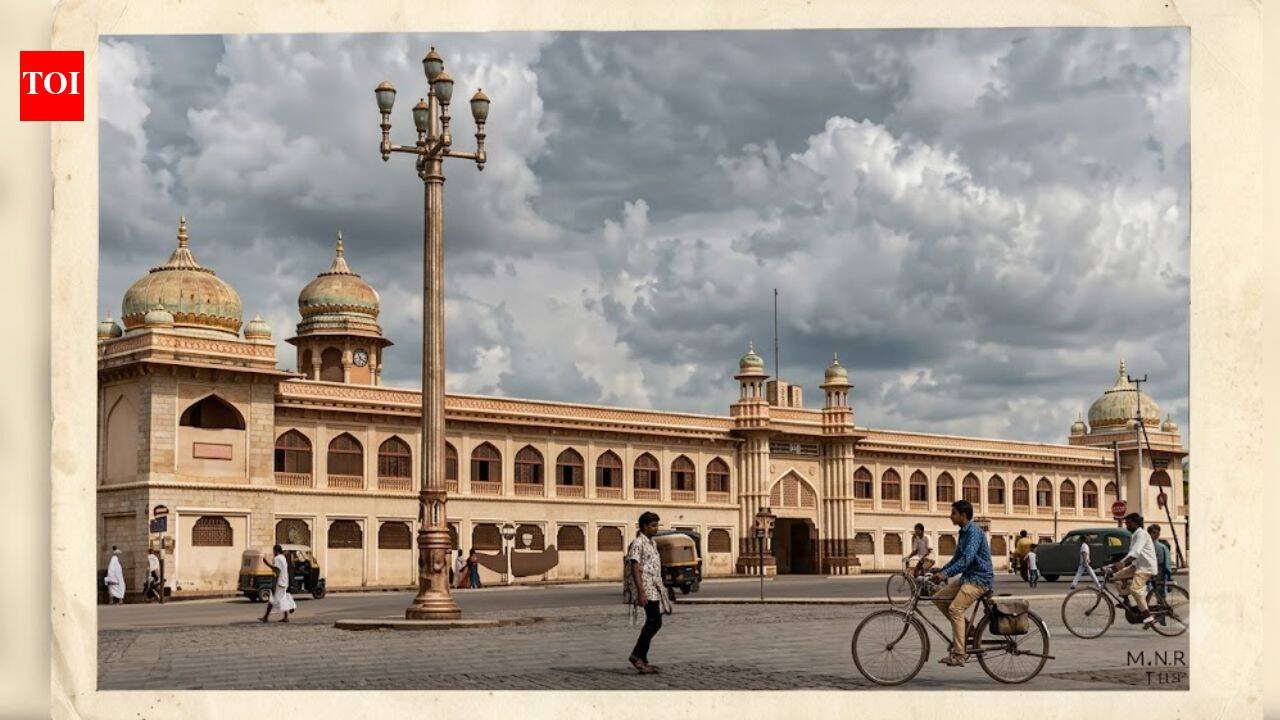
Bengaluru residents today can power homes filled with lights, fans, appliances and gadgets with the flip of a switch. But more than a century ago, electricity was still a new and unfamiliar luxury in the city — and having a single electric bulb at home could cost just Re 1 a month. Bengaluru’s electric-lighting story began in 1905, when the city became one of the first in India to receive electricity generated from a hydroelectric project. The power came from the Shivanasamudra hydroelectric station on the Cauvery, built primarily to supply electricity to the Kolar Gold Fields.The first electric streetlights in Bengaluru were switched on in August 1905. The initial lighting was concentrated around areas including Siddikatte, near the present-day KR Market, before the network was gradually expanded to other parts of the city. The arrival of electricity transformed Bengaluru after sunset. Streets that had relied on older forms of lighting began getting electric lamps, while homes and businesses slowly started connecting to the new power supply.
A bulb at home cost Re 1 a month
Electricity did not remain limited to public streets for long. Residents began taking domestic connections, allowing electric bulbs to replace traditional forms of household lighting. By June 1906, Bengaluru had 1,639 domestic electric connections. The scale of the early network is striking when compared with the size of the city at the time. Electricity had moved from being a technological experiment to something thousands of households were beginning to use. Historical accounts put the monthly charge for a single electric bulb at Re 1. For residents living in Bengaluru in the early 1900s, that meant paying a fixed amount for something that today is taken for granted — lighting a room with electricity. The cost also reflected how electricity was initially treated as a new service rather than the basic household utility it would eventually become.
Electricity came from a hydro plant built for gold mines
There was another unusual connection behind Bengaluru’s early electricity supply. The electricity illuminating Bengaluru’s streets was generated at Shivanasamudra, hundreds of kilometres from the city. The hydroelectric project was established to supply power to the Kolar Gold Fields, where deep underground mines required electricity for operations. The Kolar Gold Fields had become a major gold-mining centre under British rule. Supplying electricity to the mines required a large and reliable source of power, leading to the development of the hydroelectric station on the Cauvery Bengaluru subsequently benefited from the same power network. This made the city’s early electric-lighting story closely linked to two very different developments of the era: gold mining in Kolar and hydroelectric generation at Shivanasamudra.
From a few bulbs to a growing city
The rapid rise in domestic connections after the first streetlights showed how quickly Bengaluru embraced electricity. The city was already undergoing major changes at the time. The British Cantonment had developed separately from the older Pete, while new roads, institutions and neighbourhoods were expanding the urban landscape. Electricity became another marker of this transformation. The first streetlights were not simply about making roads brighter.They represented the arrival of a new infrastructure that would eventually change how Bengaluru’s homes, markets, factories and public spaces functioned. Within a year of the first electric lights, more than 1,600 domestic connections had been recorded. More than a century later, Bengaluru’s relationship with electricity looks very different. The city now has a vast power network serving millions of residents and a technology-driven economy that depends heavily on uninterrupted electricity. But the story began with a much smaller network — and, for some residents, a single electric bulb that cost Re 1 a month. In 1905, Bengaluru was learning what it meant to have electric light. By 1906, thousands of households had already decided they wanted it inside their homes.
