



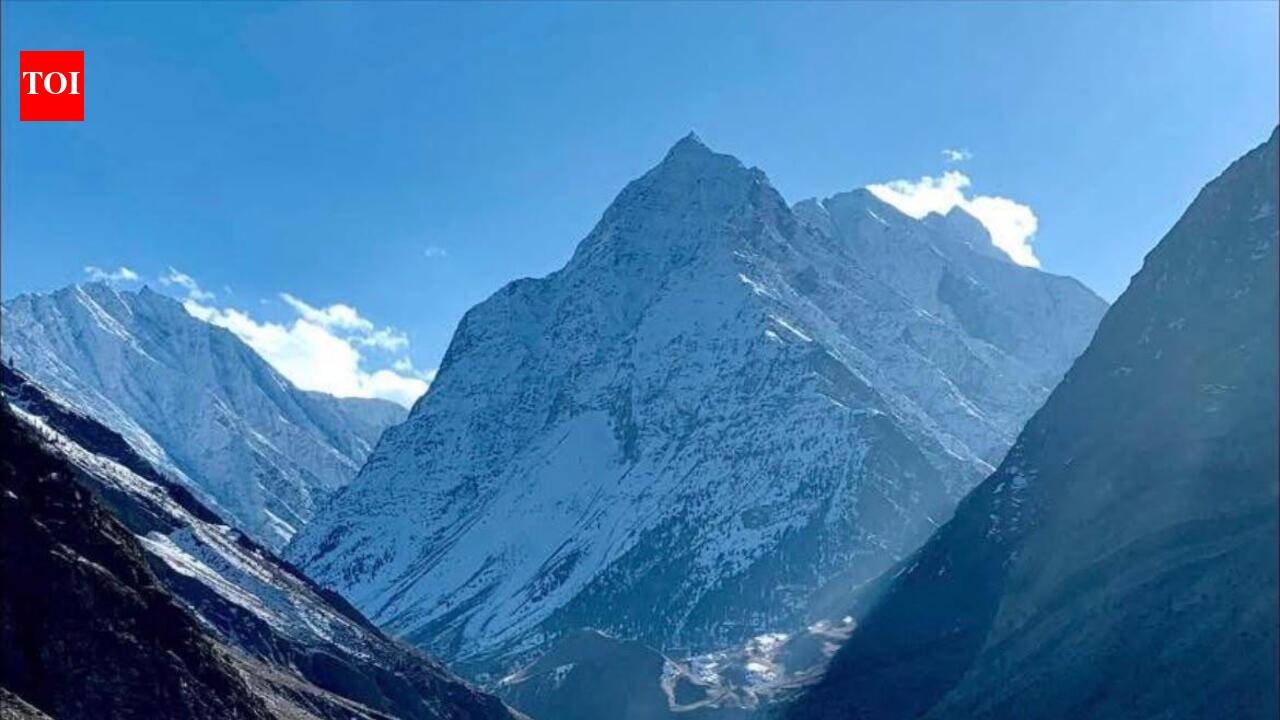
Kullu: Environmentalists and locals in Himachal Pradesh’s Lahaul-Spiti are opposing the proposed Rs 2,352-crore Chenab-Beas link hydro project, warning it risks triggering catastrophic flooding in an ecologically fragile region.The National Hydroelectric Power Corporation (NHPC) project entails constructing a 19-metre concrete barrage near Koksar on Chandra river at an altitude of around 3,140 metres. An 8.7-km tunnel through the Pir Panjal range would divert water into the upper Beas basin around Dhundi, Palchan or Solang near Manali to boost downstream power generation by up to 4,000 megawatts.Environmentalists argue the project threatens both basins, which are increasingly vulnerable to glacial lake outburst floods (GLOFs), flash floods, avalanches and landslides following recent climate-linked disasters in the Himalayas.“It’s the worst possible site for building a barrage and a tunnel,” said environmentalist Himanshu Thakkar, who is also coordinator of South Asia Network on Dams Rivers and People (SANDRP), an organisation that works on issues related to rivers and dams.Koksar sits in the headwaters of Chandra river and has expanding glacial lakes, including Samudra Tapu and Ghepan lake that pose a GLOF threat and a number of glaciers, including Bara Shigri glacier, the largest in Himachal. The number of glacial lakes in Chandra basin rose from 23 to 73 between 2016 and 2022. And in Chenab basin, the lakes rose from 133 to 399 during the same period, a 200% increase.Chandra river, which originates at Chandratal, merges with Bhaga river downstream of Koksar at Tandi to form Chenab. The river then flows through Lahaul and Chamba before entering Jammu & Kashmir and eventually Pakistan.Environmentalists argue that building a barrage, along with the blasting, tunnelling and muck disposal the project requires, will require permanent infrastructure on an already ecologically fragile terrain.According to environmentalist Guman Singh, such a project, if implemented, would create a “water bomb” that “can go off any time.”“The entire Beas valley will become a permanent high-risk flood zone as the water flow in Beas will increase immensely. Cloudbursts are no longer bound to any predictable season — which makes releasing extra water into Beas at a fixed time of year a gamble rather than a safeguard,” said Singh.According to activists, the proposed tunnel’s Beas-merger outfall is no less problematic.The proposed discharge zone — around Dhundi, Palchan or Solang in the upper Beas basin — is itself a disaster-prone corridor repeatedly hit by flash floods, landslides and avalanches. The 2024 cloudburst and flash floods damaged Palchan bridge and severed Leh-Manali highway, while the 2025 monsoon caused further damage and kept access to Atal Tunnel disrupted.Brigadier Khushal Thakur (retd), a Kargil war veteran, said Beas river hasn’t recovered from the last three years of flooding, and questioned how much protection a project’s emergency plan — shutting the barrage gates — would actually offer. “Beas cannot even handle its own water,” Thakur said.B S Rana, president of Save Lahaul Spiti Society, said any credible assessment has to start on the ground, not from a desk. “You cannot decide the environmental fate of a place from an AC room in Delhi using satellite imagery,” Rana said.Shamsher Singh, a Lahaul-Spiti resident now living in Kullu, said the simplest solution is to leave the river alone.
