



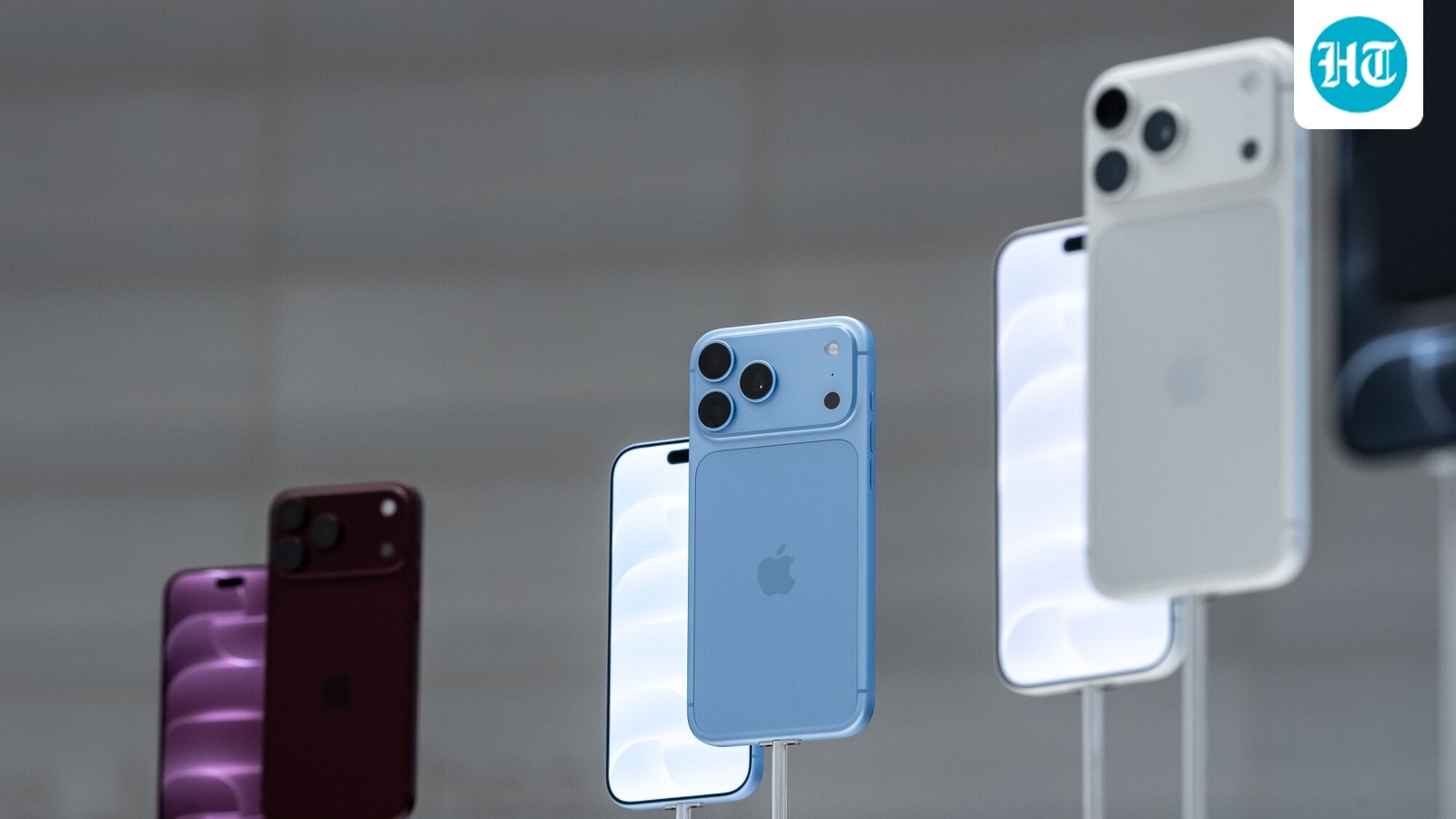
BofA Securities has lowered its Apple stock price target to $370 from $380. The investment firm kept its Buy rating on Apple shares, meaning it still expects the stock to perform well despite the lower target.
The main reason for the lower target is Apple’s iPhone pricing. BofA said the new iPhones are priced lower than it had expected. This could help Apple sell more iPhones, but it could also put pressure on the company’s profit margins, as reported by Investing.com
Apple stock price target
Higher memory and component costs are another concern for Apple. If Apple sells more iPhones at lower prices while paying more for memory and other parts, the company could make less profit on each device.
Apple 2027 earnings
BofA has also cut its 2027 earnings estimate for Apple. The firm now expects Apple to report $9.98 in earnings per share (EPS) in calendar year 2027, down from its earlier estimate of $10.32 per share. The lower earnings forecast is directly linked to the weaker margin outlook. BofA expects Apple’s gross margins to be slightly lower than previously estimated, which is why it reduced its earnings forecast and price target.
BofA Apple valuation
BofA has not lowered the valuation multiple it uses for Apple. Its new $370 price target is based on 37 times its revised 2027 earnings estimate. The firm was also using the same 37-times multiple for its previous $380 target, as reported by Investing.com. This means the price-target cut is mainly about earnings, not a change in BofA’s view of Apple’s valuation multiple. The firm still values Apple at the same 37-times earnings multiple, but the lower expected earnings result in a lower stock target.
Apple AI plans
BofA analyst Wamsi Mohan highlighted Apple’s AI plans for the new iPhones. He said the new iPhones will be able to run AI models directly on the device for some tasks, as reported by Investing.com. More difficult AI requests can be handled through Apple’s Private Cloud Compute. This allows the iPhone to use Apple’s cloud system when a task needs more computing power than the device itself can provide.
Also read: Gold price today: Why gold is near $4,400 ahead of US inflation data
Siri AI features
Privacy remains a key part of Apple’s AI strategy. BofA expects Apple’s AI features to use a mix of on-device processing and Private Cloud Compute while continuing to protect users’ personal data. Siri is also expected to become more useful over time. BofA expects Apple’s Siri AI to become more capable and more personalized as Apple continues to develop its AI technology.
John Ternus Apple launch
The launch was also important because it was CEO John Ternus’s first major Apple product launch. Mohan noted that Ternus focused on Apple’s long-standing approach of bringing hardware, software and services together to create reliable products. Ternus presented the iPhone as more than just a smartphone. He described it as an “intelligent personal hub” that can understand a user’s personal context and use AI to offer new capabilities.
Apple stock valuation
Apple’s AI features could therefore become an important part of the company’s future iPhone strategy. BofA sees the combination of the iPhone’s hardware, software and AI capabilities as a key part of Apple’s product direction. Apple shares are still trading at a high valuation despite the concerns. The stock currently has a price-to-earnings (P/E) ratio of 36.25, according to Investing.com.
Also read: Apple iPhone 18 launch: Why is there no base iPhone 18 this year? What changed
iPhone Duo launch
InvestingPro’s analysis suggests Apple stock is currently overvalued compared with its estimated Fair Value. This adds another concern for investors who are looking at Apple’s current share price. Apple’s latest product launches have attracted strong attention from investors and analysts. The company recently introduced the iPhone Duo, a foldable iPhone that starts at $1,999, along with the iPhone 18 Pro and iPhone 18 Pro Max.
Apple analyst ratings
Analysts do not all agree on whether Apple’s new pricing strategy will help or hurt the stock. Some analysts believe the new products could increase revenue, while others are concerned about pricing, costs and supply problems. Melius Research remains positive on Apple. The firm reiterated its positive view and kept a $370 price target, pointing to the possibility of stronger revenue from consumer interest in the new iPhone Duo.
Evercore ISI also maintained a positive outlook on Apple. The firm kept a $365 price target and also sees potential for higher revenue from demand for the new foldable iPhone. Jefferies has a much more cautious view of Apple. The firm maintained an Underperform rating and a $263.66 price target, citing concerns about the pricing strategy of Apple’s new devices.
Also read: S&P 500, Dow futures attempt recovery as oil tops $100: What to know
Apple supply chain concerns
Lynx Equity has also become more negative on Apple. The firm downgraded the stock while keeping its $250 price target. Its main concern is that supply-chain problems could hurt Apple’s performance in fiscal 2027. Memory and flash supply are major concerns for Lynx Equity. The firm believes Apple could have difficulty securing enough memory and flash storage supplies for its products, as reported by Investing.com.
Lynx Equity expects fixing these supply problems could take about a year. The firm said the new CEO could need around a year to address the challenges related to securing enough memory and flash supply. HSBC remains bullish on Apple. The bank reiterated its Buy rating and kept a $366 price target, based on its expected non-GAAP earnings per share for fiscal 2027.
Apple stock outlook
Overall, BofA’s decision does not mean it has turned bearish on Apple. The firm still has a Buy rating, but it expects lower iPhone pricing, higher component costs and slightly weaker margins to reduce Apple’s future earnings.
The key issue for Apple stock now is whether higher iPhone sales can make up for lower margins. If cheaper iPhones lead to much stronger demand, Apple could sell more devices, but higher memory and component costs could limit how much those additional sales add to profits. That is why BofA reduced its price target from $380 to $370 after the iPhone 18 launch. The firm has kept its positive view on Apple, but its lower 2027 earnings forecast has led to a more cautious price target.
