



Apple raised the price of every iPhone it currently sells in India after launching its first foldable phone on Wednesday, with older models becoming more expensive by ₹15,000 to ₹65,000. In the US, prices of the new iPhone 18 Pro and Pro Max were up by $100 (about ₹8,800) compared with last year’s flagships, and Apple also raised the US price of every older iPhone it kept on sale by the same amount.
The company had in June, when it raised the prices of Macbooks and iPads worldwide, blamed a global memory chip shortage caused by demand from artificial intelligence (AI) data centres.
New phones, new prices
The iPhone 18 Pro starts at ₹1,64,900 in India, and the iPhone 18 Pro Max at ₹1,79,900. Both are $100 more than last year’s models in the US, at $1,199 and $1,299 respectively.
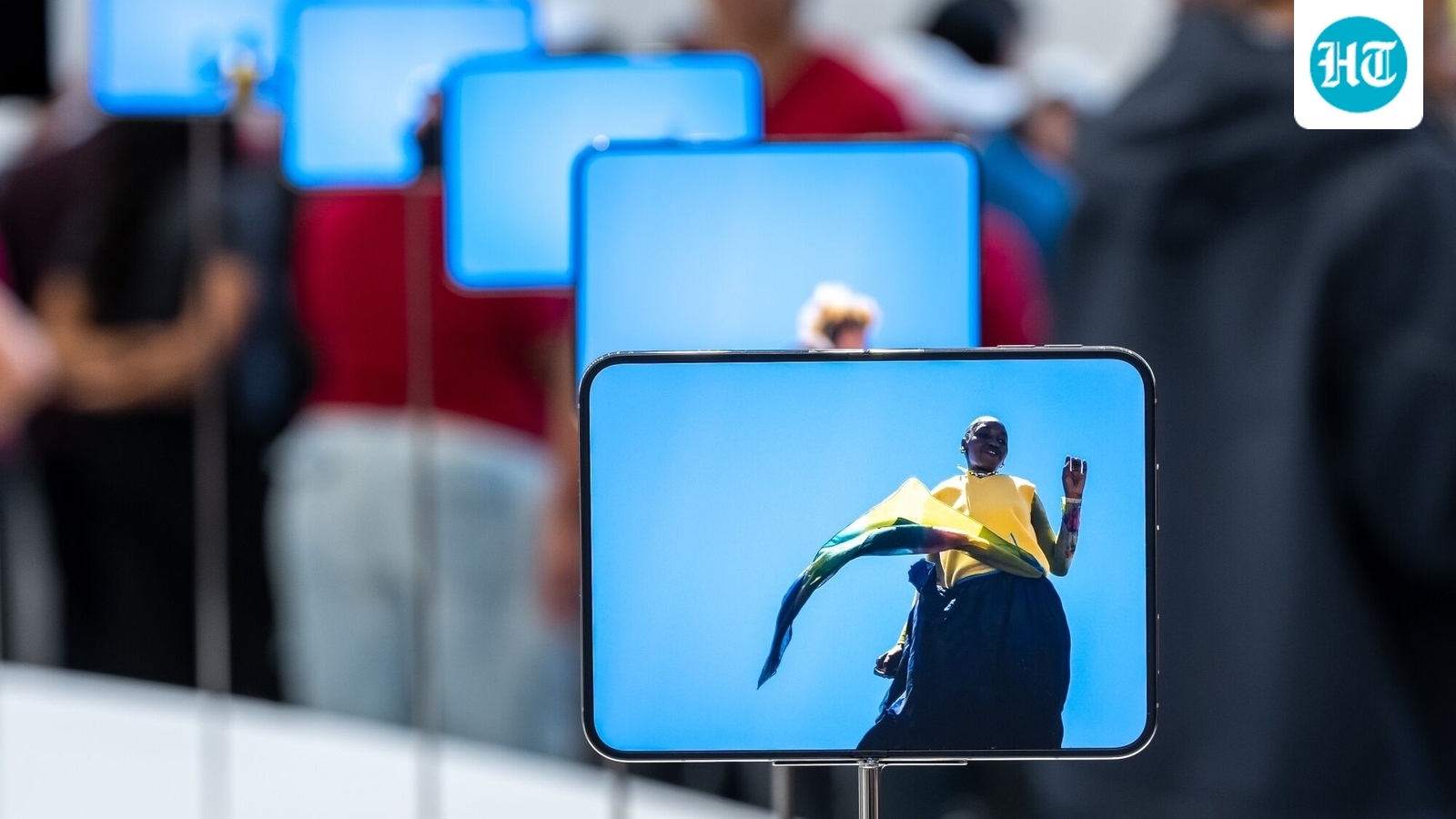
The iPhone Duo, Apple’s first folding phone, is priced at $1,999 in the US and ₹2,99,900 in India, the most Apple has charged for an iPhone. Its top configuration reaches $3,200 in the US and ₹4,49,900 in India for the 2TB version.
Samsung’s Galaxy Z Fold8, which uses similar passport-style dimensions, starts at $1,900 and ₹1,74,999 in India.
Older phones, sharper Indian rises
Apple also revised prices for the iPhone 16, iPhone 17e, iPhone 17 and iPhone Air in India.
The iPhone price increase followed a June announcement in which Apple pushed up the prices of some MacBooks and iPads by nearly 20%. In a statement at the time, Apple said the electronics industry was facing an unprecedented challenge from an extraordinary surge in demand for chips to power AI data centres. “We have never seen a component price increase this much, this quickly,” the company said.
Tim Cook, then Apple’s chief executive, told The Wall Street Journal in June that price increases had become “unavoidable” as the situation with memory chips had become “unsustainable”.
On Apple’s earnings call in August, Cook described it as “a 100-year flood on the memory pricing”, according to Reuters. John Ternus took over as chief executive on September 1, with Cook becoming executive chairman.
The shortage is industry-wide
Memory chips have been bought up by AI data-centre operators, causing a supply-demand imbalance that has raised prices across the electronics industry. Memory makers have redirected factory capacity to high-bandwidth memory (HBM), a type of chip built for AI servers, which sells for far more than the memory used in phones and laptops, industry research firm TrendForce reported.
Other companies have taken similar steps. Microsoft-owned Xbox raised the US price of its basic console by $100 to $499, and a model with more memory by $150 to $749, effective from August. It was the console’s second increase in less than a year. Xbox said the entire consumer electronics industry was struggling with a components crisis. The company added that memory and storage costs had already more than doubled, and that it expected them to double again by 2027.
Valve, the gaming company, launched its Steam Machine gaming PC at $1,049 in the US and £879 in the UK, saying its original price target had become unworkable. Wendell Huang of Taiwan Semiconductor Manufacturing Company (TSMC), which makes chips for Apple, Nvidia and AMD, told the BBC in June that inflation had raised the cost of doing business, and did not rule out TSMC’s own price rises.
David Naranjo of research firm Counterpoint had earlier said he expected PC and tablet brands to follow Apple by raising prices on some products, cutting discounts on entry-level models, or shifting their ranges towards premium devices.
Counterpoint’s pricing tracker shows the average selling price of DRAM, the working memory in phones and computers, up roughly 400% year-on-year, and NAND flash storage up more than 300%.
Is this all?
Apple does not disclose how much it costs to build each iPhone or how much profit it earns on one. Higher memory prices are almost certainly a reason for the September rises, though it is not possible to say from public information how much of the rise they account for.
The new Pro phones also carry new hardware, including the A20 Pro processor, a variable-aperture main camera, and other changes, so the $100 US rise would likely pay for more than memory. The older phones are unchanged since launch, which makes their rises a closer match to the component cost pressure Apple has described.
Cook had told The Wall Street Journal that memory prices and supply needed to return to reasonable levels for consumer products.
SK Hynix, one of the world’s largest memory makers, had also warned the shortage may last past 2030, according to Reuters.
But Apple has a loyal consumer base. “If anyone can survive a price increase with minimal blowback, it’s Apple,” Dipanjan Chatterjee, principal analyst at Forrester, told the BBC.
