



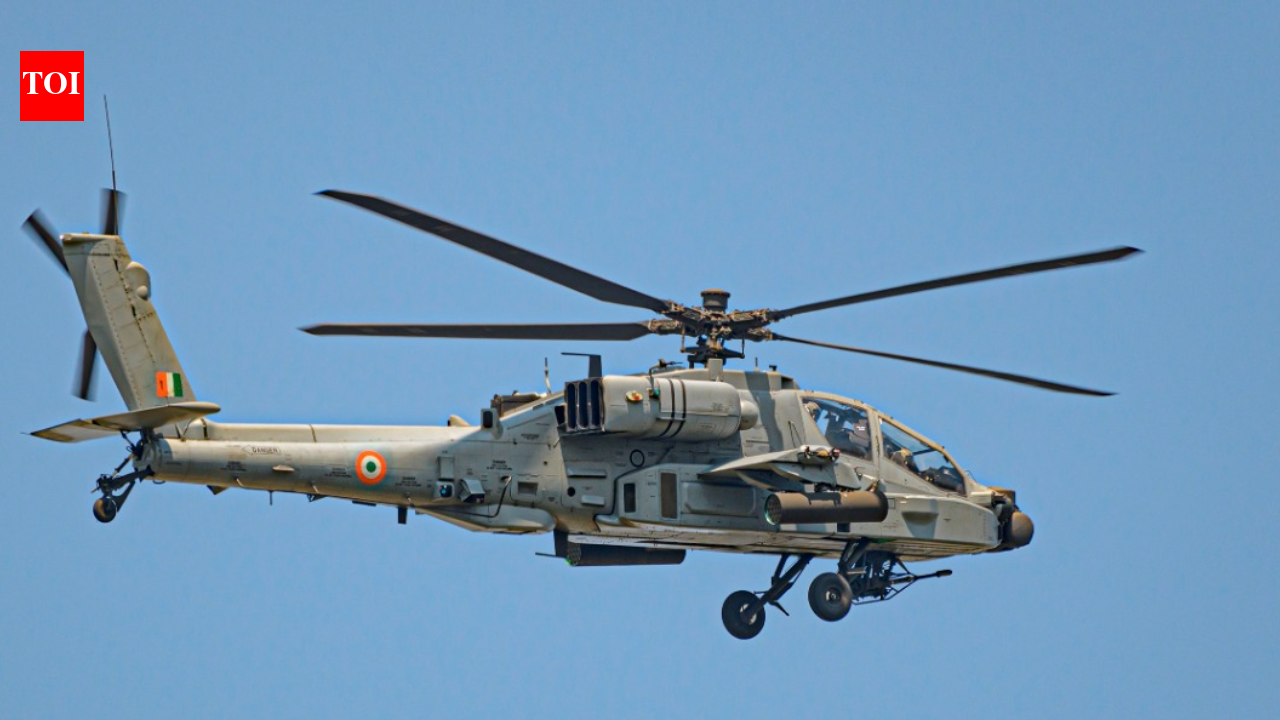
Tata Boeing Aerospace Limited has rolled out the 400th fuselage for the AH-64E Apache, one of the world’s most advanced attack helicopters, from its facility in India.The joint venture between Boeing and Tata Advanced Systems Limited manufactures the fuselages domestically, which are then integrated into the final aircraft supplied to customers worldwide, including the US Army.India has also received six Apaches for the Indian Army, while the Indian Air Force operates a fleet of 22 AH-64E helicopters.With roughly 1,300 Apaches currently in service across 19 countries, the milestone highlights the scale of India’s role in the programme: nearly 30% of all Apaches ever built have had their fuselages manufactured in India.The achievement is also part of a much larger transformation in India’s defence manufacturing sector.According to figures provided by the Defence Ministry, indigenous defence production rose from Rs 46,429 crore in 2014-15 to Rs 1.78 lakh crore in 2025-26. Production increased 15.6% over the previous year alone and has more than doubled since FY 2020-21.Defence exports have grown even more sharply. From just Rs 686 crore in 2013-14, exports reached a record Rs 38,424 crore in 2025-26. Indian defence products are now being exported to more than 80 countries, with over 145 companies actively engaged in exports.The government has set a target of Rs 50,000 crore in defence exports by 2029, a goal officials believe is achievable given the sector’s current trajectory.Supporting this expansion is a rapidly broadening defence industrial base comprising 16 Defence Public Sector Undertakings (DPSUs), around 500 licensed defence manufacturers and nearly 17,000 MSMEs directly involved in defence production. The industry is also becoming more geographically diverse, with defence manufacturing spreading beyond traditional hubs and gaining momentum through the defence industrial corridors in Uttar Pradesh and Tamil Nadu.The sector has attracted investment commitments of nearly Rs 75,000 crore, of which around Rs 10,800 crore has already translated into actual investment.The public sector has also shown signs of a significant turnaround. Recent reviews indicate that all 16 DPSUs are now operating profitably, while spending on research and development has increased and companies are increasingly pursuing opportunities in overseas markets.The shift marks a significant departure from an era when India’s defence industry was widely seen as slow-moving and the armed forces heavily dependent on imports. Today, the country is steadily positioning itself as a global defence manufacturing and supply hub.
