


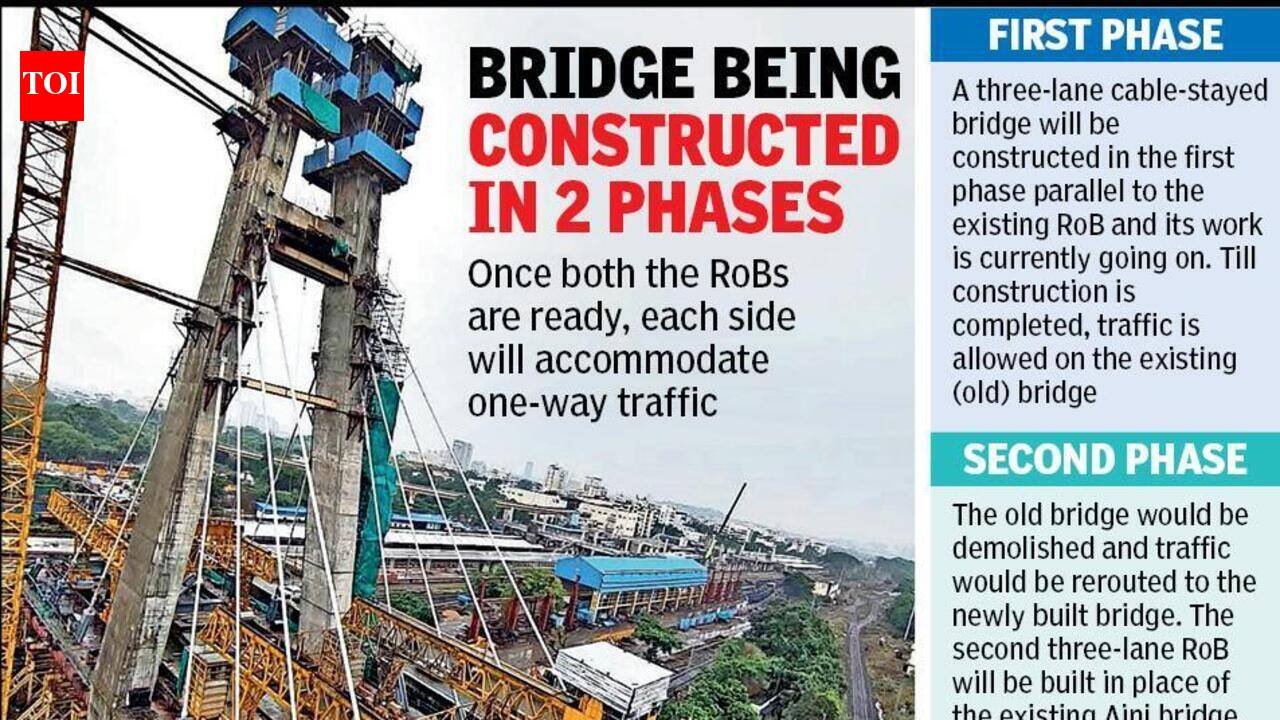
Nagpur: The distinctive cable-stayed structure of the new Ajni bridge is beginning to take shape, with six pairs of high-tensile cables installed on the first carriageway of the Rs332-crore project.The cable installation marks a major stage in the construction of the bridge, which is being built to replace the existing 125-year-old Ajni railway overbridge.The six-lane bridge, being executed by Maharashtra Rail Infrastructure Development Corporation (MRIDC), or MahaRail, will connect South Nagpur with the central parts of the city. The new structure is being built, under the supervision of MRIDC MD Rajesh Kumar Jaiswal, as an asymmetrical cable-stayed bridge, giving it its distinctive ‘Laxman Jhula’ appearance, as it is being constructed on the line of Ram Jhula near the railway station.The cable-stayed portion spans 220 metres, divided into 120-metre and 100-metre sections. It will eventually be supported by 24 pairs of high-tensile cables, which will carry the load of the bridge deck. Each cable is being installed as part of the process of progressively supporting the deck during construction.The cable-stayed span alone weighs around 1,800 metric tonnes, making the installation and tensioning of the cables a technically significant component of the project.The new bridge is being constructed in two stages to keep traffic movement going through the busy Ajni corridor. The first carriageway, with three lanes, is being built first and is planned to carry traffic in both directions initially. Once it is opened, the old Ajni RoB will be demolished to make way for the second carriageway.The final arrangement will have the two three-lane carriageways carrying traffic in opposite directions, providing a wider and more modern crossing in place of the ageing bridge.MahaRail had originally targeted March 2026 for opening the first carriageway and subsequently revised the target to the pre-monsoon period. The first phase has now missed that deadline as structural work continues, but sources said that it is likely to be completed by December this year.The delay has been attributed to design changes necessitated by parallel infrastructure works, the challenges of construction over an operational railway corridor and approvals associated with the specialised cable-stayed design. The design was prepared by a Taiwan-based firm and approved by IIT Bombay.Work on the replacement project began in April 2023. Once completed, the twin bridge is planned not only as a key transport link but also as a landmark structure, with LED theme lighting, footpaths on both sides and selfie points incorporated into the project.
