


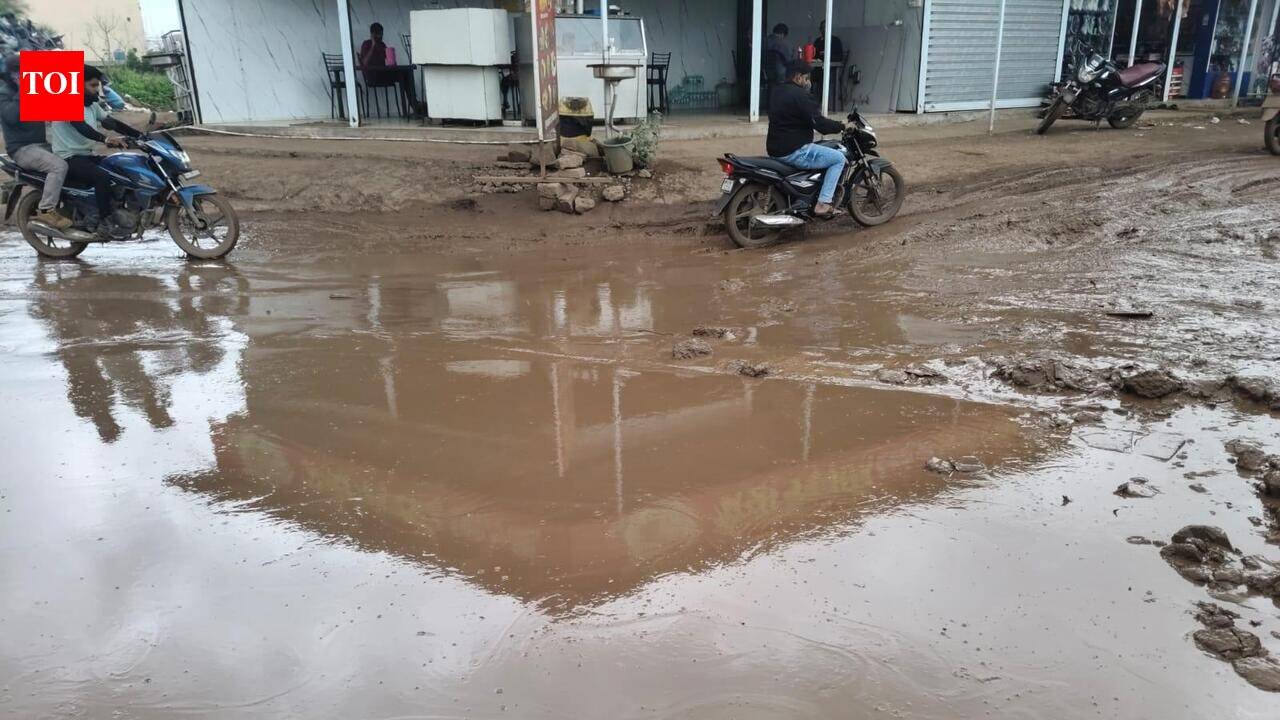
Pune: As many as 152 commuters, mostly employees travelling to and from the Chakan industrial belt, have died in fatal road accidents since 2024, according to an internal report prepared by the traffic department of the Pimpri Chinchwad police commissionerate.The highest number of fatal crashes have been reported on the Talegaon-Chakan and Chakan-Shikrapur corridors, stretches of the Pune-Nashik highway and internal roads connecting various industrial units in the Maharashtra Industrial Development Corporation (MIDC) area, police officials said.More than 200 people, including local residents, have also suffered injuries in non-fatal accidents on these roads during the period, highlighting the scale of the road safety crisis in one of Maharashtra’s most important industrial clusters.Police officials attributed the recurring accidents to a combination of poor road conditions, inadequate traffic infrastructure, traffic violations, congestion caused by heavy vehicles and a lack of basic road discipline among motorists.Dipak Gosavi, who took charge of the Chakan traffic division a few weeks ago, said the police had intensified enforcement against traffic violators. “Various measures, including strict enforcement against violators, have been taken across the area to control traffic violations. This year, we have managed to reduce fatal accidents to some extent compared with the corresponding figures of the last two years. This year, we have reported 24 deaths in accidents till July-end, while there were 39 deaths in 2025 and 37 deaths in 2024 till July-end,” Gosavi said.However, the figures have done little to reassure industrial employees and residents who travel through the network every day. Several employees said they have become increasingly frustrated and fearful about commuting to work, particularly during peak hours. “We leave home every morning knowing that there is a risk on these roads. We see accidents almost every week. Sometimes a colleague does not return home after finishing his shift. How many more people have to die before the authorities take this seriously?” said an employee, Ajay Bhadale, working at an engineering company in the Chakan MIDC area.Another employee said the problem becomes particularly dangerous during shift-change hours when thousands of workers and heavy vehicles enter and leave the industrial belt simultaneously. “There are containers, trucks, buses, two-wheelers and cars all competing for the same narrow road space. There is hardly any proper lane discipline. When someone tries to overtake, the consequences can be fatal. Employees are angry because this has been going on for years,” said Keshav T, who has been working with a paint shop of an MNC.Dilip Batwal, secretary of the Chakan Industry Association, said industrial units had been concerned about road safety for more than a decade. “Fatal accidents have been a worrisome factor for us for more than a decade. Hundreds of employees working in Chakan have died while returning home or coming to their offices. Who is responsible for these irreparable losses? Their families have been suffering all these years. It is the need of the hour to reduce fatal accidents and ensure a safe atmosphere for employees of industrial companies,” he said.Residents also blamed inadequate road infrastructure. “It is impossible to overtake a vehicle on the Talegaon-Chakan and Chakan-Shikrapur highways because of narrow carriageways. People often try to overtake in frustration and meet with an accident. This has become a common feature on these roads,” said local activist Prakash Gore.Traffic officials, however, said the sheer volume and nature of traffic made policing particularly difficult.A senior traffic police officer said the department was severely short of manpower to regulate traffic across the industrial belt. “Almost all junctions and intersections across these areas need more than 100 police personnel and proper planning for daily operations. The volume of vehicles is in lakhs and most of these are containers and industrial trucks. They occupy a significant portion of the roads and severely affect regular traffic and employee movement. We cannot ask them not to operate or impose blanket time restrictions. We need additional manpower. At present, we have close to 50 personnel, which is not adequate,” the officer said.Road safety experts said enforcement alone would not solve the problem and that the industrial belt required an integrated road safety plan. “Where there is a concentration of heavy vehicles and commuter traffic, road safety cannot be treated merely as a policing issue. The road geometry, junction design, pedestrian movement, lighting, lane discipline, speed management and heavy-vehicle movement all have to be addressed together,” said a road safety expert Tanmay Pendse.Experts suggested conducting a detailed road safety audit of the entire Talegaon-Chakan-Chakan-Shikrapur network and identifying accident black spots through crash data. Engineering interventions such as widening bottleneck stretches, installing proper lane markings, improving junction design, providing pedestrian crossings and footpaths, fixing damaged carriageways and improving street lighting should be prioritised, said experts.A section of senior management officials of these companies also recommended dedicated measures for industrial traffic, including better truck lay-bys, designated loading and parking areas, regulated entry and exit points for large factories and staggered movement of heavy vehicles wherever operationally feasible. “Factories cannot stop functioning and trucks cannot simply be banned. The solution is to separate, as far as possible, different categories of traffic and manage their movement scientifically. Shift timings, truck entry schedules and junction management can be coordinated between industries, police and civic agencies,” said another expert who did not wish to be named.Another important intervention, Pendse said, would be strengthening public transport for industrial workers. A reliable network of buses connecting major residential areas with industrial gates could reduce the dependence on two-wheelers, which are particularly vulnerable in crashes involving heavy commercial vehicles.For employees, however, the demand is more immediate: safer roads and accountability. “We are not asking for anything extraordinary. We want roads on which our workers can travel safely and return to their families every day. The deaths should not be treated as routine statistics,” said Batwal, who has been pursuing various issues related to the road infrastructure.With Chakan continuing to attract manufacturing units and thousands of workers travelling through the region every day, residents and industry representatives fear that the road network could become an even bigger safety challenge unless infrastructure keeps pace with industrial growth. “If the authorities do not widen these roads, there is no scope in reducing fatal accidents. Innocent employees who migrated for work would keep dying in road accidents for no fault of their own,” added activist Gore.
