


For decades, global education largely meant Indian students travelling overseas in pursuit of prestigious universities, cutting-edge research opportunities and international careers. Today, however, that narrative is beginning to change. As India implements bold higher education reforms under the National Education Policy (NEP) 2020, the country is witnessing an unprecedented shift—where some of the world’s leading universities are establishing campuses on Indian soil instead of expecting students to travel abroad.
This new model of transnational education represents far more than geographical expansion. It reflects a broader transformation in how higher education is delivered, experienced and valued. By combining global academic standards with local relevance, these institutions have the potential to expand access to quality education, foster research and innovation, strengthen industry-academia collaboration and prepare graduates for an increasingly interconnected world.
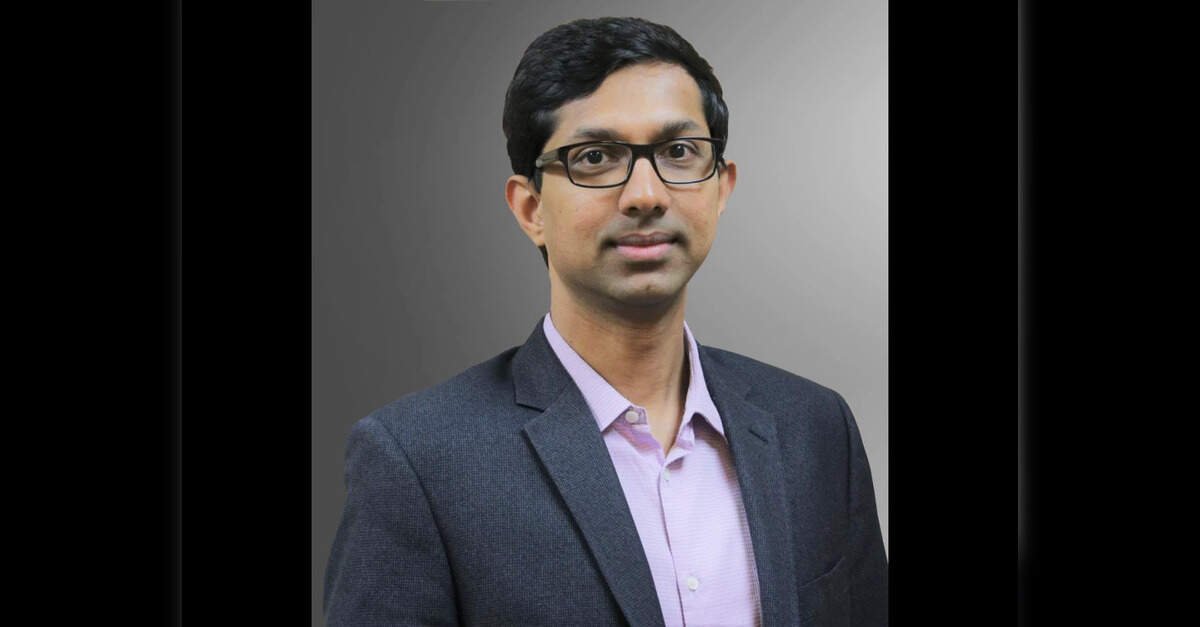
In this exclusive interview with ETEducation, Ashwin Damera, Co-founder & CEO of Eruditus & Emeritus, discusses why this moment could redefine India’s higher education landscape, what distinguishes successful international campuses from those that merely replicate existing models, and how globally connected universities can help convert India’s demographic advantage into a globally competitive talent economy.
Damera is the Co-founder and CEO of Emeritus (part of Eruditus), one of the world’s leading providers of executive education and lifelong learning in partnership with globally renowned universities. Over the past sixteen years, he has worked closely with more than 80 leading institutions—including MIT, Harvard, Wharton and INSEAD—to expand access to world-class education across the globe. Today, he is leading the company’s next phase of growth by enabling globally ranked universities to establish campuses in India, helping shape a new chapter in the country’s higher education ecosystem.
Here are the edited excerpts from the interview:
Q1. Transnational education has traditionally been associated with students crossing borders to access global universities. Today, we’re seeing a new model emerge—where leading international institutions are crossing borders instead. How do you define this new era of transnational education, and why do you believe it represents one of the most significant shifts in global higher education?What we are seeing today—the shift in education policies and the arrival of foreign higher education institutions (FHEIs) in India—is the result of something that has been building for years.
Indian talent has always been globally ambitious but, for the longest time, the only way to access intellectual capital, institutional brand, and a strong peer network was to leave the country. Fields such as quantum computing, AI ethics, robotics, sustainable architecture and advanced data science simply weren’t being taught at sufficient depth in India.
The other half of the equation was capacity. Only a tiny fraction of students could secure admission into institutions such as the IITs, IIMs or ISB, while everyone else either had to go abroad or settle for fewer opportunities. Consequently, Indian students abroad crossed 1.3 million in 2024, nearly double the number in 2019.
What has changed today is both demand and policy. India’s higher education enrolment has grown rapidly, government investment in emerging disciplines has accelerated, Global Capability Centres (GCCs) continue to expand, and the NEP 2020 has opened the door for globally ranked universities to establish campuses in India. Combined with India’s enormous talent pool and growing demand for world-class education, these factors have created one of the biggest structural shifts in global higher education.
Q2. For decades, Indian students travelled overseas in pursuit of global education. Today, we’re witnessing world-class international universities establishing a physical presence in India. What has fundamentally changed, and how can these institutions contribute to India’s broader nation-building agenda?
Global economies are facing increasing uncertainty—from tightening visa regulations and rising costs to narrowing post-study opportunities. India, meanwhile, offers relative stability, a thriving startup ecosystem and rapidly expanding GCCs.
Global universities now recognise India not simply as a source of talent but as one of the world’s most strategic education markets. For students, globally recognised degrees are becoming available within India at significantly lower costs than studying overseas.
More importantly, these institutions can become powerful engines of innovation, entrepreneurship and research. They can help nurture future builders, scientists and innovators while strengthening India’s own knowledge economy rather than merely producing graduates for overseas markets. The University of Liverpool, for example, chose Bengaluru – close to where Unilever is, which has been investing in research with Liverpool for decades. Real research & real industry proximity. The kind of applied, hands-on experience that has historically pulled Indian students abroad is now arriving here. Meanwhile, Maharashtra alone hosts four globally ranked campuses, signalling the kind of state-level policy intent that gives institutions the confidence to commit.
India is no longer content with being seen only as a supplier of talent—it is building the ecosystem to become a global centre for talent creation.
Q3. As global universities enter India, what will distinguish those that simply establish a campus from those that truly become part of India’s higher education ecosystem?India is not a market where institutions can simply replicate an overseas campus. Success will depend on whether universities redesign for India rather than merely relocate to India.
That means adapting pedagogy, curriculum, faculty engagement and industry partnerships to India’s evolving skills landscape while maintaining global academic standards – and our academic partners are building these into the content mix
The universities that succeed will approach India with humility, curiosity and long-term commitment. Rather than competing with India’s existing institutions, they will strengthen and complement the country’s higher education ecosystem.
Q4. India’s demographic dividend is often described as its greatest economic advantage. How can globally connected universities help convert this demographic opportunity into a globally competitive talent economy?
India already has one of the world’s largest and most ambitious young populations. What has often been missing is equitable access to globally benchmarked education.
Over sixteen years, we’ve seen extraordinary demand from Indian learners for world-class education. More than one-third of our revenue today comes from AI-related programmes alone, demonstrating how professionals across every stage of their careers are investing in continuous learning.
Globally connected universities bring research-led curricula, international faculty, global peer networks and applied learning experiences that enable graduates to think beyond examinations and solve real-world problems. That is exactly what India needs to fully realise its demographic advantage.
Q5. Establishing an international campus involves far more than replicating a curriculum. What are the biggest challenges in creating a truly global learning ecosystem in India?
The biggest challenge is building an academic culture that remains authentic to the university’s global identity while being genuinely rooted in India.
Everything matters—from faculty recruitment and research capability to student services, technology, laboratories, governance and career support. Students must receive the same academic standards, institutional recognition and alumni network that they would expect from the university’s home campus. In Illinois Tech’s (Mumbai campus) case for instance, 40% of the faculty are coming directly from the main campus in Chicago, with the remainder being global faculty with strong academic experience from Europe and the US.
Ultimately, this initiative is about giving students the opportunity to receive world-class education without leaving India while contributing to the country’s own growth story.
Q6. Student expectations have evolved significantly. How are these institutions designing a campus experience that combines global pedagogy with local relevance and employability?
Today’s students expect far more than classroom teaching. They seek experiential learning, industry exposure and clear career pathways. Victoria University’s VU Block Model, for instance, puts students in applied learning environments where they are building and testing against real market conditions within hours. The University of Bristol brings access to a billion-dollar AI supercomputer – research infrastructure that was previously accessible only to students physically enrolled on its UK campus, now available to students in Mumbai through the cloud.
Universities are also combining internationally recognised teaching models with partnerships across corporate India to ensure programmes remain aligned with future workforce needs. Undergraduate and postgraduate offerings increasingly focus on AI, cybersecurity, data science, business, finance and other high-growth sectors.
The objective is to ensure, what students learn directly translates into the skills employers will need in the years ahead.
Q7. With the first undergraduate and postgraduate cohorts expected this year, what should students expect when they arrive on campus?
Our university partners have completed the necessary regulatory approvals and are preparing to welcome their first cohorts.
Students can expect fully operational campuses, internationally benchmarked academic environments, globally experienced faculty, and the same pedagogical standards that define these universities across the world. For India’s young talent, this marks the beginning of a new era where world-class education is available much closer to home.
Q8. Eruditus has built one of the world’s leading executive education platforms. What inspired the move into full-fledged higher education?
In many ways, this is the culmination of the vision with which Eruditus was founded. When we started in 2010, we flew international faculty to India for residential programs in emerging disciplines – because we believed Indian professionals deserved access to the same quality of education that existed abroad, but could not bear the opportunity cost of pursuing it on a foreign campus.
For over sixteen years, we’ve partnered with leading universities to expand access to quality education through executive learning. The revised FHEI framework under NEP 2020 created an opportunity to extend that mission into undergraduate and postgraduate education.
Our experience has given us deep insight into what globally ranked universities need to successfully establish themselves in new markets—from operational excellence and technology to learner support and quality assurance.
Q9. Many see this as an entirely new category—an edtech company enabling physical global university campuses. How would you describe the business model?
Each partnership is structured as a joint venture in which the university retains complete academic control.
Everything relating to curriculum, admissions, faculty, degrees and research remains entirely with the university. Eruditus provides the operational infrastructure—including technology, marketing, student acquisition, campus operations and local execution—allowing global universities to establish campuses in India efficiently while preserving their academic integrity.
Q10. Looking ahead a decade, what impact do you hope this initiative will have on India’s higher education landscape?
I believe this will eventually stop being viewed as a separate category—it will simply become part of how higher education operates in India.
The real measure of success will be the graduates: where they work, what they build and the value they create. India has always had exceptional talent. What it now has is the opportunity to build an ecosystem that allows more of that talent to flourish without leaving the country.
For Emeritus, this represents the next evolution of our mission—to help build the future of education across executive learning, higher education, AI-enabled learning and technology infrastructure, making globally recognised education more accessible than ever before.
