


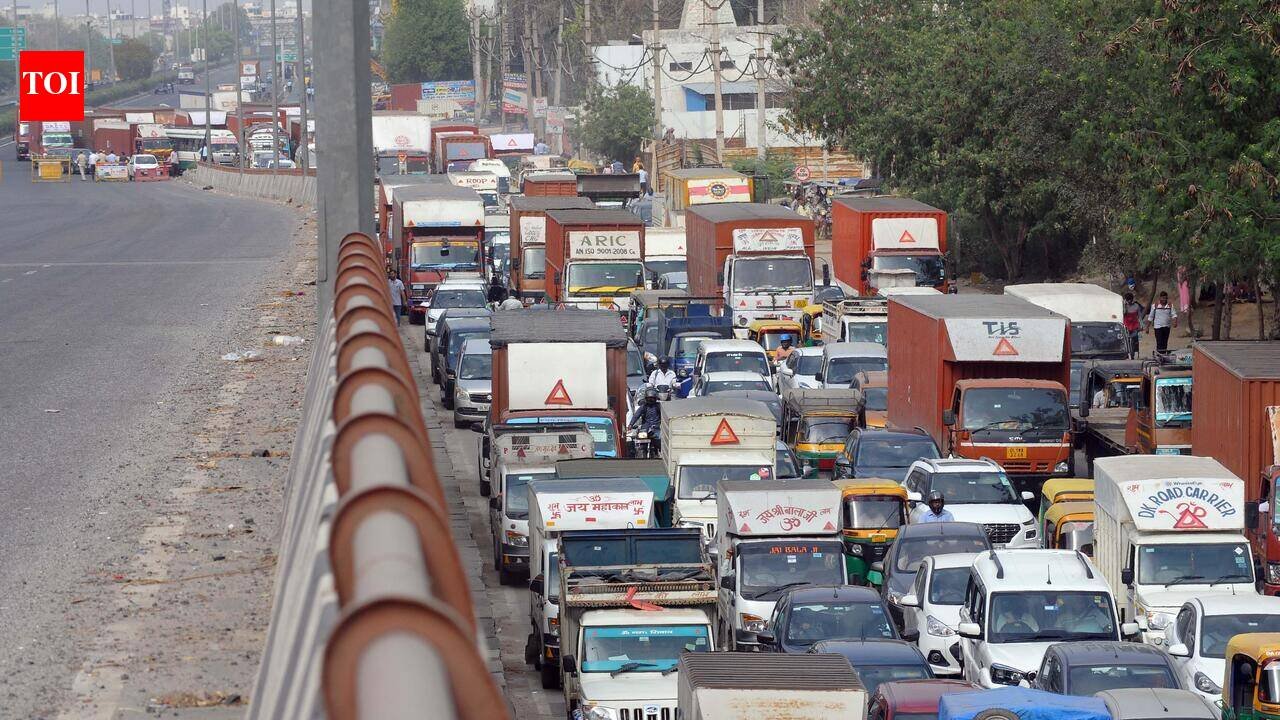
Gurgaon: Haryana has managed to address fewer than half of the traffic congestion hotspots identified for 2026.Only 40 of the 88 congestion hotspots identified across seven cities had been addressed by June 30, leaving 48 locations still awaiting intervention, according to Haryana State Pollution Control Board (HSPCB) data on short-term traffic management measures.The tardy pace of fixing these hotspots has raised concerns over the pace of decongestion efforts that are also expected to help curb vehicular emissions before the onset of the winter pollution season.While long-term solutions such as expanding public transport and shifting to cleaner vehicles require years, engineering interventions at congestion hotspots can provide immediate relief by improving traffic flow. The congestion hotspot programme is aimed specifically at reducing traffic bottlenecks through short-term engineering and traffic management measures.“Traffic congestion is not merely a mobility problem, it is also a major air pollution concern. Vehicles caught in stop-and-go traffic and prolonged idling emit substantially more particulate matter, nitrogen oxides and other gases than vehicles moving at a steady speed,” Centre for Science and Environment executive director (research and advocacy) Anumita Roychowdhury told TOI.Among NCR cities, the millennium city has resolved four of its nine identified hotspots, while Faridabad has addressed six of 14 and Sonipat has completed work at two of four locations.Outside NCR, Karnal has made the least progress in absolute terms, completing work at 18 of its 40 identified hotspots, leaving 22 locations pending. Panipat has addressed seven of 18 hotspots, while Rohtak is the only city to have met its target, resolving all three identified congestion points.The data indicates that only about 45% of the annual target had been achieved halfway through the year.CSE executive director Anumita added, “Identifying and removing congestion hotspots is therefore an important air quality intervention, especially in NCR cities where transport is a significant source of pollution. Such measures, however, need to be complemented with stronger public transport and demand management to deliver sustained improvements.”HSPCB officials have long maintained that easing bottlenecks does more than reduce travel time. “Congested junctions force vehicles into repeated stop-and-go movement and prolonged idling, leading to higher fuel consumption and increased emissions of pollutants such as particulate matter (PM), nitrogen oxides (NOx) and carbon dioxide. These emissions are particularly significant in NCR cities, where transport remains one of the major contributors to deteriorating air quality,” said an HSPCB official.With the pollution season typically beginning in Oct and peaking through winter, the delayed pace of hotspot mitigation could reduce the effectiveness of one of the relatively quick measures available to cut transport-related emissions.
