


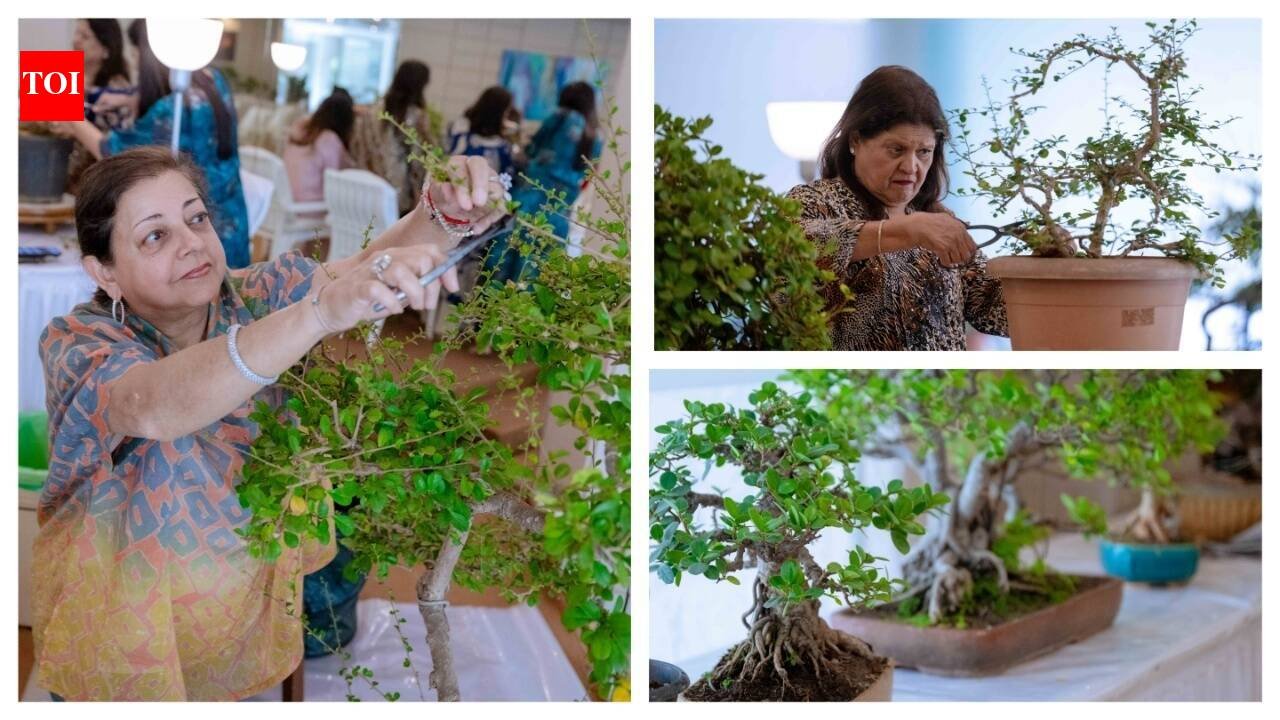
On a quiet weekday afternoon in Juhu, while Mumbai raced through traffic snarls and deadline dashes, a group of people gathered around something far more patient: bonsai trees no taller than a coffee table. Clippers in hand, stories on their lips, and soil under their nails, these bonsai lovers were tending to miniature forests and, in the process, to themselves. A community rooted in calm What began years ago as an interest in a niche of horticultural art has grown into a close-knit community of enthusiasts who meet regularly prune, wire, repot, and talk. The sessions are equal parts technique and therapy. “Bonsai teaches you to pause,” says Harsha Hinduja, a bonsai lover for the last two decades, gently adjusting the wire on a ficus. “In a city like Mumbai, we are conditioned to rush. With bonsai, you learn that growth cannot be forced, it has to be guided with care and patience. It takes eight to 10 years for a plant to begin being a bonsai. Taking care of a bonsai teaches you discipline, patience and expresses your creativity.” The Bonsai lovers community meet on the third Thursday every month at members’ homes across the city, ensuring that the learning remains informal and hands-on. “Sometimes we get Bonsai experts from abroad like Sir Peter Chan, from England, come over to teach us the techniques and those classes go on for the whole day,” says Harsha. Tiny trees, big conversations As the group gathers around a 12-year-old bonsai, discussions drift seamlessly from root structure to monsoon care, and from travel plans to favourite trees. Urvashi Thacker, who has been among the founding members of this bonsai community, says, “Bonsai is not about perfection. It’s about observation, empathy, and continuity. When we share knowledge, we ensure the art survives beyond us.” She adds, “A complete bonsai is a work of alive art, like a painting, but because it is a living thing, you have to keep nurturing it.” Dr Sangita Chadha, physiotherapist from Lokhandwala, who has been into this art for the last decade says, “I’ve always been passionate about gardening and bonsai is such a pleasure. These are my pets and babies. Now, I appreciate the big trees and nature’s beauty even more.”
Bonsai is the ultimate lesson in control and surrender Rusi Bharucha, an engineer and artist who uses the Jin and shari techniques in bonsai says, “These techniques done with special tools and an eclectic saw creates the appearance of extreme age and natural, weathered beauty on mature bonsais that are over 35- 40 years old.” He adds, “Bonsai is the ultimate lesson in control and surrender. You shape the tree, yes, but you also have to accept its natural rhythm. That balance has changed how I look at life outside this room.” Urvashi says,” Our’s is a community dedicated to sharing knowledge, fostering interest, and helping each other grow in this rewarding pursuit.” Passing it on, one sapling at a time What sets this community apart is its eagerness to welcome newcomers. First-timers are encouraged to bring their plants, ask questions, and even make mistakes. Ami Shah, a sculpture artist, says, “I am relatively new to this bonsai community but have always found that everyone here is extremely helpful, and really encouraging. There is no gatekeeping here, no politics. Even for the mistakes I’ve made, instead of judgment, I always got guidance and help, and that keeps you coming back.” Harsha believes this openness is key to sustaining the art form. “Bonsai is not about perfection,” she says. “It’s about observation, empathy, and continuity. When we share knowledge, we ensure the art survives beyond us.”
