


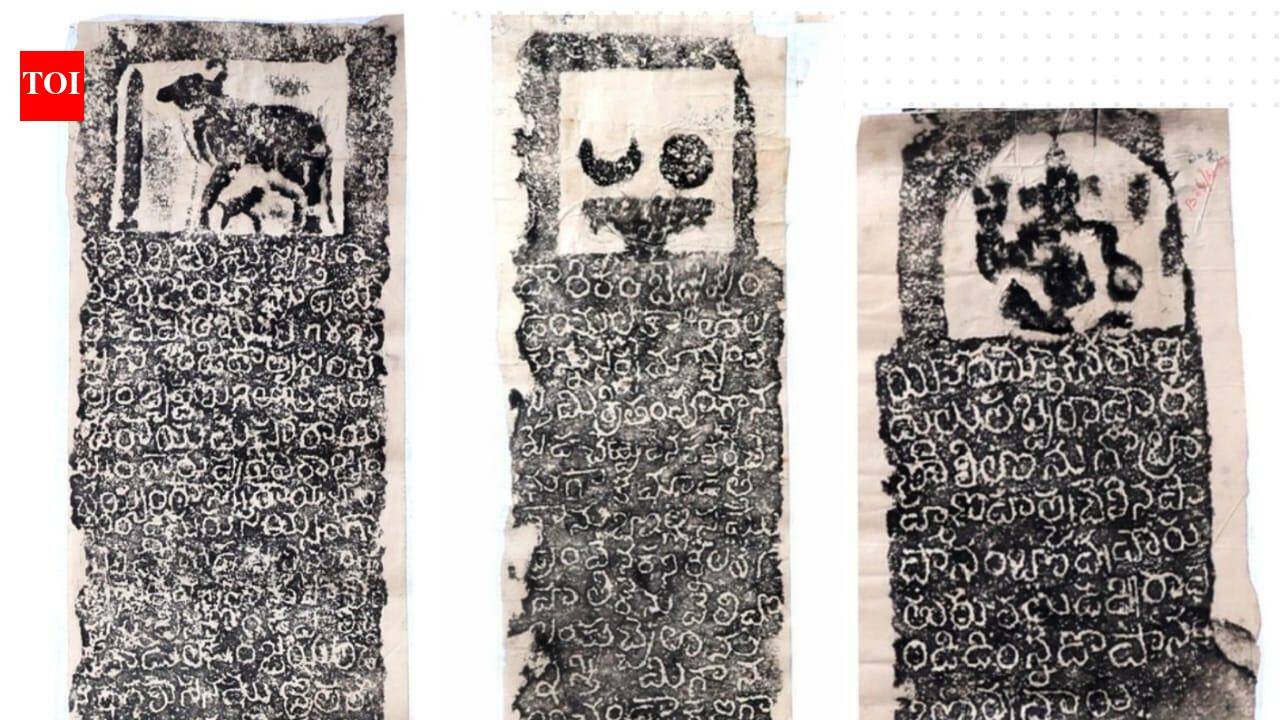
Hyderabad: A stone inscription dating to 1516 CE has emerged as the earliest known epigraphical reference to the Bonalu festival in present-day Telangana, offering evidence that the festival and its associated rituals were already well established during the reign of Vijayanagara emperor Krishnadevaraya.The inscription, now preserved at the State Archaeology Museum, Hyderabad, was originally discovered at Gobbur, a village located on the Telangana–Karnataka border. It is engraved in the Telugu language and script and is dated Śaka 1438, Dhātu year, Jyestha Śukla Tritiya, Sunday, corresponding to May 4, 1516 CE.Tax exemptions and land grants for Bonalu celebrationsAccording to ASI Epigraphy division director K Munirathnam Reddy, the inscription records the exemption of taxes levied on Rangam (ritual foretelling), Kūnamuggu, Gaddapattana, and Bonalu, which were otherwise payable to the govt.
It further states that lands under the irrigation tanks of Pedacheruvu and Bollasamudram were granted as sarvamanyam (tax-free endowment), in addition to earlier endowments, to support the celebration of the Bonalu festival in the presence of the deity at Kondapalli. The grants were made on the orders of Rāyasam Kondamarasayya, a senior official in the Vijayanagara administration.The inscription also records that Parvatayya erected the stone pillar during the reign of Krishnadevaraya, who ruled from Vijayanagara.Evidence of an older religious traditionBeyond documenting royal patronage, the inscription indicates that Bonalu and related ritual practices were already in existence before 1516, suggesting that the festival predates the inscription and had become an established part of local religious tradition by the early 16th century.The discovery provides valuable historical evidence for the antiquity of Bonalu, now recognised as one of Telangana’s most significant traditional festivals, strengthening its documented history through contemporary epigraphical records.
