


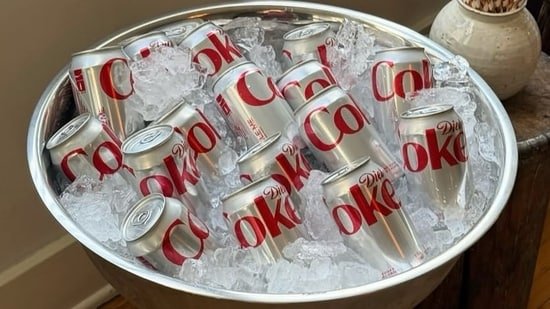
It sounds like a headline cooked up by a social media algorithm: a woman taking a weight loss drug develops a solid mass of undigested food in her stomach, only for doctors to ‘cure’ her with a daily prescription of Diet Coke. Also read | Orthopaedic surgeon shares real reason 26-year-old woman ‘was bleeding 15 days a month’: Was told it was normal until…
Yet, this bizarre medical crossover is entirely real, documented in a case study published in the New England Journal of Medicine in September 2025, and reported by Livescience.com in October 2025. The case highlighted a rare but eye-opening risk of GLP-1 receptor agonists like semaglutide (the active ingredient in Ozempic and Wegovy) — and the surprisingly low-tech, fizzy remedy doctors used to fix it.
The mystery mass
The patient, a 63-year-old woman from Massachusetts in the US with a history of obesity and type 2 diabetes, had reportedly been taking semaglutide for a year. While she successfully lost 40 pounds (18.1 kg), her weight loss suddenly accelerated alongside a month of escalating misery: relentless nausea, vomiting, a dwindling appetite, and a burning abdominal pain that wrapped around her back.
After over-the-counter acid reflux medications failed, she reportedly went to the emergency room. Scans and an endoscopy revealed a culprit straight out of a medical curiosity shop: a gastric bezoar, which is a tightly packed, hardened blob of partially digested food trapped in the stomach.
Because GLP-1 medications work by dramatically slowing down gastric emptying to keep patients feeling full, the woman’s digestive tract had essentially ground to a near-halt, allowing food to accumulate and solidify.
The ‘fizzy’ prescription
While physically breaking up a stomach mass with an endoscope carries surgical risks, doctors had a preferred, remarkably cheap alternative. As the authors of the case report noted: “Existing evidence, largely from case series and anecdotal experiences, supports the administration of 3 litres [0.8 gallons] of cola, either orally or through a nasogastric tube, within a 12-hour window. It is not well understood whether acidity, carbonation, or another mechanism accounts for dissolution of the bezoar.”
Because the patient had diabetes, doctors opted for diet soda. And because she wasn’t a fan of carbonated drinks, they cut the dose in half to 1.5 litres a day. The low-tech trick worked. On her second day of chugging diet soda, the patient reportedly felt a ‘tugging’ sensation in her abdomen, followed by immediate relief. A follow-up endoscopy confirmed the blockage was completely gone.
According to the medical team: “Bezoars formed from food material may be initially managed with oral administration of cola in patients in a clinically stable condition. This intervention is generally cost-effective and is associated with a lower risk of complications than invasive procedures.”
The science behind the soda
While the case was grabbing attention on social media as a ‘miracle cure’, medical experts urged a realistic look at the physiology. Dr Mohammad Shafi Kuchay, associate director of endocrinology at Medanta Gurugram, explained in an interview with HT Lifestyle that while the treatment is scientifically sound, it is far from a magic bullet.
“The reports of a woman being treated with Diet Coke after developing a stomach blockage while on Ozempic have sparked interest. While the case is medically plausible, it is important to understand the science behind it rather than viewing it as a ‘miracle cure’,” Dr Kuchay said.
Dr Kuchay pointed out that gastric bezoars are an incredibly rare side effect of the way these weight-loss drugs function: “GLP-1 receptor agonists, such as semaglutide (Ozempic), are effective medications used to manage type 2 diabetes and obesity. They work by slowing the rate of stomach emptying, helping people feel fuller for longer and improving blood sugar control. In very rare cases, however, this delayed gastric emptying may contribute to the formation of a gastric bezoar.”
The chemical makeup of soft drinks is what makes them uniquely suited to act as a gentle, liquid jackhammer. “Because of its acidic pH and carbonation, cola may help soften and dissolve phytobezoars (those formed from plant fibers) in selected patients,” Dr Kuchay said, adding, “However, this is not a standard treatment for all types of bezoars, nor is it a substitute for medical care.”
Red flags and prevention
For the millions of people currently taking GLP-1 medications, Dr Kuchay highlighted that there is no need to panic — or to start hoarding 2-litre bottles of soda.
“Most people taking GLP-1 medications will never develop a bezoar,” Dr Kuchay reassured. However, he warned that certain individuals face a higher baseline risk: “The risk is generally higher in people who already have delayed stomach emptying (gastroparesis), previous stomach surgery, poorly controlled diabetes, or diets high in indigestible plant fibres.”
He advised patients to watch for warning signs of a potential blockage, including persistent nausea, vomiting, abdominal pain, bloating, or early fullness after eating. “These symptoms should never be ignored and warrant medical evaluation,” Dr Kuchay warned. Also read | Cardiologist with 20 years of experience warns about Ozempic: ‘Not all weight loss on GLP-1 medications is healthy’
He strongly cautioned against patients attempting to self-treat digestive issues at home: “Patients taking GLP-1 medications should continue them only as prescribed and should not stop treatment or attempt home remedies based on viral social media stories. Maintaining adequate hydration, chewing food thoroughly, gradually introducing high-fibre foods, and attending regular follow-ups with a healthcare provider can help minimise gastrointestinal side effects.”
Note to readers: This report is based on user-generated content from social media. HT.com has not independently verified the claims and does not endorse them.
This article is for informational purposes only and not a substitute for professional medical advice.
