


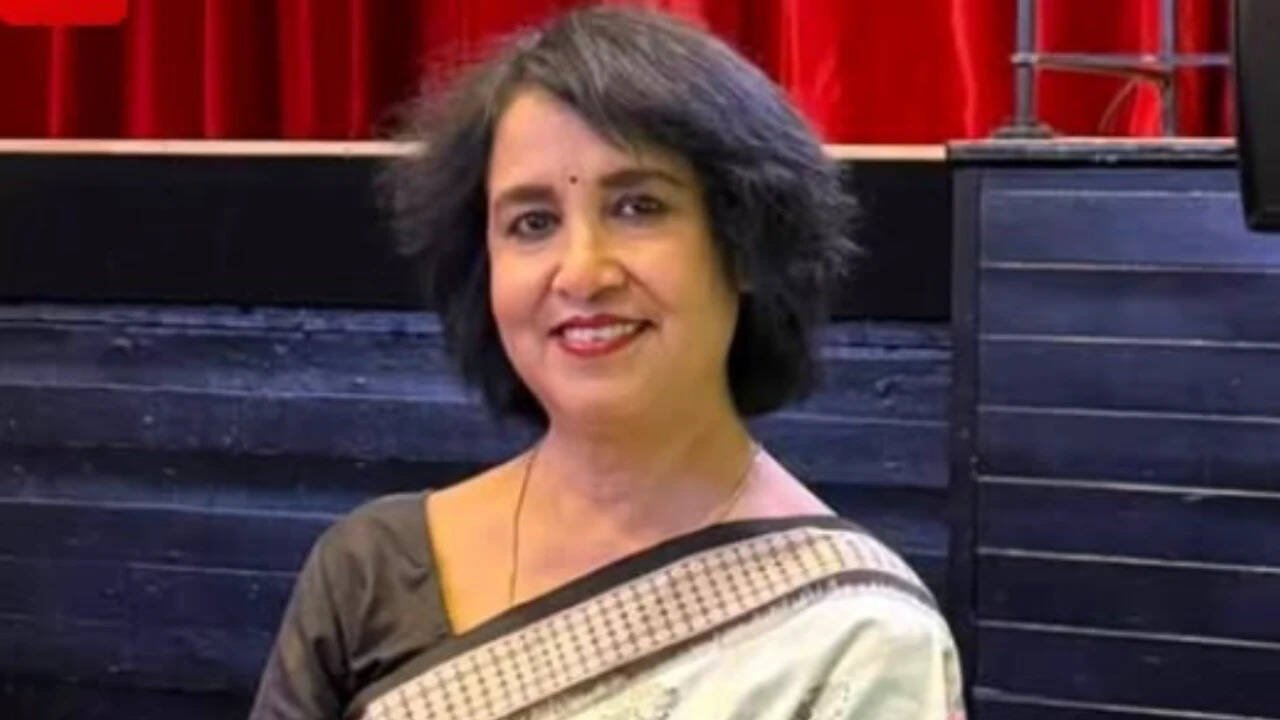
KOLKATA: Nearly 19 years after she was forced to leave Kolkata amid violent protests, Bangladesh-born author Taslima Nasrin is set to return to the city on August 1 for a literary event at Rabindra Sadan.For Nasrin, who has repeatedly described Kolkata as her ‘home’, the visit marks the end of an absence that began in November 2007.A physician-turned-writer, Nasrin is among South Asia’s most controversial literary figures.Over the decades, she has earned praise for her outspoken views on women’s rights, secularism and freedom of expression, while simultaneously drawing fierce criticism from religious groups in Bangladesh and India.Nasrin shot to international prominence in the early 1990s with her novel Lajja, which explored the plight of a Hindu family in Bangladesh in the aftermath of the Babri Masjid demolition in India.The book triggered widespread controversy and backlash from religious groups in Bangladesh.Over the years, she became known for her writings on the treatment of women in Islamic societies and her criticism of religious fundamentalism.Her autobiographical work Dwikhandita also sparked protests in West Bengal.Nasrin has been living in exile since 1994 after facing threats over her writings.She has often said that her criticism of fundamentalism led to her expulsion from Bangladesh, where no government has allowed her to return.Nasrin left Bangladesh in 1994 after a fatwa was issued against her and death threats intensified following the publication of Lajja and her newspaper columns.She has maintained that her writings angered religious hardliners, forcing her into exile.Although she spent years in Europe and elsewhere, Nasrin eventually moved to Kolkata, which she has repeatedly described as the closest place to home because of its shared Bengali language and culture.Nasrin lived in Kolkata for several years before being forced to leave the city in November 2007 after violent protests by fundamentalist groups, who accused her of insulting their religion through Dwikhandita and other writings.The protests, marked by road blockades and arson, prompted the then Left Front government led by Buddhadeb Bhattacharjee to deploy the Army in Kolkata.Authorities later shifted Nasrin out of the city and arranged accommodation for her outside West Bengal over security concerns.Nasrin has often spoken about the trauma of that period, saying she was ‘stunned’ when she was asked to leave Kolkata and that the memories remain fresh even today.She has also accused successive governments in West Bengal of denying her permission to return, citing law-and-order concerns.Nasrin has authored dozens of novels, memoirs, poetry collections and essays. Some of her best-known works include: Lajja, Dwikhandita, Shodh, Nirbashan, Bandini, etc.During her upcoming visit to Kolkata, Nasrin is expected to recite poems from Bandini, a collection she wrote while under house arrest in Delhi.The poems revolve around Kolkata, a city she has long said she wishes to return to permanently.Nasrin, who is currently based mostly in Delhi, recently said she remains ‘open to shifting back permanently’ to Kolkata, which she continues to regard as India’s cultural capital.
