


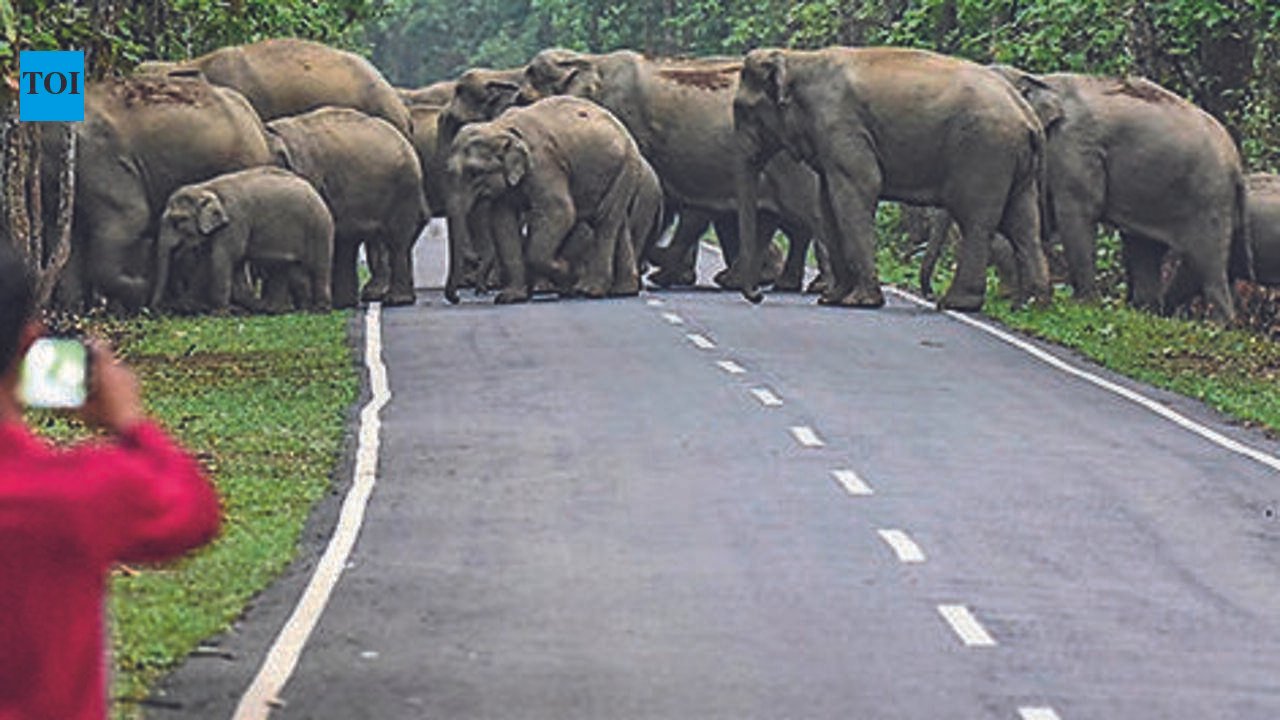
Guwahati: Assam will consult MLAs and experts to prepare a roadmap to tackle human-elephant conflict, forest minister Jayanta Malla Baruah said Monday.Responding in the assembly to a Calling Attention motion by MLA Padma Hazarika on human-elephant conflict along the Assam-Bhutan border, Baruah said the problem was not confined to border areas but affected several parts of the state.The forest department will first seek ground-level inputs from MLAs representing affected constituencies before holding detailed discussions with wildlife experts and experienced elephant handlers, he said.“After the discussion on the budget is completed, we will sit with the MLAs of the districts facing the problem and experts to seek suggestions to solve the problem,” he added.Baruah said the Himanta Biswa Sarma-led govt prepared a long-term strategy focused on habitat restoration, increased forest cover and reconnecting fragmented elephant corridors. He said shrinking forests, broken corridors and declining food and water sources were forcing elephants into villages and farmland.The minister said restoring degraded forests and ensuring adequate food, water and shelter inside elephant habitats were key to reducing conflict and promoting coexistence.Alongside long-term measures, the govt is strengthening immediate interventions such as bamboo, grass and indigenous fodder plantations inside forests, creation of waterholes, Assam lemon plantations as natural barriers and scientific evaluation of beekeeping as an elephant deterrent. Rapid Response Teams are also being better equipped to handle conflict situations.Baruah said compensation for crop damage was also enhanced. “An amount of Rs 8000 would be provided per bigha of cultivation land if elephants damage crops. This would help minimise distress and reduce the likelihood of confrontations between humans and elephants,” he added.He said experiences from Assam showed elephant movement stabilised and conflict declined where degraded forests were restored and encroachments removed, adding that lasting coexistence required more than physical barriers.
