


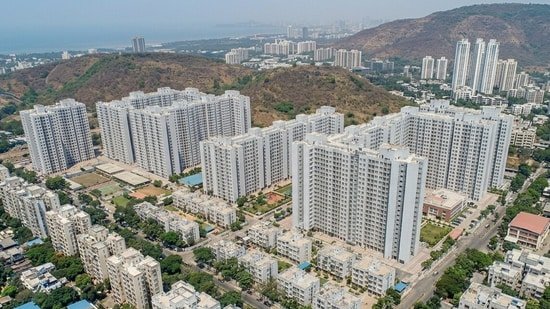
The Maharashtra government’s amendment to the Maharashtra Housing and Area Development (MHADA) Act, 1976 is expected to pave the way for redeveloping nearly 13,000 old and dilapidated buildings across Mumbai. The amendment aims to address legal and procedural bottlenecks that have delayed projects for years.
What is a dilapidated building?
A dilapidated building is a structure that has deteriorated due to age, poor maintenance or structural damage, making it unsafe or unfit for occupation. Such buildings often require major repairs, reconstruction or complete redevelopment to ensure occupant safety.
All cessed buildings in the city come under the purview of the Mumbai Building Repairs and Reconstruction Board (MBRRB) under MHADA. Many of these buildings are at least eight decades old, and some collapse partially or entirely every monsoon, leading to loss of life and injury.
Every year, ahead of the monsoon, the MHADA conducts a pre-monsoon structural audit to identify buildings that pose a safety risk. Based on the findings, MHADA issues evacuation notices to residents of buildings deemed ‘dangerous’.
To support affected residents, MHADA offers transit tenements in alternative locations. However, many occupants resist relocation due to location preferences, community ties, and other social concerns. Redevelopment of such dilapidated structures remains a long-standing challenge in Mumbai’s real estate sector, with frequent building collapses reported during the monsoon season.
Dilapidated buildings in Mumbai
According to MHADA data, there are more than 13,000 dilapidated buildings in the city of Mumbai. Ahead of the monsoon, the MHADA’s MBRRB released a list of 82 residential buildings in South and Central Mumbai classified as the city’s most dangerous structures requiring immediate evacuation.
The list of 82 buildings also includes 43 buildings declared highly dangerous last year. In 2025, the MHADA released a list of 96 extremely dangerous buildings. In 2024, MHADA issued a similar list of 20 extremely dangerous buildings, and BMC issued a list of 188 dilapidated buildings across the city.
How will the amendment pave way for redevelopment?
The amendment seeks to strengthen MHADA’s powers to facilitate redevelopment where projects have remained stuck due to disputes among occupants, landlords, developers or housing societies.
The legislature has now amended the Act to give Mhada the legal authority to redevelop the old and dilapidated buildings for which it has been collecting cess. The issue is now pending before the Supreme Court and the amendment will help MHADA get the desired verdict, according to a Hindustan Times report.
One of the key objectives of the amendment is to simplify the redevelopment process by enabling MHADA to intervene more effectively in projects that have remained stalled for years. The proposed changes are expected to reduce delays arising from litigation, disagreements among stakeholders and procedural bottlenecks that have prevented redevelopment from moving forward. By providing a clearer legal framework, the government hopes to accelerate the reconstruction of unsafe buildings while ensuring that eligible residents receive new homes in redeveloped projects, the report said.
“The amendment will help thousands of tenants living in very old buildings, whose redevelopment has remained stalled for decades due to landlord-tenant disputes. 815 persons had died in dilapidated building collapses from the 1970s till 2018. Between January 2021 and August 2025, there have been 345 incidents of full or partial building collapses, resulting in eight deaths and 28 injuries,” MHADA official said.
According to MHADA officials, this is also in line with the Maharashtra government’s push for cluster redevelopment projects across the city of Mumbai.
What is cluster redevelopment?
Cluster development is an urban redevelopment approach in which multiple adjoining buildings or plots are combined into a single large project. It enables better planning, improved infrastructure, wider roads, open spaces, and amenities, while supporting the rehabilitation of existing residents and more efficient land use in crowded cities.
At present, MHADA is undertaking 11 major redevelopment projects under the C&DA model across nearly 925 acres in Mumbai. According to the authority, these projects are expected to benefit more than 80,000 residents living in ageing colonies constructed decades ago. Along with MHADA, the slum rehabilitation authority (SRA) has also identified slum clusters in the Mumbai real estate market, which will be taken up for redevelopment.
Under MHADA’s Construction and Development Agency (C&DA) system, developers are appointed to redevelop entire housing clusters while eligible residents receive rehabilitation apartments, transit rent compensation and corpus funds. MHADA has said the objective of these projects is to improve residents’ quality of life through planned urban development and modern infrastructure.
