


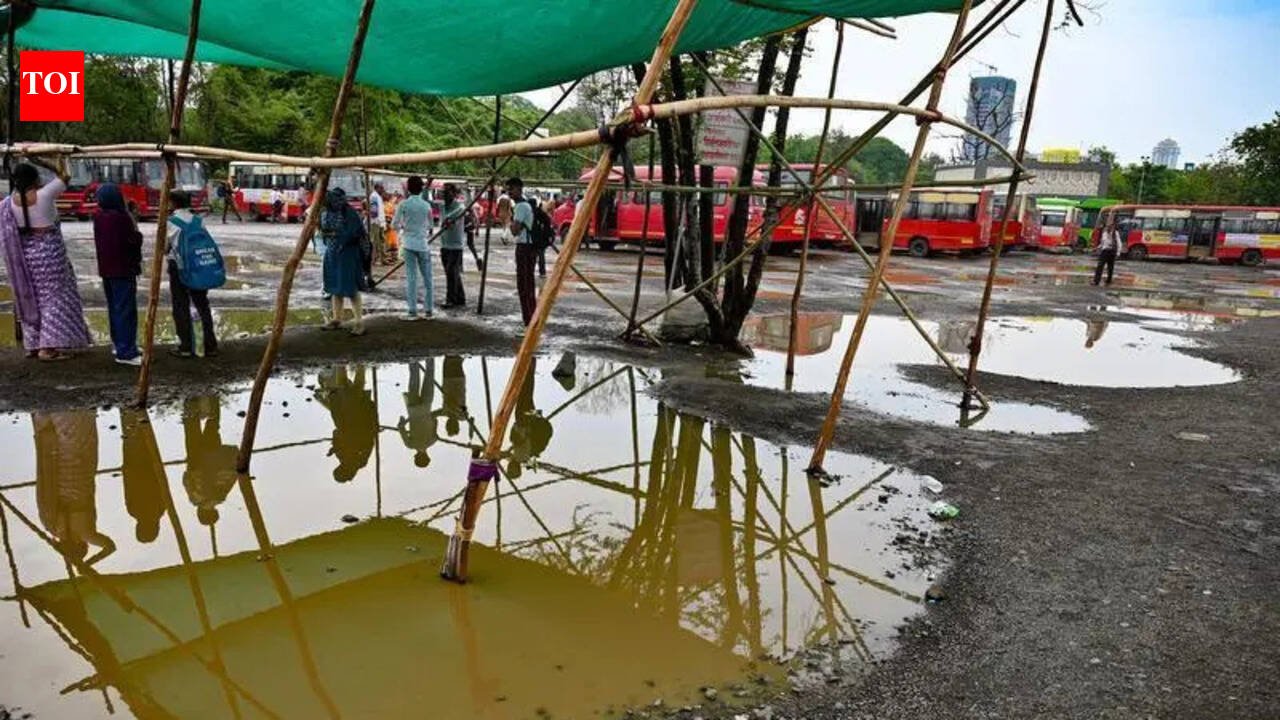
Nagpur: The Mor Bhavan bus terminus, from where hundreds of Aapli buses operate daily, has turned into a cesspool of rainwater, exposing the civic body’s poor monsoon preparedness. The seven-acre terminus is riddled with crater-sized potholes, loose gravel, uneven patches and slush, making it hazardous for commuters.The condition is particularly difficult for senior citizens, children and persons with disabilities, who struggle to navigate the slippery surface. Several commuters have reportedly suffered minor injuries while boarding or alighting from buses.During TOI’s visit, buses were seen negotiating stagnant pools of water as passengers carefully made their way around muddy craters to reach the platforms. Every passing bus sent dirty water splashing onto waiting commuters, leaving many with mud-stained clothes.The deteriorating condition prompted NMC commissioner Vipin Itankar to convene a meeting on Wednesday, directing the transport department to make the terminus pothole-free and complete repairs without delay.Ironically, although the terminus has nearly a dozen platforms, the Maharashtra State Road Transport Corporation (MSRTC) has permitted NMC to operate its Aapli Bus fleet from only eight. The restricted access has led to congestion and accelerated deterioration of the operational area.An Aapli Bus staff member, requesting anonymity, said the situation has worsened with the onset of the monsoon. “Drivers are forced to crawl through the potholes to avoid damaging the buses, but they cannot prevent dirty water from splashing onto passengers. The entire terminus has become unsafe for operations,” the staffer said.Regular commuter Mangesh Sahare said passengers are bearing the brunt of official apathy. “The slush is everywhere. You either step into muddy water or risk slipping while boarding a bus. By the time you reach work, your clothes are already dirty,” he said.The situation is particularly ironic because, ahead of last year’s monsoon, NMC’s hot-mix plant re-carpeted the terminus as a stop-gap measure. Barely a year later, the temporary surface has completely worn away, underscoring the absence of a durable engineering solution.
