


Drones, CCTV, latest tech deployed: SSP Sgr
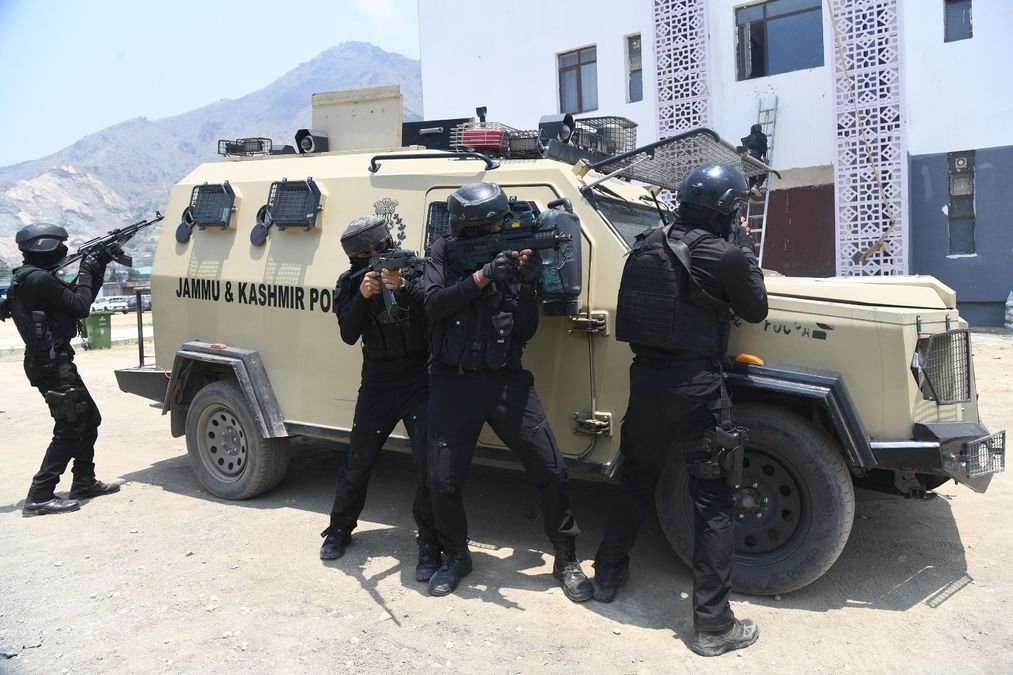
Joint mock drill held at Pantha Chowk Yatri Niwas to meet exigency
Srinagar, Jun 30: With the annual Shri Amarnath Ji Yatra (SANJY) set to commence amid heightened security and logistical preparedness from July 3, Jammu & Kashmir Police on Tuesday said elaborate arrangements have been put in place to ensure a safe, smooth and incident-free pilgrimage.
Speaking exclusively to Rising Kashmir after a joint mock drill at Pantha Chowk Yatri Niwas, Inspector General of Police (IGP) Kashmir, VK Birdi said that a comprehensive and multi-layer security mechanism has been established across the Valley, especially along the yatra route.
“A multi-layer security grid is in place. We have done multiple drills related to contingencies. Today, we conducted a mock drill involving all stakeholders of the area to ensure road responsibility and security measures,” the IGP said. “From roads to the cave shrine, every security measure is in place.”
He urged pilgrims and citizens to strictly adhere to cut-off timings issued by the authorities so that movement along the highway and yatra routes remains smooth and regulated.
“I urge the pilgrims and citizens to follow cut-off timings issued by the traffic police so that they can plan their travel accordingly for smooth pilgrimage and travel,” Birdi said.
The Kashmir Police chief said that seamless coordination among security agencies, civil administration and local stakeholders remains central to the security architecture designed for this year’s pilgrimage.
Speaking to reporters after the drill, Senior Superintendent of Police (SSP) Srinagar Dr Sundeep Chakravarthy said advanced surveillance and modern technology are being extensively used to monitor the yatra corridor and vulnerable areas.
“Every area is covered under CCTVs, and we are using drones. Higher reaches are also being covered. Latest technology is in place, corridors are also being protected,” he said.
The SSP said that strong inter-agency coordination would play a vital role in ensuring the peaceful conduct of the pilgrimage. “Inter-agency coordination will help us ensure a peaceful and smooth yatra,” he said.
Chakravarthy said that personnel on the ground are being regularly briefed about evolving situations and responsibilities.
“Every rank of J&K Police knows their duty and responsibility. Men on the ground get regular briefings, and we get inputs from them also. So we know what to do and what not to do,” he added.
Highlighting the role of local support systems, the SSP said service providers and stakeholders have also been integrated into the larger security and management framework. “Local stakeholders and service providers are on the same platform and ensuring close coordination,” he said.
Earlier, a large-scale mock drill was conducted at Pantha Chowk Yatri Niwas in Srinagar involving Police, Central Armed Police Forces (CAPFs), Traffic Police, SDRF, Fire and Emergency Services, Health Department, district administration, ambulance services and other stakeholders.
According to a police spokesperson, all participating agencies were thoroughly briefed on their respective roles and Standard Operating Procedures (SOPs) before the mock drill began.
“Emphasis was laid on maintaining coordination and communication flow,” the spokesperson said. The exercise simulated multiple emergency scenarios, including road accidents, fidayeen attacks, law and order contingencies, accidental injuries, evacuation procedures, rescue operations and medical emergencies.
“Srinagar Police reiterates its unwavering commitment to ensuring a safe, secure and incident-free Amarnath pilgrimage through coordinated planning, seamless inter-agency cooperation and proactive policing,” the spokesperson added.
Officials said the administration has introduced several additional safety and monitoring mechanisms this year. The “Pehchan”, a QR-based verification system by the police, has been implemented for ponywallas, palkiwallas, porters and other service providers associated with the pilgrimage to ensure proper identification and background verification.
In addition, RFID-based tracking systems have been activated for pilgrims to enable real-time monitoring and movement regulation along the yatra route. The officials said the technology would help improve crowd management, emergency response and overall coordination.
Security agencies have also increased deployment across J&K with around 670 companies of Central Armed Police Forces stationed at various strategic locations to strengthen the security grid around the twin routes of Baltal and Pahalgam.
As Kashmir prepares to welcome thousands of pilgrims from across the country, authorities say the focus remains firmly on safety, coordination and ensuring that devotees undertake the spiritual journey with confidence and peace of mind.
