


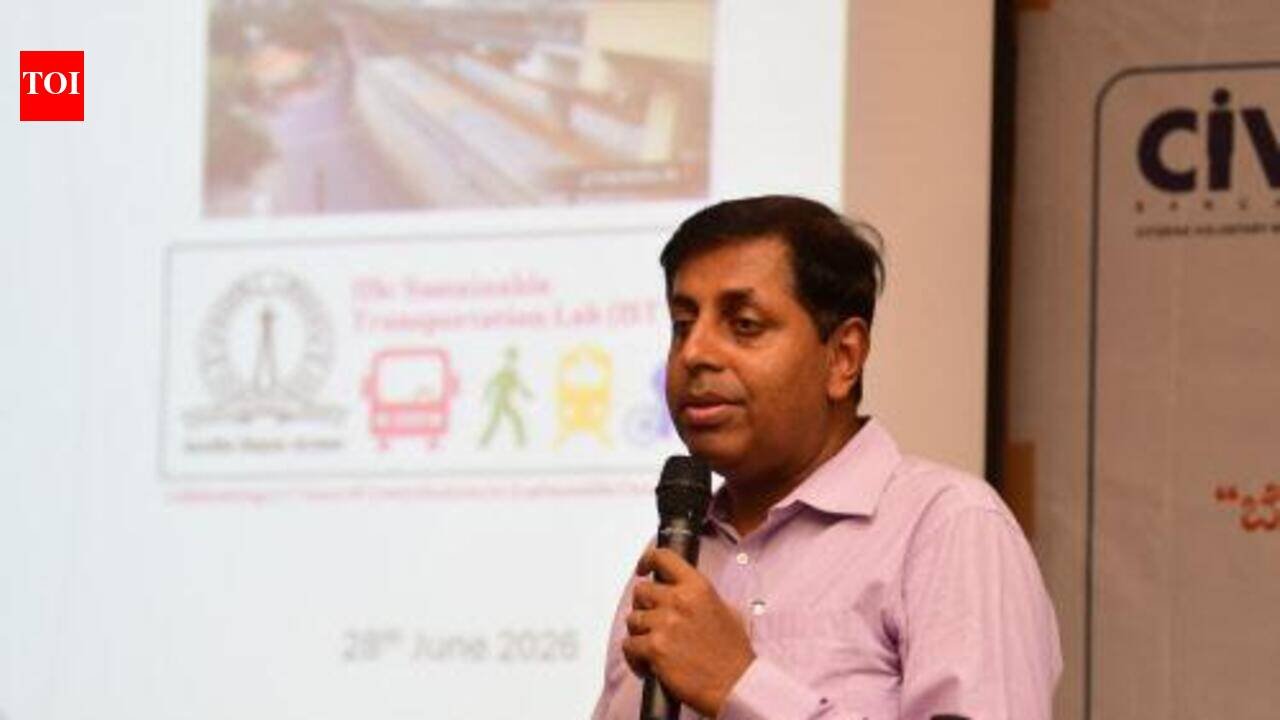
Bengaluru: Bengaluru’s proposed double-decker metro corridors could reverse years of efforts to shift commuters towards public transport by making private vehicle travel more attractive, according to IISc Prof Ashish Verma. Releasing an independent technical assessment of the project, Verma argued that urban mobility planning should focus on increasing the share of trips made by Metro, buses, walking and cycling rather than creating additional road capacity for cars.According to the study, the introduction of double-decker corridors under Metro Phase 3 could reduce Metro ridership by around 11,000 passengers a day and that the car usage would rise by nearly 4%. Verma claimed the shift away from public transport would lead to higher fuel consumption and increased emissions, undermining the city’s sustainability goals.Calling the proposal a “suicide of the metro system’s own objectives,” he said the project risks weakening public transport while strengthening reliance on cars.Residents flag concernsResidents of JP Nagar and surrounding areas have raised concerns over the proposed double-decker metro corridor, alleging that it could worsen congestion by fuelling more traffic towards already busy junctions near Vega City and Kanakapura Road.They argued that lessons from the recently opened Ragigudda flyover, which has witnessed traffic bottlenecks, have not been adequately considered. Citizen groups also questioned official estimates of tree loss. While supporting improvements to public transport, residents said the elevated road component requires a thorough review of its traffic and environmental impacts.Citizens question Indiranagar elevated corridor DPRResidents opposing the proposed Indiranagar elevated corridor have questioned the data and assumptions used to justify the project, arguing that authorities have not clearly established the problem the flyover is intended to solve.Members of I Change Indiranagar alleged that the DPR relies on limited traffic data and does not adequately explain where traffic using the corridor originates or whether alternative solutions were evaluated.Residents argued that the project could significantly alter the character of the neighbourhood, affecting parks, trees, public spaces and pedestrian movement along key stretches such as 80 Feet Road, CMH Road and 100 Feet Road.They also questioned projections that the corridor would maintain high travel speeds and deliver long-term congestion relief despite increasing traffic volumes. Citizen groups have sought a detailed review of the project’s costs, benefits and alternatives before construction moves ahead.
