


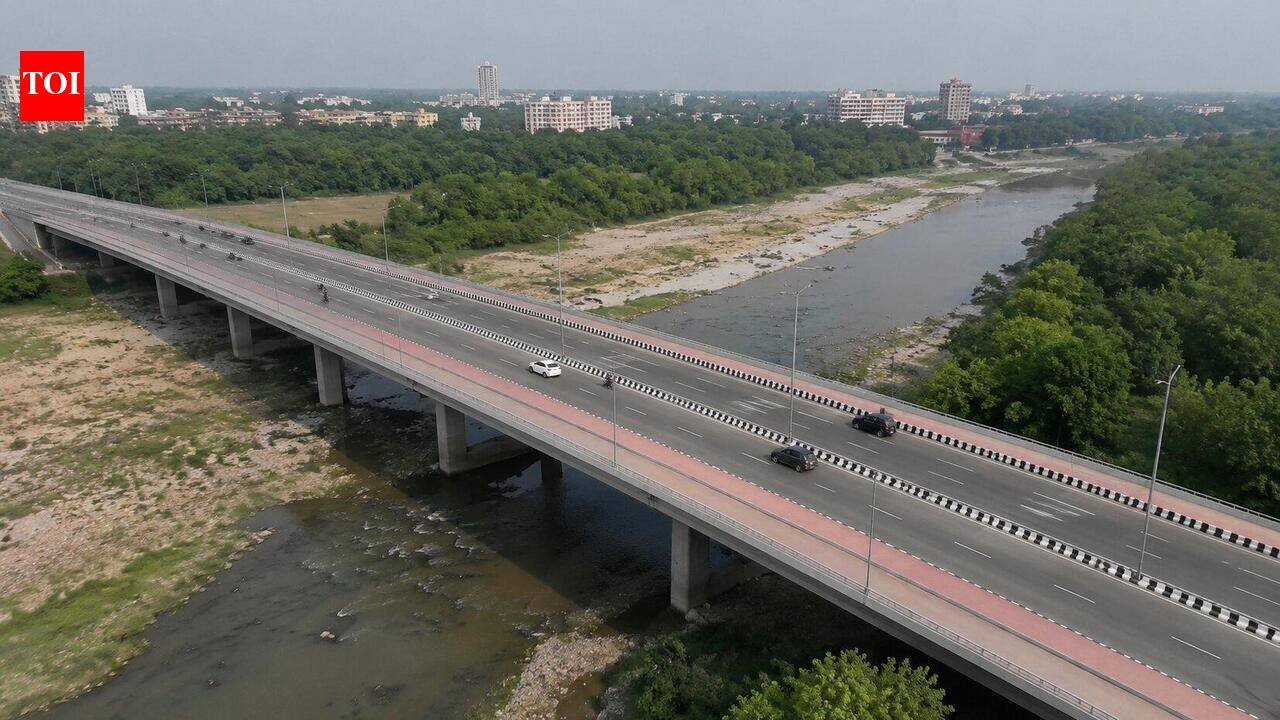
Chandigarh: The Chandigarh Administration has set in motion the construction of a high-level bridge over the Sukhna Choe to replace the existing flood-prone causeway linking Manimajra with Sector 26. Designed to provide all-weather crossing and improve traffic flow on one of the city’s busiest routes, the project is expected to be completed in one year.The project, which is estimated to cost around Rs 17 crore, has entered the tendering stage, with the UT engineering department floating a request for proposal (RFP) to appoint an executing agency.The proposed bridge will be the city’s third high-level crossing over the Sukhna Choe. Spread across 500 metres and 27 metres in width, it will have four traffic lanes, dedicated cycle tracks and two-metre-wide pedestrian pathways on either side. The bridge will connect the T-junction in Sector 26 with Shastri Nagar in Manimajra, with its deck aligned to the level of the adjoining roads for uninterrupted movement.The project includes remodelling of the existing T-junction in Sector 26. Officials said the junction will be elevated by nearly two metres to facilitate smoother traffic flow. A slip road towards Transport Chowk and a free left-turn lane for vehicles travelling from Sector 26 towards Manimajra will be constructed to reduce congestion.The existing low-level causeway is frequently submerged during heavy rain, making the road unsafe and disrupting connectivity between Chandigarh and Panchkula. The route carries heavy daily traffic, including commuters from Panchkula, Manimajra and IT Park, besides serving as a major approach to the Punjab and Haryana High Court, Haryana Civil Secretariat, Sukhna Lake and the city’s northern sectors.The proposal for the bridge was first included in the Chandigarh Master Plan-2031. However, repeated flooding and worsening traffic bottlenecks underlined the need for its implementation. During the 2023 monsoon, release of water from Sukhna Lake inundated the causeway, damaging its structure and forcing its closure for several days.Following these incidents, the UT administration commissioned a feasibility study to assess traffic volume and engineering requirements. Based on the findings, a consultant prepared the bridge design. The project has since received conceptual approval from the sub-committee of the Chandigarh Heritage Conservation Committee, clearing the way for its execution.Once completed, the bridge is expected to provide a flood-resilient, all-weather link between Manimajra and the rest of Chandigarh while improving traffic movement along one of the city’s key entry corridors.
