


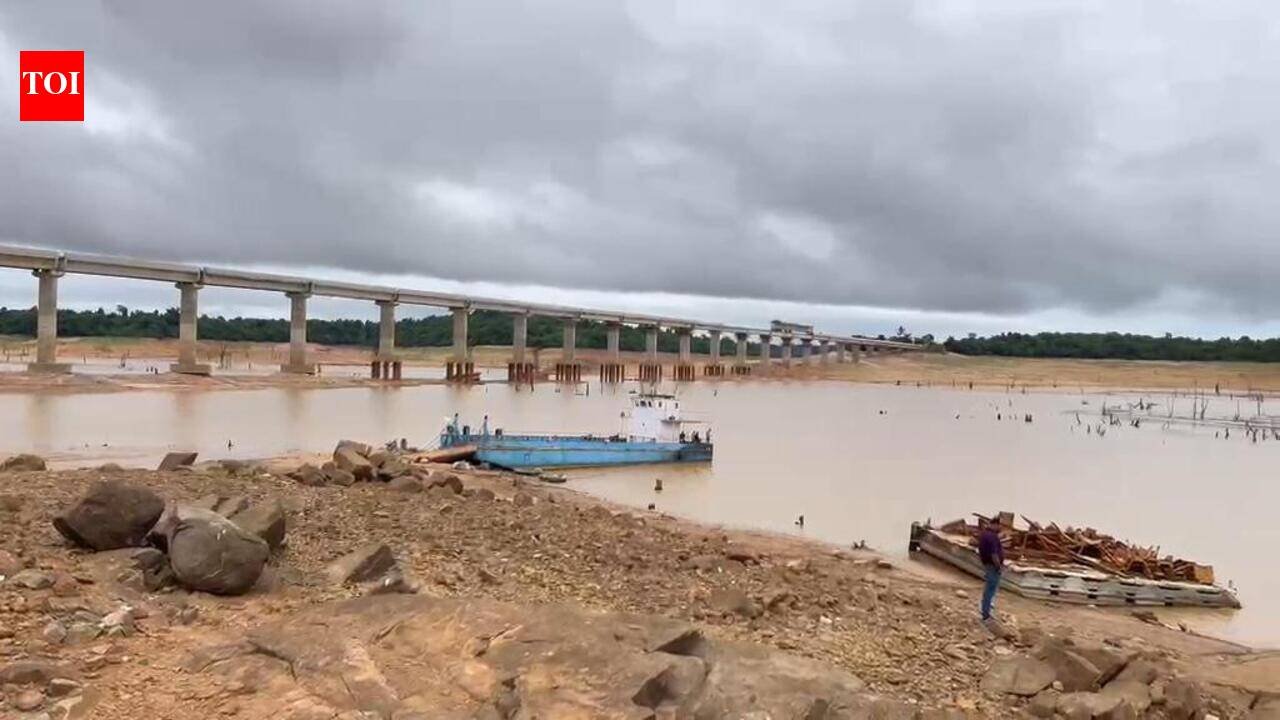
Shivamogga: There is a popular saying that the monsoon is a gamble for Indian farmers. However, this has become a harsh reality for the farmers in Malnad region. Known as the gateway to the Western Ghats, Shivamogga and its surrounding areas are facing severe distress as the southwest monsoon has largely evaded the region this year, leaving vast fields parched and farmers staring at immense financial ruin.While pre-monsoon showers in May prompted early tilling, the actual monsoon has seen a sharp deficit since June 1.According to joint director of agriculture Kiran Kumar, Shivamogga district has recorded a 25% rainfall deficit for June, receiving only 61.7 mm against the normal 81.9 mm.Relying on the initial showers, thousands of farmers across regions like Aynur, Haranahalli, Holalur, Shikaripura and Soraba invested heavily in sowing maize and paddy. Three weeks later, the fields are barren. Seeds sown deep in the dry soil have failed to sprout, and the few shoots that did break through have withered away under the scorching sun.Farmers who took loans to spend on seeds, fertiliser and labour said they are staring at complete crop failure, with many small-scale and tenant farmers warning that they are being pushed to the brink of financial collapse due to skyrocketing input costs and black-market exploitation.While the agriculture department maintains that there is adequate stock of subsidised seeds and fertilisers, and that there is still time until late Aug for paddy transplantation, farmers argue that they have no capital left to invest in a second sowing cycle without direct govt intervention.Adding to this growing tension is brewing water crisis as the region’s crucial river systems are drying up at an alarming pace. Sharavathi and Bhadra rivers—which serve as the primary lifelines for drinking water, agricultural irrigation and massive hydroelectric power generation across Karnataka—are seeing drastically low water inflows. The sight of receding water levels and dry patches along the riverbeds has triggered immense anxiety among locals. If the monsoon does not revive significantly in the coming weeks, the region faces an imminent threat of acute drinking water shortages, compounded by severe restrictions on agricultural pumping, pushing an already vulnerable farming community into panic.
