


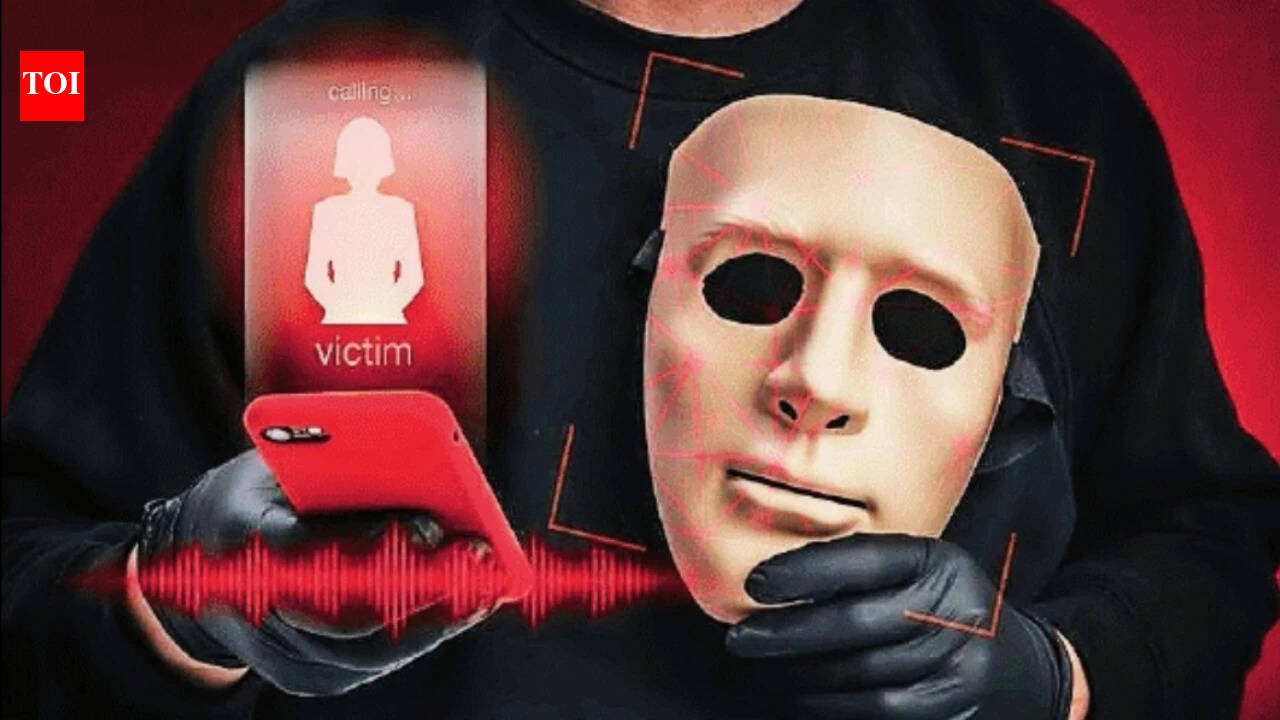
MUMBAI: A sophisticated new form of impersonation fraud is targeting business groups and companies by combining social engineering with malware deployment.Scammers are now gaining unauthorized access to employees’ mobile devices to alter contact lists and impersonate company heads.Two firms recently fell victim to this tactic, losing a combined Rs 3.48 crore after their accountants were tricked into transferring money to fraudsters.In the first incident, an aluminium supplying and trading firm fell victim to a highly targeted attack that resulted in a loss of Rs 1.98 crore.The breach began in the evening on June 11 when the company’s accountant received a malicious zip file from an unknown mobile number.Unaware of the danger, she opened the file, which immediately granted the fraudster remote access to her phone.According to the FIR (lodgedby cyber police), the fraudster stealthily altered her phone contact list, blocking the actual MD’s number and saving his own number under the MD’s name.Posing as the MD over WhatsApp, the fraudster initiated a conversation over WhatsApp and directed the accountant to urgently release Rs 1.98 crore of the firm’s funds to a bank account in Gurgaon.Trusting the request, the accountant instructed her subordinate to make the transfer between June 11 and 15. She eventually found out that she had been scammed and approached police who froze Rs 87.04 lakh of the transferred funds.In an almost identical playbook unfolding around the same period, a luxury gold jewellery design firm was defrauded of Rs 1.5 crore.The fraudster targeted a junior accountant at the firm, using the same tactic of sending a malicious zip file.Once the file was opened, the fraudster gained control of the phone, blocked the company director’s mobile number andsaved his own number under the director’s name.The fraudster then posed as the director over WhatsApp, sending instructions to the junior accountant to transfer Rs 1.5 crore to the Ghaziabadbased bank account of a garments trader.The junior accountant consulted a senior accountant, and believing the order came directly from the top, they executed the transfer between June 12 and 16.“While these specific attacks targeted mobile devices, malicious files could infect desktops and laptops too, potentially causing catastrophic damage to an enterprise,” said cybersecurity expert Nikhil Mahadeshwar, who is working with police on analyzing these malicious zip files.“Companies must deploy security tools capable of containing, investigating, and remediating cyberattacks,” he said.
One message and crores are gone
The cyber police, led by DCP Ba jrang Bansode, recently hosted a session for business houses to create awareness on impersonation scams and share prevention strate gies.
