


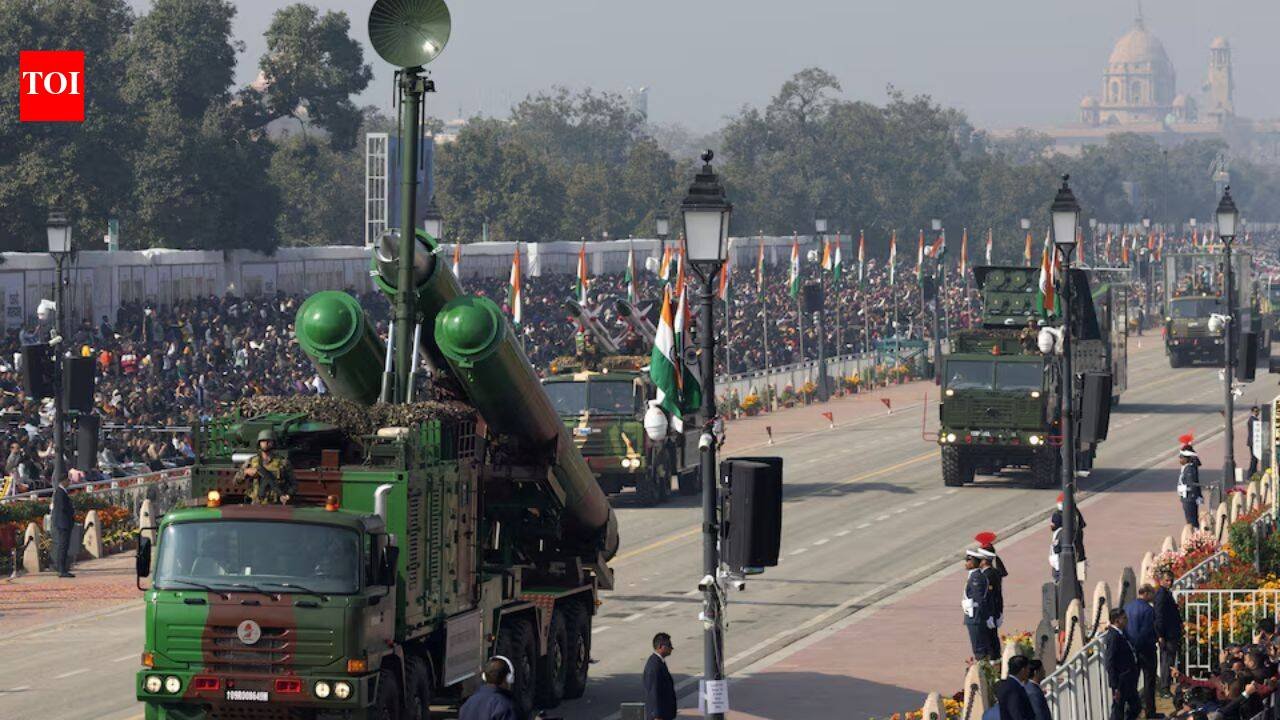
The United Arab Emirates reported interest in acquiring India’s BrahMos supersonic cruise missile and Akashteer air-defence system reflects its broader efforts to strength both its offensive and defensive capabilities while diversifying military suppliers beyond its traditional western partners.According to a Reuters report, India and the UAE are holding preliminary discussions on the possible sale of the two systems as the Gulf nation seeks to enhance its ability to respond to emerging threats following recent conflict in the Middle East.
If the discussions turns into a deal between Abu Dhabi and New Delhi, it will be a major boost for UAE’s ability to conduct precision strikes against maritime and land targets while improving its capacity to detect, track and respond aerial threats through an integrated air-defence network.Policy of DiversifyingThe UAE has long adopted a strategy of diversifying its defence procurement by sourcing military equipment from multiple countries rather than relying on a single supplier.“A diversified supplier base gives the UAE more strategic autonomy, and closer ties with India have the added benefit of not antagonising the US as the countries remain allies,” said Pearl Pandya, South Asia senior analyst at Armed Conflict Location & Event Data, a conflict monitoring group.While the United States remains its principal security partner, the UAE has over the years acquired fighter aircraft, air-defence systems, drones and naval platforms from a range of Western and non-Western suppliers.UAE Air Force currently consists of 80 American F-16 E/F Block 60 “Desert Falcon” fighters and around 60 French Mirage 2000-9 aircraft, with 80 Rafale fighters on order from France. UAE also operates Wing Loong series drones, acquired from China.For air-defence UAE primarily uses Terminal High Altitude Area Defence (THAAD) and Patriot systems from the United States. UAE has also acquired the Russian Pantsir-S1 short-range air-defence system and Cheongung-II (KM-SAM) medium-range air-defence system.The UAE’s latest diversification push was underscored in February 2026 when Abu Dhabi and Seoul signed a memorandum of understanding on defence cooperation valued at more than $35 billion.
Brahmos missile
Offensive and Defensive:United Arab emirates sits along the Persian Gulf and near the Strait of Hormuz, through which a significant portion of global oil trade passes. Recent conflicts in the Middle East have underscored the growing threat posed by ballistic missiles, cruise missiles and drones to the emirate’s cities and critical infrastructure.BrahMos, designed for both anti-ship and land-attack missions, would give the UAE the capability to rapidly engage hostile naval vessels threatening critical shipping lanes, offshore energy infrastructure and coastal facilities.Beyond its maritime role, BrahMos would strengthen the UAE’s conventional strike capabilities. The missile is capable of being launched from land, sea and air platforms and strike against both maritime and land-based targets. This would provide the UAE with an additional stand-off strike option against military installations, command centres and other high-value targets.BrahMos would not merely serve as a weapon but as a deterrent, increasing the cost of potential aggression against the UAE. Abu Dhabi’s current defence modernisation efforts are being shaped by evolving regional security challenges and the need to safeguard critical infrastructure.While BrahMos would strengthen the UAE’s offensive capabilities, Akashteer could play an equally important role on the defensive side by enhancing the effectiveness of the country’s existing air-defence network.Akashteer system acts as a centralised network that integrates inputs from radars, sensors, communication systems and air-defence weapons into a common operational picture, enabling commanders to detect, track and respond to aerial threats more quickly and efficiently.The effectiveness of an air-defence network depends not only on the quality of its missiles but also on how efficiently radars, sensors and interceptors communicate with one another. Akashteer is designed to address precisely this challenge by creating a unified and automated battlefield air defence picture.Akashteer operates within a broader ecosystem that includes the Akash surface-to-air missile system and other air-defence assets. By adopting Akashteer, the UAE would gain familiarity with India’s air-defence architecture, potentially creating opportunities for future cooperation in missile defence and air-defence modernisation.If the negotiations culminate in a deal, the acquisition of BrahMos and Akashteer would represent more than just another addition to the UAE’s increasingly diverse military inventory.Together, the two systems would enhance both the offensive and defensive dimensions of the country’s defence architecture at a time when regional conflicts are increasingly characterised by missile, drone and maritime threats.
