


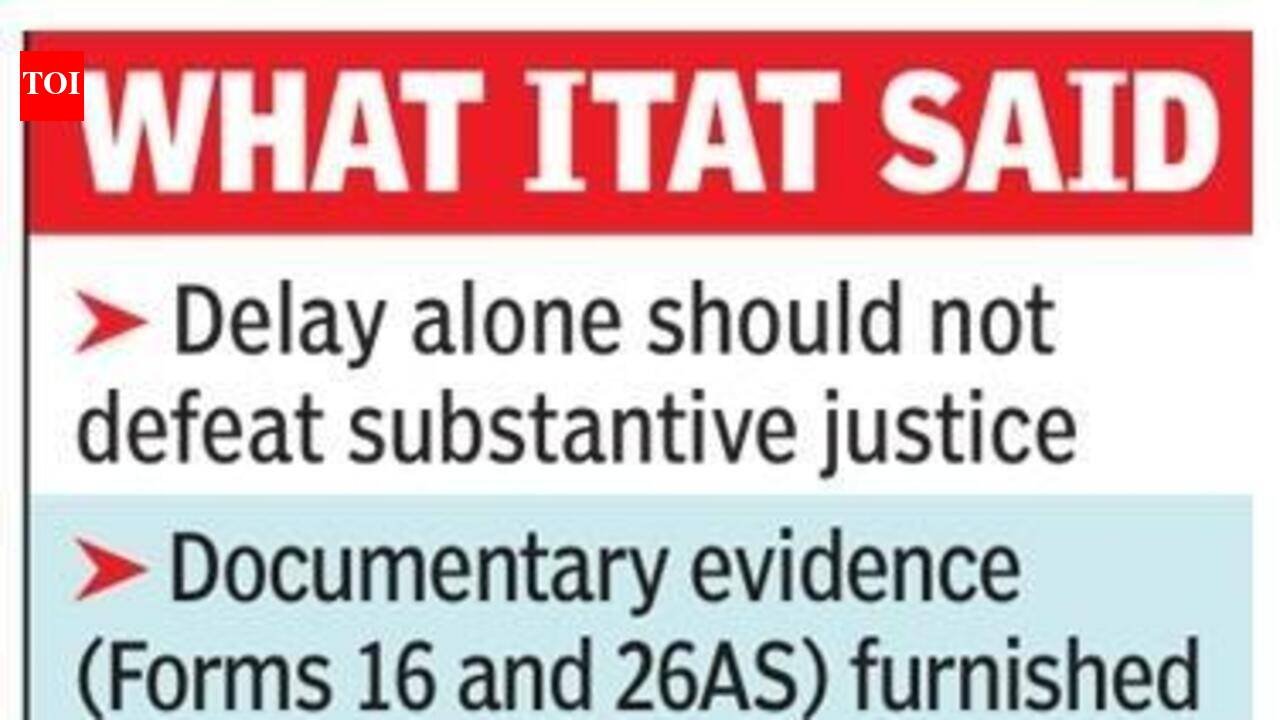
Mumbai: Many taxpayers believe their compliance responsibility ends once the income tax (I-T) return is uploaded. But, an additional process is required. An electronically filed I-T return must also be e-verified within 30 days of being uploaded, without which it is treated as invalid—as if it was never filed.Coming to the rescue of Nair, a taxpayer, the Mumbai income tax appellate tribunal (ITAT) held the delay for e-verification to be procedural. It observed that a belated e-verification, by itself, should not defeat substantive justice and directed that the case be decided on its merits.Nair had filed a I-T return in response to a notice under Section 148 (notice for reassessment). However, he e-verified this tax return after the prescribed 30-day period. The I-T officer, therefore, treated it as invalid and ignored his I-T return as well as Forms 16 (TDS certificate issued by his two employers) and Form 26AS (annual tax statement) produced by him during the reassessment proceedings.The I-T officer relied solely on salary information reflected on the I-T department’s ‘Insight Portal’ and made additions to his taxable income, by adopting the higher salary figures shown on the portal.The Insight Portal is the I-T department’s data analytics platform, which collates information collected from various sources, such as TDS returns, statements of financial transactions, and other third-party reports. It is used to identify potential tax mismatches and helps in selection of cases for scrutiny or reassessment.Before the ITAT, the taxpayer argued that the delay in e-verification was merely a procedural defect. More importantly, authentic statutory records—Forms 16 and 26AS—which were submitted by him clearly established the actual lower salary he received from his two employers. Judicial precedents were also cited to emphasise that procedural lapses should not override substantive rights.The ITAT agreed and noted that documentary evidence had already been furnished before the I-T officer and that the additions were based only on unverified portal information without independent corroboration.The tax tribunal also observed that the first appellate authority had dismissed the appeal for non-prosecution without examining the merits of the case. It, therefore, restored the matter to the commissioner (appeals) for fresh adjudication after verifying the evidence.According to tax experts, the ITAT’s order is a timely reminder that taxpayers should always complete the e-verification process within the prescribed timeline. At the same time, it sends an equally important message to tax authorities: that procedural lapses should not overshadow documentary evidence produced by the taxpayer.
