


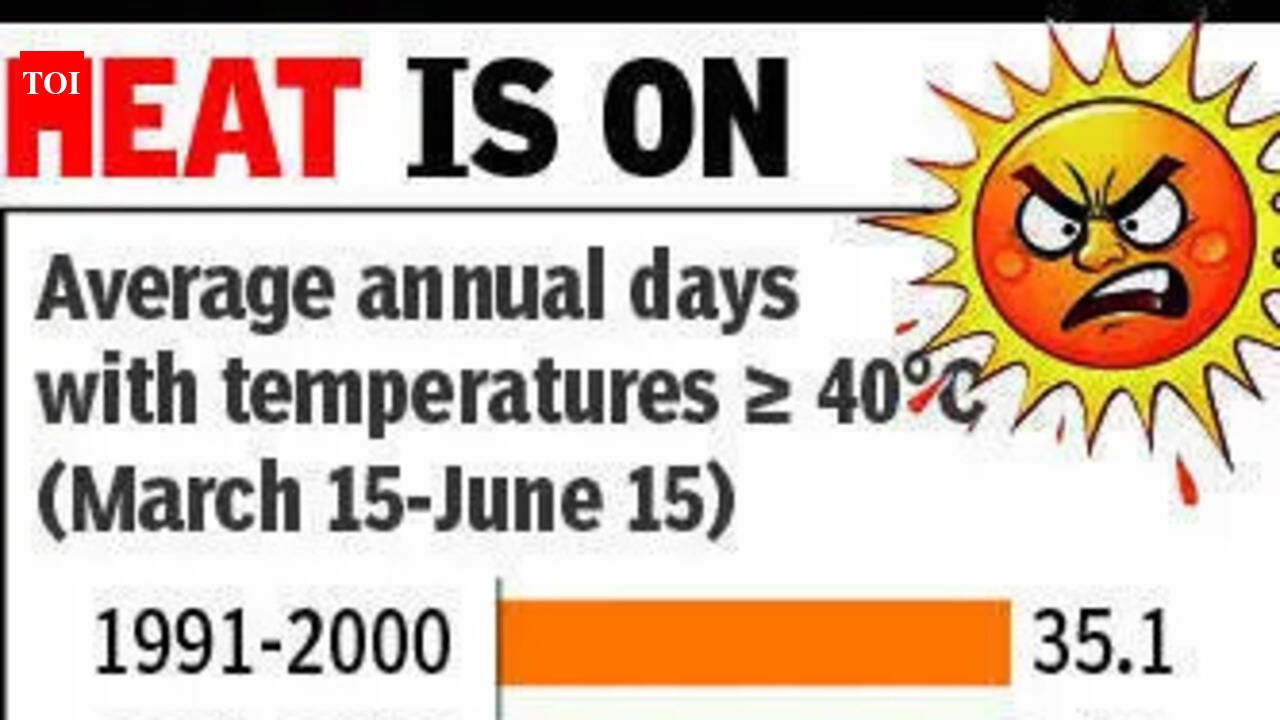
Ahmedabad: Even in the first week of June, with the monsoon nearing, Ahmedabad remains in the grip of extreme heat. The city’s maximum temperature on Friday was 41.3°C. IMD data indicates that out of the last 56 days this year, 53 recorded maximum temperatures of 40°C or higher; only three days stayed below the mark, stretching residents’ patience amid the prolonged spell.The streak also fits into a longer pattern. An analysis by TOI, using daily temperature data for Ahmedabad from the OpenCity portal (1991-2023) and India Meteorological Department bulletins (2024-2026), suggests the city is adding more 40°C-plus days over time. From an average of about 35 such days annually in 1991-2000, the figure has risen to 53, concentrated largely between mid-March and mid-June — an increase of 18 days over about 35 years.Recent years underline the shift. The data shows 2023, 2024 and 2025 recorded 36, 57 and 60 days, respectively, with maximum temperatures at or above 40°C, pushing the experience of severe heat close to two months.Ashok Kumar Das, head of the India Meteorological Department, Gujarat, said that they need to check the data and overall trend analysis to ascertain the exact figures. “But it is true that the city — and the region as a whole — has seen an upward trend in temperatures over the decades. Multiple factors ranging from climate change to urbanisation and urban heat island (UHI) effect are responsible for the phenomenon,” he said.Public health impacts are a growing concern, experts said, and not just because of daytime peaks. Prof Dileep Mavalankar, former director of IIPH Gandhinagar and a public health expert involved in framing Ahmedabad’s Heat Action Plan (HAP), said minimum temperatures matter as much as maximums.“The primary reason for the phenomenon is that the city is not cooling down in the evening and night hours even after sundown. When the minimum temperatures, too, hover around 28-30 degrees, the cycle of heat continues — the built structure and roads absorb the heat that they radiate during the nighttime, keeping the temperatures up. By the time the city starts cooling down, the new cycle begins,” he said.Prof Mavalankar said this persistence of heat intensifies health risks. “Several recent studies have shown a connection between heat stress and health issues such as cardiovascular diseases and muscle fatigue, among others. Some international studies have also connected it with excess mortality — one of the motivations for the city’s much-celebrated AP. A multi-pronged approach is a must to ensure that the city remains resilient for the incessant heat conditions,” said Prof Mavalankar.With inputs from Shinjini Sen
