


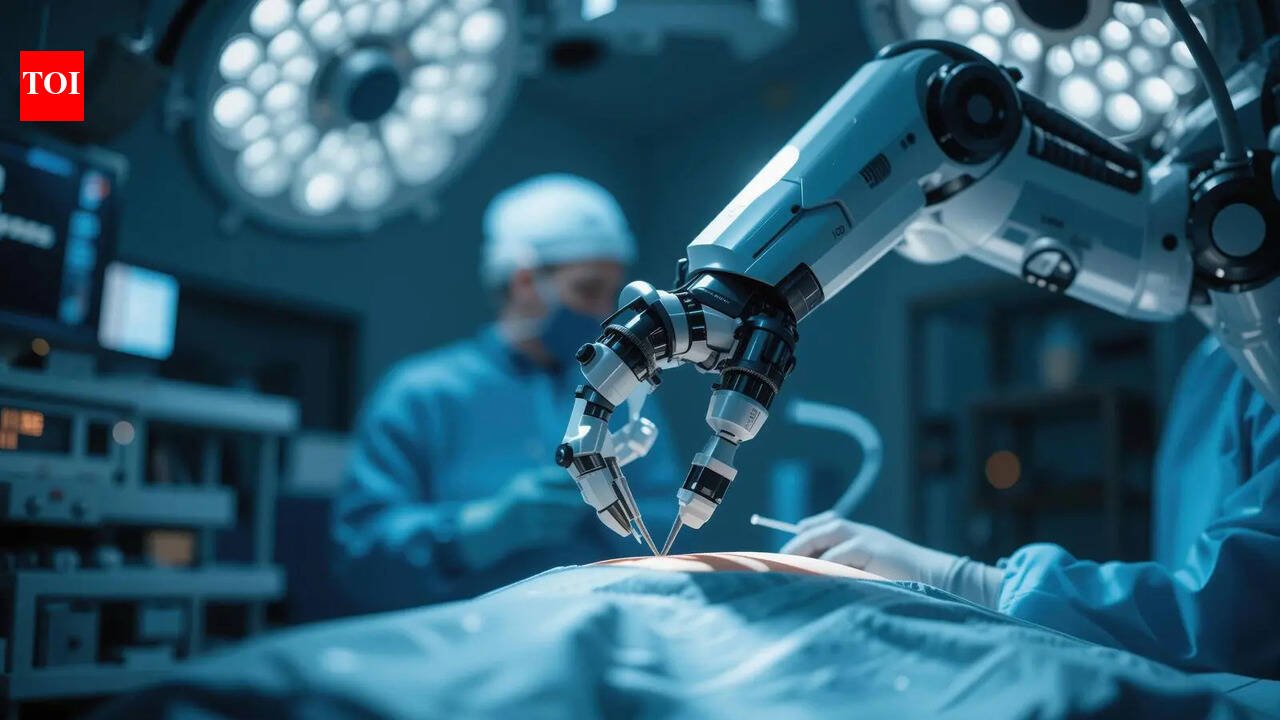
Chandigarh: PGI has successfully adopted India’s first home-grown surgical robotic system to perform kidney transplant surgeries. The department has already completed operations utilizing 10 living donors, with plans to scale the validation phase to 20 cases before expanding the protocol. The transition to this indigenous robotic platform represents a shift for affordable, high-tech healthcare, demonstrating that complex organ retrievals can be executed at global standards without the prohibitive expense of imported surgical systems.While initial surgeries required more time as the surgical team navigated the learning curve, operational times have gradually come down to match conventional procedures. Affordability remains a standout feature of the project; using the Indian robotic system adds only about Rs 30,000 to Rs 40,000 to the cost of a standard surgery, keeping the overall expense highly manageable for patients compared to the steep premiums associated with imported robotic platforms.“We chose to initiate the programme with healthy living donors rather than recipients to allow the entire operating team to become thoroughly familiar with the system’s interface, arm movements, and troubleshooting protocols in a highly controlled manner,” said Prof Ashish Sharma, head of the renal transplant surgery.The indigenously manufactured system offers an estimated 80% to 90% feature similarity to dominant global robotic platforms, while introducing specialized operational features tailored for Indian surgical environments. A major mechanical advantage of this Indian system is its modular adaptability; if an instrument encounters a technical glitch mid-surgery, it can be quickly changed right at the table without disrupting the flow of the operation.While the primary team expresses full confidence in handling the system, institutional protocols require training at least two to three additional surgeons to provide a reliable internal backup before the program expands further. “PGI is the only public institute which has been using this robot for transplant surgery,” said Prof Sharma.BOX: A few advantagesThe imported robot consists of a surgeon’s console, a patient-side cart with robotic arms, and a high-definition 3D vision systemThe Indian made robot is designed to provide high-quality robotic assistance at a significantly lower costIt supports urology, gynecology, general surgery, and thoracic proceduresEquipped with four robotic arms, allowing for efficient surgical maneuverabilityUnlike the imported version, this robot allows third-party instrument integration, reducing operational costsProvides enhanced visualization and control for minimally invasive surgery
