


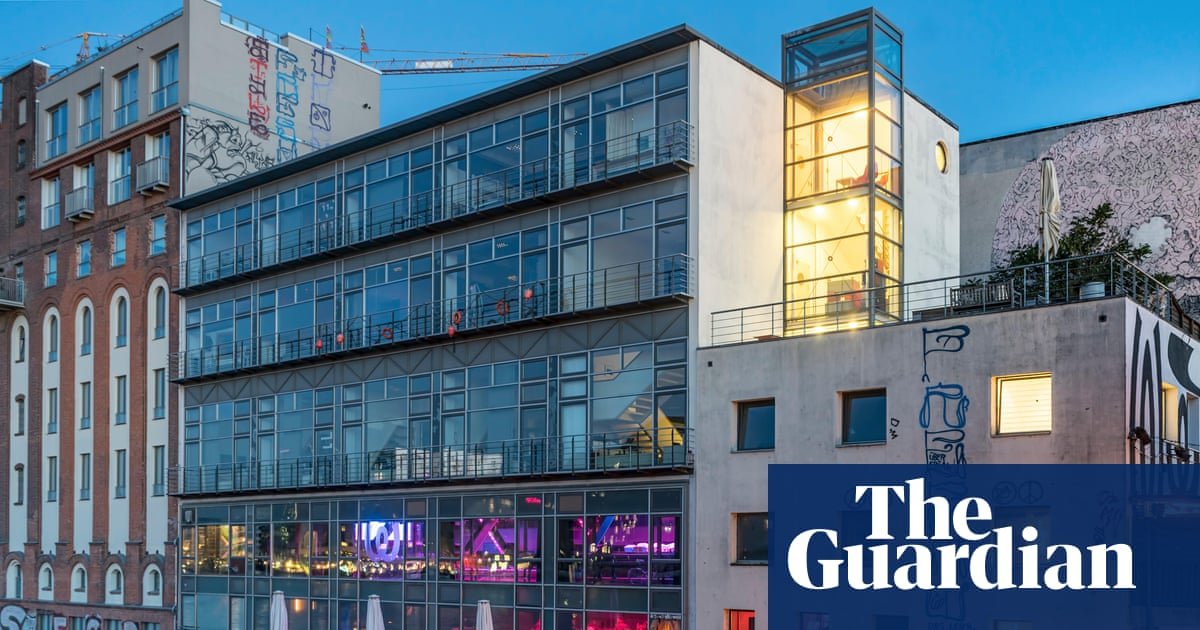
A move by the German government to reclassify nightclubs to distinguish them from amusement and adult entertainment facilities could give a much-needed boost to the country’s struggling nightlife, industry advocates say.
Under a fundamental change to building regulations approved by Friedrich Merz’s cabinet last week, nightclubs will be formally recognised as providing cultural and artistic value, making it more difficult for developers to evict venue operators in favour of new construction.
The law still requires approval from the Bundestag and the upper house, the Bundesrat, but cross-party support makes its passage likely. Clubs are classified alongside brothels, strip bars and betting shops – though often face stricter scrutiny due to noise regulations. The new rules will allow clubs to operate in certain residential areas.
Marc Wohlrabe, a night-time industry lobbyist for 30 years, called the change a “historic moment” for German club culture.
“The existing entertainment venue regulations date back to the last century when legislature and the authorities decided to lump together as shady everything that happened in the evenings, from red-light districts, to strip bars, game halls, and music clubs, considering this incompatible with residential areas and families,” said Wohlrabe, a board member of the federal association of music venues in Germany, which has been advocating for change for more than a decade.
“We’ve long maintained that curated music clubs have absolutely nothing to do with red-light district table dance bars. The club owners we represent operate more like a theatre – curating artists … nurture emerging talent, and deserve instead to be designated as cultural centres alongside opera, theatre, and high culture,” he added.
It is hoped the changes may help to slow down the Clubsterben (death of clubs) phenomenon, which has grown across Germany in recent years and been particularly acute in Berlin, where a large number of alternative spaces sprang up on wasteland and abandoned industrial sites after the fall of communism.
Rising real estate costs, post-pandemic social shifts, and noise disputes have led to the threat of closure of many clubs in recent years.
Legendary venues such as SchwuZ, Watergate and Mensch Meier are the most prominent recent shutdowns.
The Clubcommission, an association representing clubs, festivals and cultural events which lobbies for the protection of nightlife, estimates that nearly half of Berlin’s clubs are considering closing.
Photograph: Everynight Images/Alamy
Wolfram Weimer, the federal culture minister whose support for the change has come as a surprise to some, owing to his reputation for run-ins with representatives of non-mainstream culture, said he believed it was only right to distinguish music clubs from pure entertainment venues.
“This is an important step toward protecting and expanding the live music scene in Germany and sends a strong signal to the cultural and creative industries,” he said.
This week’s decision followed a 2021 “political declaration of intent” by the then government to classify clubs as “establishments for cultural purposes”, which was celebrated at the time but had no legal basis.
Under the new legislation, clubs will be generally allowed in mixed-use areas and exceptionally in special residential areas, in an acknowledgment of their role in attracting international audiences and supporting the economy, including drawing a younger workforce to Germany.
Jakob Turtur, who runs the popular collaborative cultural space and nightclub collective Jonny Knüppel, said he welcomed the changes to the building code, but feared they had come too late for his club as well as the city’s embattled club culture more generally, which he said needed far more widespread help.
Turtur is searching for a new, permanent location after being pushed out of premises on a former industrial wasteland by an international sports conglomerate. Jonny Knüppel is biding its time on a disused railway site, but Turtur said he was sceptical about finding a suitable new position.
“This could have come a lot sooner,” he said. “It would not only have saved us a tremendous amount of work, money and effort, but above all, it would have given us the feeling that Berlin still has a thirst for grassroots socio-culture and cultural diversity – the kind of culture that made Berlin so exciting after the fall of the wall.
“Instead we’ve often been made to feel like criminals.”
He said he regretted the fact that the new legislation stopped short of putting music clubs on a legal footing with theatres, operas and museums.
“A cultural classification like that would have helped provide urban planners with more tools to argue that clubs are essential for a vibrant and diverse city, and more important than profit-driven developments, like say, an office complex, which nobody needs these days anyway”.
