


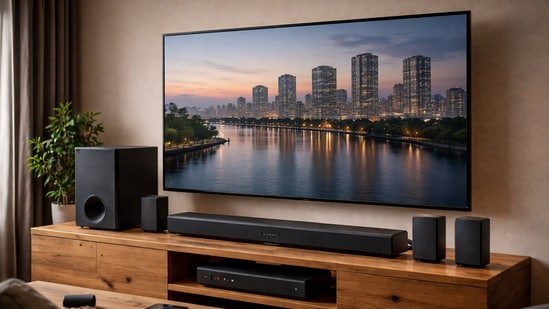
Many TV brands continue to make displays slimmer, but audio quality still takes a hit. That is why soundbars are no longer an optional upgrade for many users. Whether it is IPL streaming, OTT binge sessions, or console gaming, a dedicated speaker setup changes the overall viewing experience in a way TV speakers simply cannot.
But buying a soundbar today is also confusing. Terms like Dolby Atmos, 700W sound, and virtual surround are used everywhere, even on products that cannot deliver true cinematic audio. In reality, speaker tuning, channel separation, and room setup matter far more than raw wattage figures.
A properly balanced 3.1-channel system can sound cleaner than an uneven 5.1 setup. Similarly, Dolby Atmos support on paper does not always mean height-based surround sound in real-world use. The key is choosing a system that matches your room size, content habits, and setup expectations.
Here are some soundbars worth considering in India right now.
The JBL Cinema SB580 targets users who want better audio without turning their living room into a full home theatre setup. It comes with a 3.1-channel configuration and includes a wireless subwoofer along with a dedicated centre speaker.
That centre channel makes a noticeable difference during movies and sports broadcasts because dialogue stays clearer even during loud background effects. JBL’s bass-heavy tuning also helps action scenes and music playback feel fuller compared to standard TV speakers. This setup works well in small and medium-sized rooms where rear speakers may feel unnecessary or difficult to place.
2. Sony HT-S40R
Our Principles
Full Transparency
Every product review clearly lists the Pros and Cons, giving you a balanced view.
Brand Confidence
We focus on products from brands with a proven reputation and long-standing market trust.
The Sony HT-S40R focuses on true surround sound instead of software-based virtual effects. Unlike most soundbars in this price segment, it ships with dedicated rear speakers, creating an actual 5.1-channel experience.
This improves directional audio during films and games. Background effects, crowd noise, and action sequences feel more spread across the room instead of staying limited to the front.
The trade-off is installation. The rear speakers connect through the subwoofer, so cable management requires planning. However, users looking for proper surround separation may find the setup effort worthwhile. Sony has also tuned the system more towards vocal clarity than overpowering bass, making it suitable for everyday TV watching as well.
The boAt Aavante Prime 7050D is designed for users who want a complete home entertainment setup without spending heavily. It includes a wireless subwoofer, rear satellite speakers, and Dolby Audio support in a 5.1-channel layout.
The soundstage feels larger than standard stereo soundbars, especially during sports streaming and action-heavy content. The bass output is also strong enough for larger living rooms.
boAt includes multiple EQ presets for movies, music, and news content, allowing users to switch profiles depending on what they are watching. Wireless connectivity and remote-based controls also keep day-to-day usage simple.
The Zebronics Juke Bar 9900 brings Dolby Atmos and DTS:X support into the affordable segment. While it does not offer the same experience as premium Atmos systems with dedicated upward-firing drivers, it still creates a wider audio presentation compared to regular soundbars.
The system delivers high output power and includes dual wireless subwoofers for stronger low-end performance. Zebronics has also added an LED display that shows modes and playback controls directly on the unit. Connectivity options include Bluetooth, HDMI, USB, and optical input support, making it easier to pair with TVs, streaming devices, and gaming consoles.
The LG S65TR is a 5.1-channel home theatre soundbar that combines a wireless subwoofer with rear speakers for a more complete surround sound setup. Its biggest advantage is LG’s AI Sound Pro feature, which automatically adjusts sound tuning based on the type of content being played. Dialogue-heavy scenes receive more vocal emphasis, while movies and sports broadcasts get wider sound output.
Dolby Digital support helps improve immersion during OTT content playback, while HDMI, Bluetooth, and USB connectivity options make device pairing straightforward. The system works best for users who want balanced sound performance across movies, music, and regular TV viewing instead of bass-focused tuning alone.
Sony’s Bravia Theatre System 6 is aimed at users who want a larger-scale home theatre setup. It includes rear speakers, a subwoofer, Dolby Atmos support, and a dedicated centre channel in a 5.1-channel configuration.
The dedicated centre speaker improves dialogue reproduction, especially during movies with heavy background effects. Rear speakers also help create better sound movement across the room during games and action scenes.
Sony has included support for the BRAVIA Connect app, which simplifies setup and sound customisation. While the system pairs naturally with Sony BRAVIA televisions, it also supports connectivity with TVs from other brands.
The Mivi Fort H120 is a compact 2.1-channel soundbar designed for smaller rooms and basic entertainment setups. It delivers 120W audio output and includes a separate subwoofer for improved bass response over standard TV speakers.
The soundbar supports Bluetooth streaming and offers different EQ modes for movies, music, and dialogue-focused content. Users can also adjust settings through the bundled remote control.
Its compact structure makes it suitable for users who want cleaner setups without rear speakers or complex wiring. For smaller TVs and bedroom setups, it serves as a practical entry-level upgrade.
5 Things to Consider Before Buying a Soundbar
1. Choose the Right Channel Setup
A 2.1-channel soundbar is enough for casual viewing, but a 3.1 or 5.1-channel setup offers better dialogue clarity and surround sound for movies and sports.
2. Don’t Focus Only on Wattage
Higher wattage does not always mean better sound. Speaker tuning and audio balance matter more in daily usage.
3. Check Connectivity Options
Look for HDMI ARC/eARC, Bluetooth, USB, and optical support for easier setup and better compatibility with TVs and streaming devices.
4. Understand Dolby Atmos Support
Not all Dolby Atmos soundbars offer true overhead audio. Many budget models rely on virtual surround processing instead of dedicated drivers.
5. Match It With Your Room Size
Compact soundbars work well for bedrooms, while larger rooms benefit from rear speakers and dedicated subwoofers.
Disclaimer: At Hindustan Times, we help you stay up-to-date with the latest trends and products. Hindustan Times has an affiliate partnership, so we may get a part of the revenue when you make a purchase. We shall not be liable for any claim under applicable laws, including but not limited to the Consumer Protection Act, 2019, with respect to the products. The products listed in this article are in no particular order of priority.
