


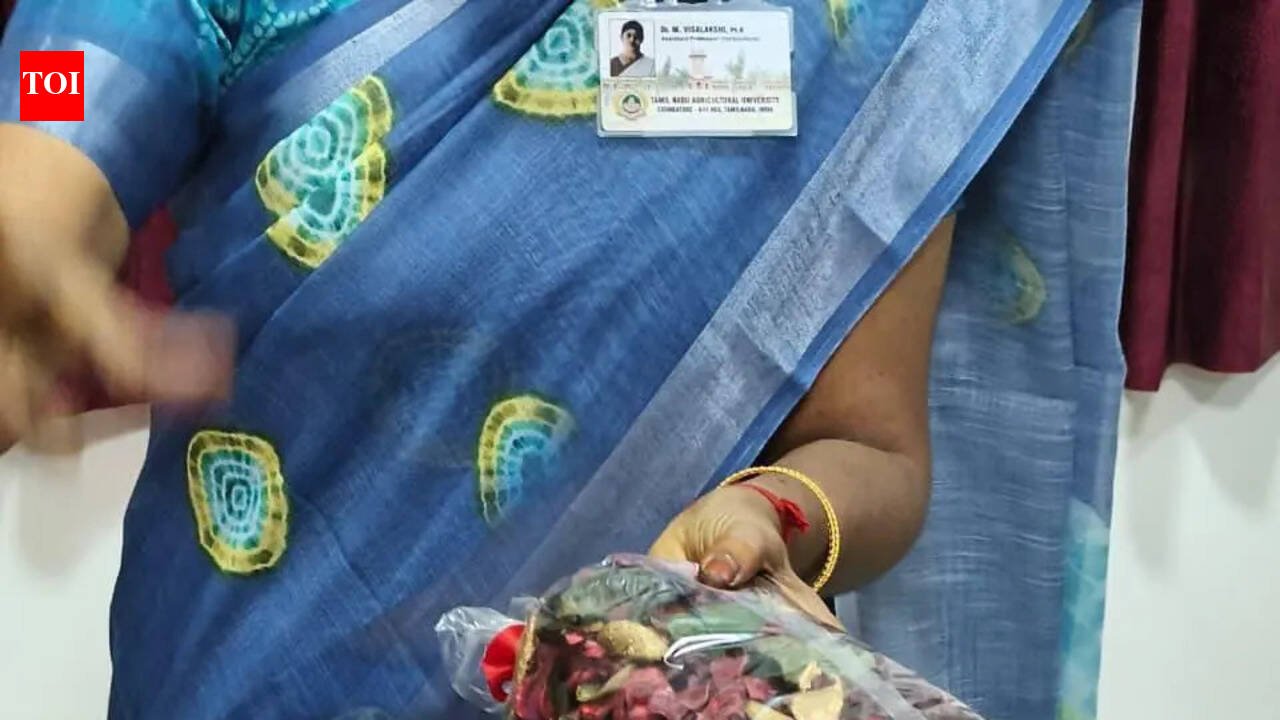
By V Ritheka SreeCoimbatore: India accounts for 70% of the global dried flower trade within a segment that makes up 15% of world exports, with potpourri forming a major share of shipments, experts from Tamil Nadu Agricultural University (TNAU) said, citing strong market potential for entrepreneurs.Dr M Visalakshi, assistant professor (horticulture), Department of Floriculture and Landscape Architecture, TNAU, Coimbatore, said the dry flower industry has been active since 1975 and India has exported dried flowers and botanicals for about four decades. India’s dried flower exports are broadly classified into three categories: botanical dried plants in bulk and dried flowers, potpourri, and décor products. Visalakshi was speaking at a one-day skill training in making products using botanicals in floriculture to support commercialisation efforts. TNAU conducted the training programme.Visalakshi said India’s overall flower exports are over Rs 750 crore, with dried flowers contributing over Rs 100 crore annually, while the domestic market is still emerging. Major exporting states include West Bengal, Tamil Nadu, Andhra Pradesh, Maharashtra and Karnataka, while key domestic markets are metropolitan cities such as Kolkata, Delhi, Chennai, Bengaluru and Hyderabad.Exports are largely to North America, Europe, the Middle East and Southeast Asia, with major destinations including the US, the UK, Japan, Australia and the UAE. In Tamil Nadu, Tuticorin leads in production, followed by Salem and Trichy.Visalakshi said the sector uses a wide range of plant parts for decorative products, including roots, fruits, seeds, bark and leaves, and the long shelf life of dried products drives demand. She added that India’s biodiversity supports the industry’s scale and variety, with materials ranging from coconut and palm botanicals, arecanut husk, luffa sponge and lotus centres to pods, cones, grasses, leaves and flowers such as roses, gomphrena, cockscomb, hydrangea and wood rose.She said three core technologies, drying, bleaching and dyeing—convert raw botanicals into usable products. Beyond home decor, the industry also produces home fragrance items such as potpourri, sachets, reed diffusers, incense sticks, aromatic candles, scent diffusers and refresher oils.TNAU’s floriculture department provides training and guidance on raw materials and export opportunities for aspiring entrepreneurs. The training on Tuesday demonstrated preservation methods for rose-making using shola material sourced largely from West Bengal. TNAU projects across India aim at standardising processes, strengthening the floriculture value chain and identifying new botanical sites for product and design development.Lakshmi, who attended the training programme, said the participants were impressed by how everyday waste, such as roots and leaves, was transformed into decorative items. She added that the programme introduced them to a more creative and sustainable approach to decor-making and encouraged them to start a business.
