


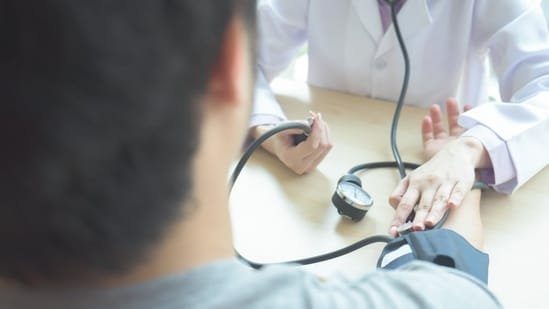
Hypertension is India’s most common silent public health emergency: easy to detect, affordable to treat, and devastating when ignored. The battle can be won long before a patient reach a hospital–when communities support healthier choices and help people stay on lifelong treatment.
More than 30 crore Indians live with elevated blood pressure (higher than 120 over 80), as shown by India’s National Family Health Survey-5 (2019-21). Because hypertension often shows no early symptoms, it can quietly damage the heart, brain, and kidneys until it appears as a heart attack or stroke. Control–not just diagnosis–must be the benchmark, and support close to home matters as much as a prescription. The urgency is growing. More young adults are developing hypertension due to high salt intake, tobacco use, stress, and rising obesity–factors shaped by what people eat, how they move, and what habits communities accept as normal.
India’s challenge is no longer finding solutions; it is ensuring continuous care. Screening has improved, but many remain undiagnosed, and too many who start treatment miss follow-up or stop medicines. The result: Control rates stay far below what is achievable. We cannot solve this problem by building more hospitals. We need to reach people where they live, in the language they trust, through the people they already know.
India has seen what happens when health programmes treat communities as partners–from polio’s door-to-door mobilisation, to Tuberculosis (TB) treatment support, to self-help groups that spread behaviour change through peer influence. These efforts worked because local leaders took charge, people stayed engaged through regular follow-ups, and everyone shared responsibility. We find that in TB control programme starting treatment is the easy part; the real work is supporting people to continue it. Hypertension needs the same community architecture to ensure control.
With the expansion of Ayushman Arogya Mandirs (AAMs) and the national NCD programme, India has started screening for Hypertension. These centres bring care closer to communities – people can access basic health services within their own neighbourhoods instead of travelling long distances to hospitals. The strengthening of frontline care and making hypertension control a routine part of services needs to be done. The screening/detecting of hypertension cases need regular follow up with patients through the AAM frontline workers. To make this work well, we need to propagate the standard treatment protocols, ensure a steady supply of medicines, and devise simple systems to track patients and monitor their blood pressure over time. Under India’s Hypertension Control Initiative, health workers have become a backbone of blood pressure care in hundreds of districts. They are not doctors, but they do not need to be. What they bring is something that no prescription can provide–presence, consistency, and trust.
Results can be speeded up by making refills and blood pressure checks easy through fixed-day services and outreach, helping frontline teams follow standard protocols consistently, and tracking control rates so the system focuses on outcomes–not just the number of screenings.
‘Community as the first line of defence’ is not a slogan. Community also encompasses workplaces, schools, self-help groups, and local governance structures that influence behaviour and access to care. When meaningfully engaged, this ecosystem can strengthen every stage of the hypertension care.
Families shape routines. Accredited Social Health Activist (ASHAs) and Community Health Workers connect households to services and follow-up. Jan Arogya Samitis, self-help groups organise local discussions and camps, and make healthy norms visible.
In nutrition, we have seen that we achieve the biggest gains when we make healthy choices easier through what schools, workplaces, and local markets offer to the people not just through messages. For prevention, communities can make healthy living the default choice by creating safe spaces for walking, reducing tobacco use, and promoting lower-salt diets. In many homes, salt comes not only from the saltshaker but from achar, papad, namkeen and packaged snacks; local campaigns and canteens can promote simple swaps and make less salt a shared norm.
For the first line of defence to work efficiently, primary health care must have a dependable backup, accurate BP measurement, steady medicine supplies, and standard protocols. Without that, community effort will not translate into sustained control.
India has the knowledge, the tools and an expanding primary health care platform to control hypertension at scale. This year’s World Hypertension Day which has just gone by is a reminder that no government programme, no clinical protocol, and no single intervention can substitute for the sustained, personalised, trust-based support that a mobilised community provides.
We can control hypertension if the first line of defence is strong: Communities that prevent risk, detect early, and help people stay controlled for life.
(The views expressed are personal)
This article is authored by Preeti Sudan, former Union health secretary and chairman, UPSC.
