


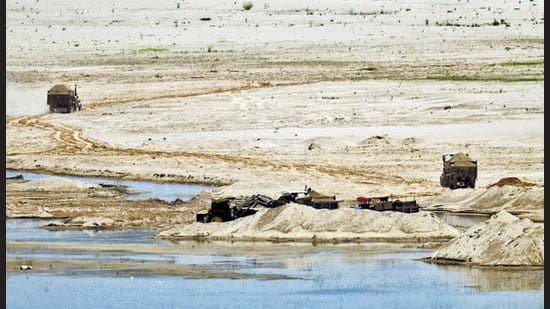
Illegal sand-mining at the Chambal’s banks has become emblematic of a problem that several rivers in India now face. As HT reported on Monday, the bleak state of the National Chambal Wildlife Sanctuary — with deep indentations fracturing the floodplains in several places and threatening the survival of many protected species — highlights the ecological impact of illegal sand-mining.

The costs of such unheeding extraction are now well known. Mining often exceeds the river’s natural replenishment by several multiples, threatening banks with collapse while groundwater tables in surrounding areas plummet and animal and avian habitats are destroyed. Illegal sand mining’s link to the construction and infrastructure development boom is also well known. The problem is that scrutiny is sporadic and often lacks adequate support action from the State. Indeed, several courts, including the Supreme Court in the case of Chambal, have lamented this in related orders. Sand mining falls under the purview of the state governments, which do not always show the political will to monitor it. Most attempts in regulation stem from action by municipal government personnel or activists and civil society organisations campaigning against violations, often risking their own safety.
